
Disclaimer: This post contains affiliate links to handpicked partners, including tours, gear and booking sites. If you click through or buy something via one of them, I may receive a small commission. This is at no extra cost to you and allows this site to keep running.
In Japan, to see Geisha in Kyoto within the old streets of Gion is a special sight. Here’s how you can see this renowned and beautiful figure, and the respectful rules you should follow.
It’s a dream to see a Geisha in Kyoto, Japan. Mysterious and elusive; a remnant of time-worn tradition and exquisite beauty.
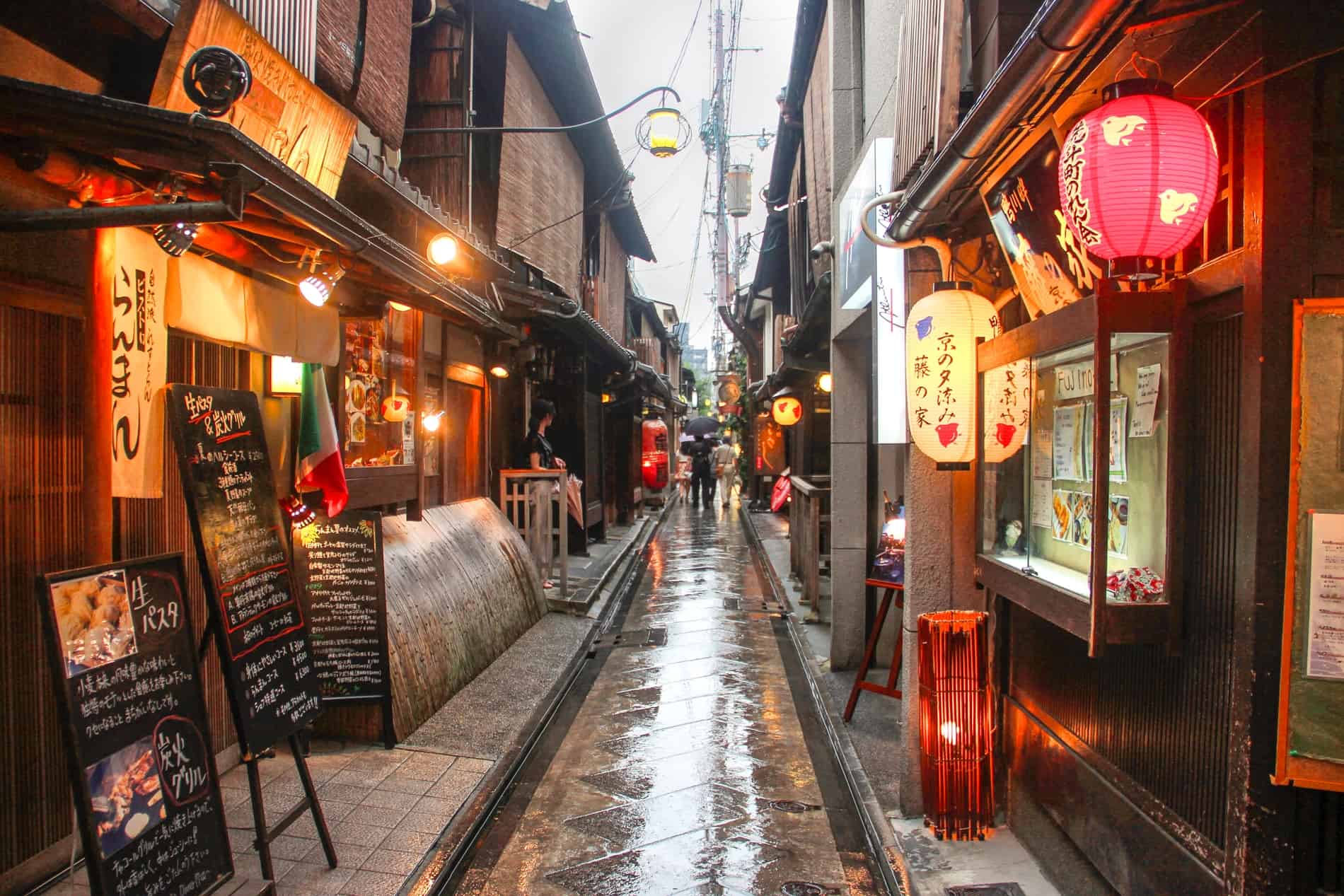
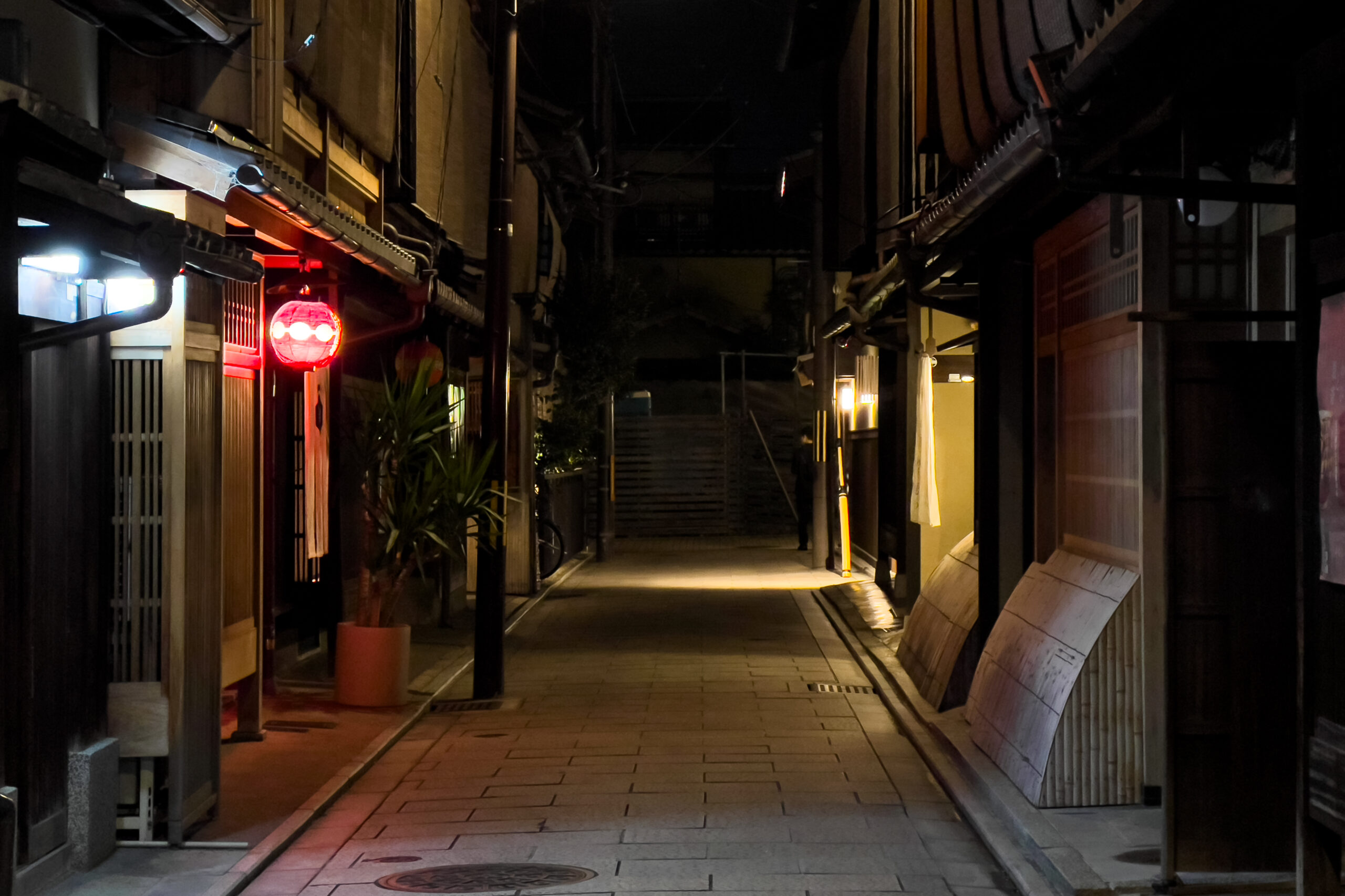
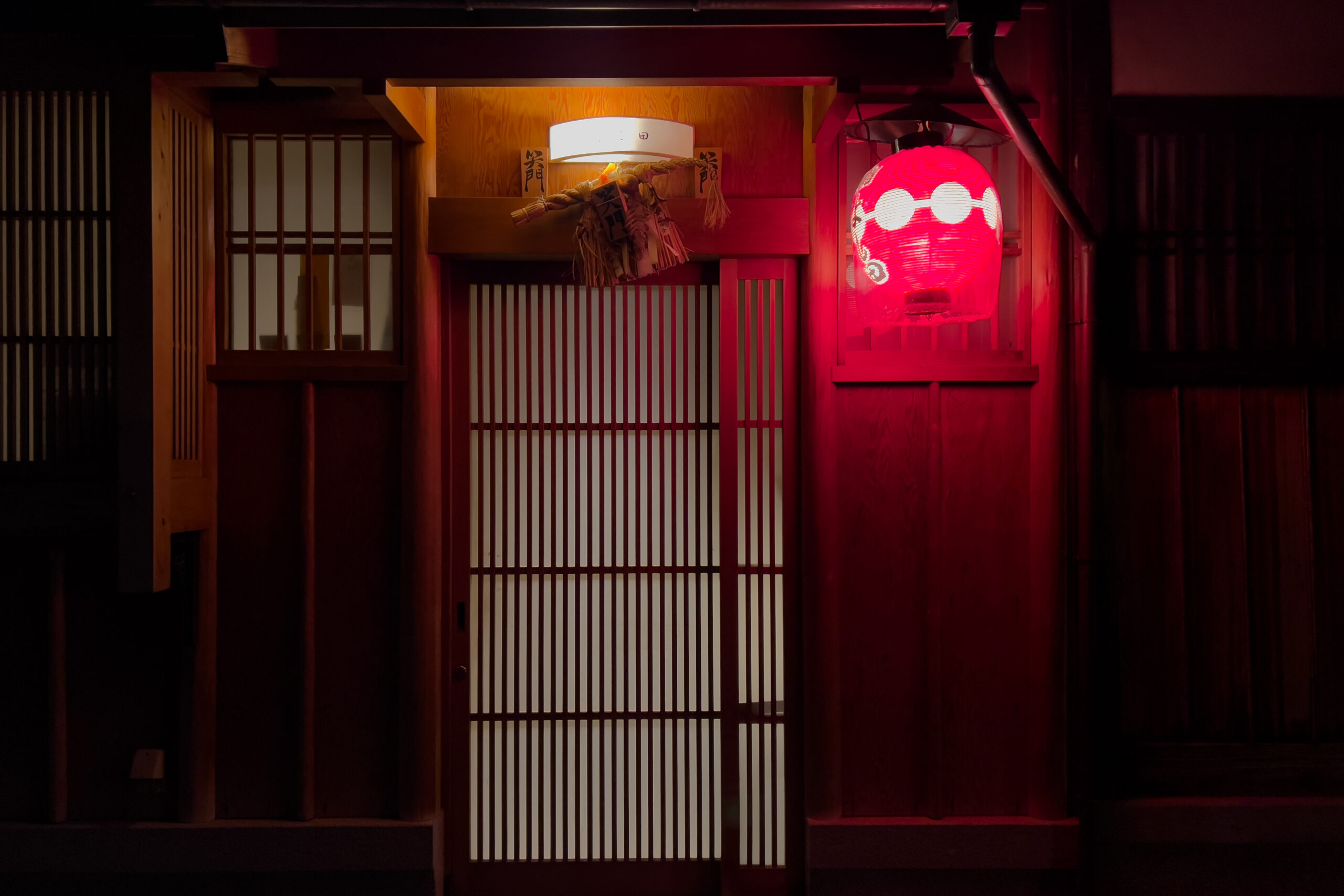
Wandering the streets of Gion, the narrow streets and alleys invite in their subdued orange glow, casting a mysterious glow on a well-known district. Blood-red lanterns with their pretty dove patterns mark out traditional teahouses, restaurants buzz with the low hum of customers, and the laughter of businesspeople echoes in the secretive air. All of which whispers nothing, except curiosity in a place where you wander slowly and pause in the hope of seeing this traditional art for a fleeting moment, before moving on.
“Look behind you, now”, I heard, as I was leisurely photographing the old wooden houses that still stand as a preservation of ancient Japan. I longed to see what was behind them and what tales they could tell.
And there she was.
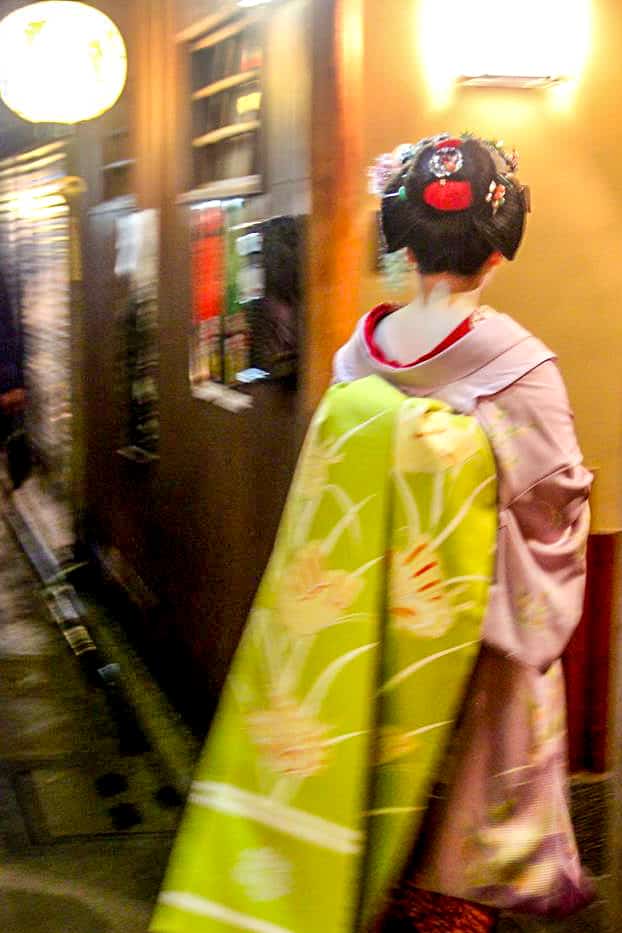
The brief eye contact through the delicate face of white; the elaborate design and bold colour of the robe which moved only in time with the elegance of the small, rapid steps; the unmistakable sound of the wooden shoes hitting the cobbled stones in a composed rhythm. In the electric atmosphere, I was transfixed as I eagerly followed, mesmerised by a figure whose company is only for the invited.
I scrambled with my camera settings, knowing I only had a matter of seconds to capture seeing such a respected figure in person as the door opened and the sound of the raucous crowd emerged. Before realising what was happening, and snapping out of awe, the door slammed shut, and the sound of the awaiting audience was muted.
And she was gone.
The Culture of Geisha in Kyoto
Kyoto is a place identified not only with the ‘old’ Japan and UNESCO World Heritage temples but also with the most beautiful and revered entertainer of all – the Geisha.
A centuries-old form of entertainment, Geisha and Maiko (the apprentice Geisha) are performing artists in Japan held in high esteem – female entertainers who are not only hostesses but also classical musicians and dancers.
Some begin their daily training at a very early age, while others enter the profession later in life. Either way, you train for life unless you leave your Okiya – where you live, train and are indebted to under contract.
Hired to attend parties and private gatherings at ochaya (teahouses) and ryōtei (traditional Japanese restaurants), no one knows where a Geisha will get the call to work, and the exclusivity of their company means they are not a common sight. Not only do you have to pay the equivalent of hundreds or even thousands of dollars but, in many cases, another person must invite you.
Therefore, to behold one within the old streets of the ‘Geisha District’ of Gion in Kyoto as they make their way to work is an extraordinary sight indeed.
As much as I loved trend-setting Tokyo and rebellious Osaka, I was more excited about the traditions of Kyoto, and one of the first things I asked when I arrived at my hostel was, “Where can I see Geisha?” They will, of course, tell you what they know, but there is also a respectful way to view this tradition and rules that should be followed.
The Geisha of Gion
Seeing Geisha in the district of Gion is not guaranteed, and it will most likely be that of a Maiko. Many local people told me, “You have to be very lucky to see a Maiko, and even more so to see Geisha,” and that’s the truth.
My first visit to Gion was in the early evening, after 8 pm, where I wandered for approximately 90 minutes and didn’t see anything. I covered a lot of ground, and there was no hint of an appearance. On the second night, I stayed close to the main street next to the river after 10 pm.
Typically, it happened when I was not paying attention. As I had heard from others’ stories, it happens so quickly, as if you had seen a ghost. Despite walking with small and dainty steps, they are quick – they know they are held in high esteem and that everyone wants a glimpse of them. The Geisha will be out of sight before you’ve even had the chance to adjust your camera settings and pick your jaw up off the floor.
But you will never forget the moment.
How You Can See a Geisha in Kyoto
What is the Best Time to See a Maiko or Geisha in Kyoto?
A local told me that Geisha and Maiko start work as early as 8 pm, though the consensus was that 10 pm to 11 pm would give you a higher chance of an appearance.
Where is the Best Area of Gion to See Geisha?
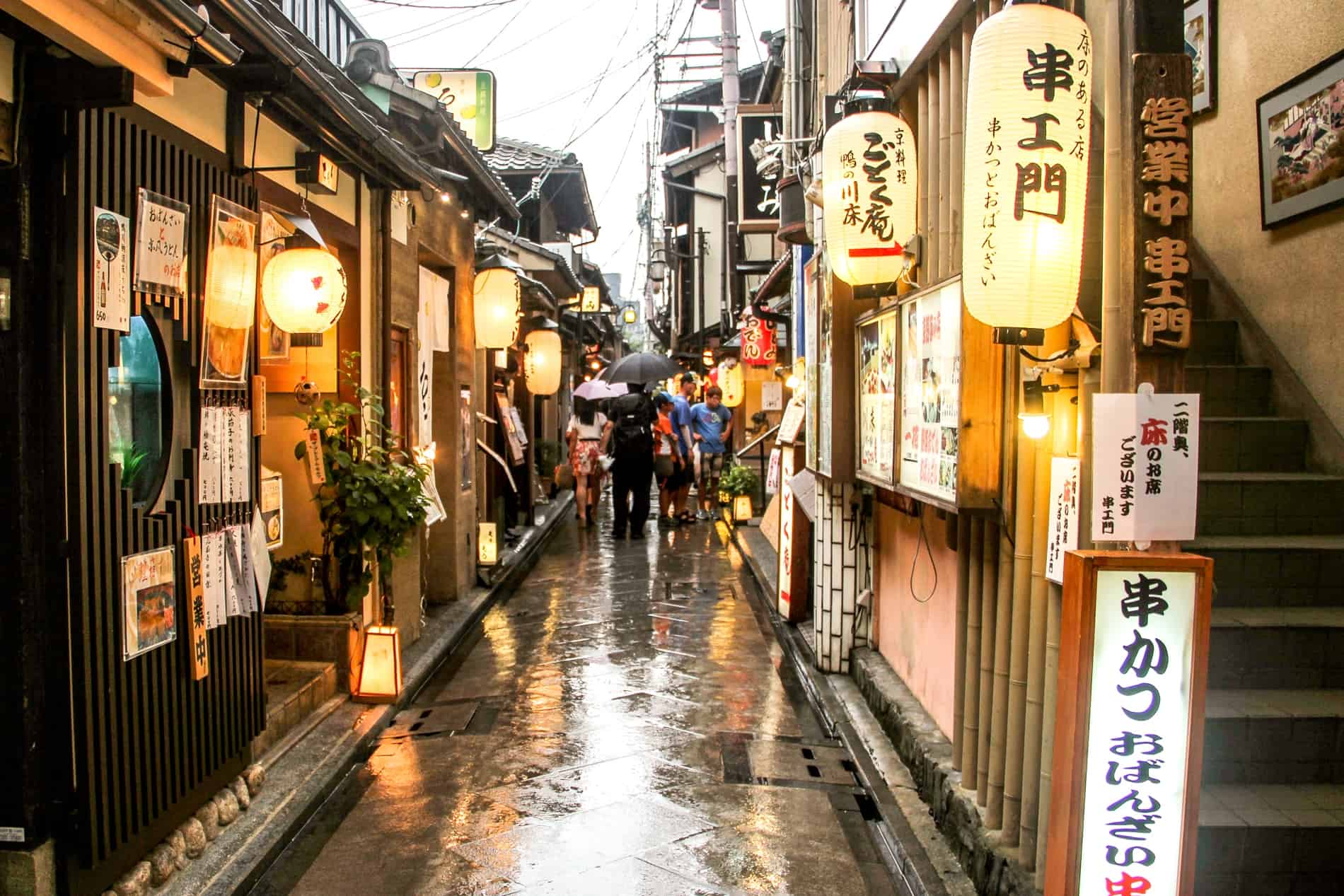
Gion is now a mish-mash of old narrow alleyways and a modern shopping district with a whole host of department stores. Two areas remain the main hubs where the Geisha work – the tiny, mysterious lantern-lit street of Pontocho-Dori to the west of the river, and Hanamikoll-Dori on the opposite side, near to the beautifully preserved Shimbashi Street.
The main sightings are of them getting out of a taxi or walking the short way directly to the teahouse. I was also informed that the small temples and shrines in this area are where most of the Geisha go to pray before work, many in full makeup and outfit.
Rules: Many parts of Gion now have signs stating where photography isn’t allowed. Respect the wishes of the properties showcasing these signs. Things has gotten so out of control that there are reports of afternoon and evening patrols, and the issuing of fines.
Linger in One Spot
Stand for 20 minutes, wander within a small area around the street, and be patient. It may just happen, especially if you can sense an atmosphere. The beauty of Gion is in its silence and unhurried atmosphere.
Rules: Always keep your distance; do not run, crowd around, or touch these women. It’s a shame that signs had to be put up in Gion to tell people how to behave after multiple instances of tourists tugging at these women and blocking their path to work. This behaviour is also subject to fines up to ¥10,000.
Don’t Overlook the Tiny Alleys
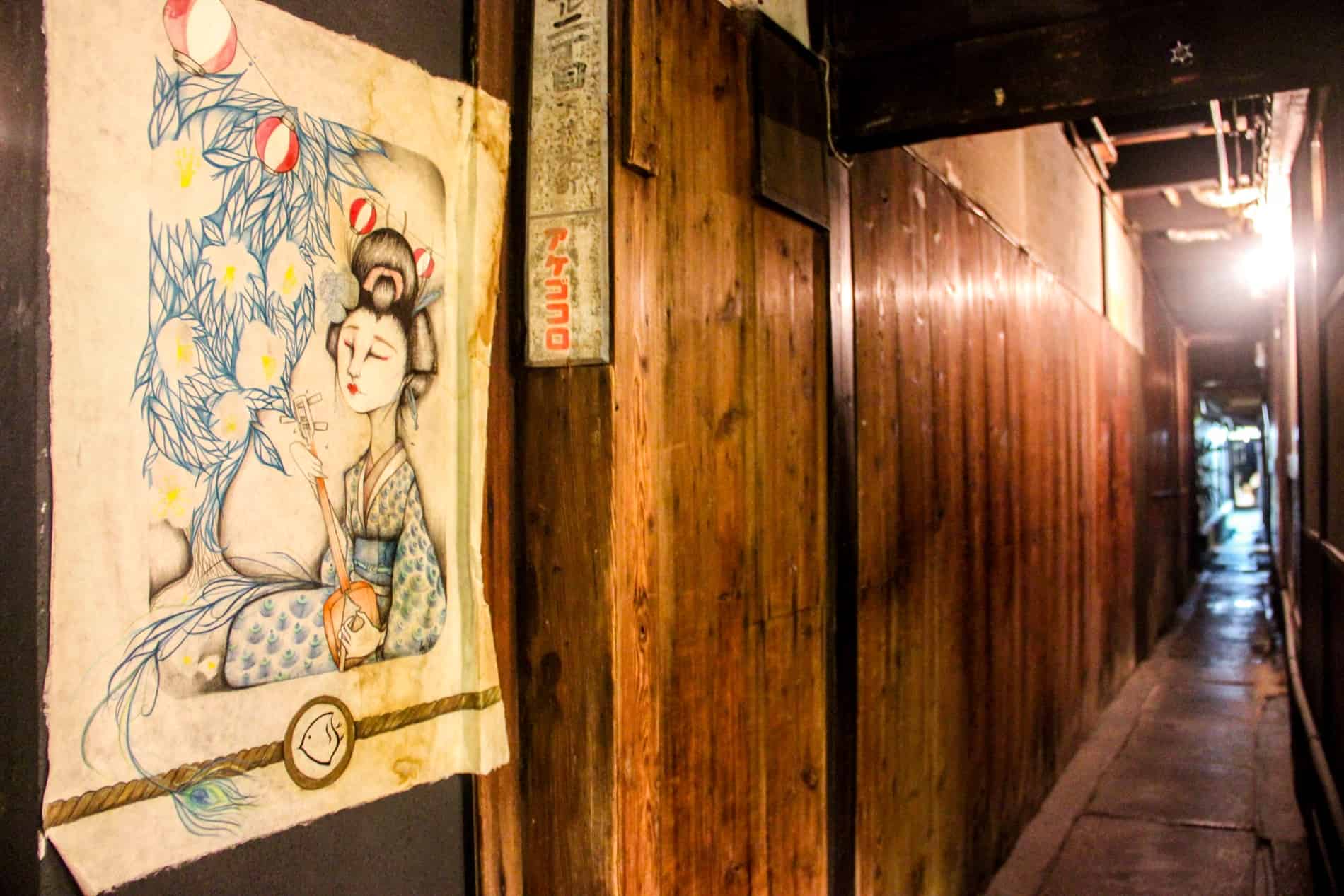
Peer into the off-the-path alleyways – you never know what might be on the other side. Like a swift entry or exit in the golden glow.
Rules: These alleyways are typically private property; do not walk down them or try to enter buildings that are not designated teahouses open to visitors.
Go to a Maiko Tourist Performance
The Miyako Odori hosts daily dance performances by Maiko for around 11,000 yen (around £80). They were pricey, but I preferred being in Gionto see them in their natural work setting.
Know the Difference Between a Geisha and a Maiko
Geisha typically wear more subdued, less elaborate clothing, hair, and makeup. In contrast, Maiko are more colourful and bold – their robes are usually patterned and hang low at the nape of the neck. The obi (the waist tie decoration) is usually more embellished and longer, sometimes hanging as low as the ankles. They are striking and not easily missed. I even saw one from the back during the day in a local neighbourhood, except that when she turned around, she had no makeup on.
When Am I Most Unlikely to See a Geisha?
During Obon, the annual Buddhist event commemorating one’s ancestors, Geisha and Maiko do not work. Therefore, travelling to Gion during these dates means seeing Geisha is unlikely. Obon is an annual Buddhist event in Japan that commemorates one’s ancestors by lighting lanterns and usually takes place in mid-August. It’s best to check with your guesthouse owners and other locals if any other festival or commemorative event is taking place while you are there.
Ethics of Viewing Geisha Culture
Whether you have a vested interest in seeing one of these notable entertainers or not, it’s an insight into a renowned and preserved Japanese tradition that creates as much of a mysterious culture for us as it does for the people they entertain.
Yet, this traditional art is not a safari. If visitor ethics do not improve, the preservation of Geisha culture will be fundamentally shattered. Or, worse, kept completely out of sight.
Related Tours and Experiences in Kyoto
This GetYourGuide Gion Night Walking Tour with a local guide is a great way to immerse yourself in this district’s centuries-old entertainment custom.
On Klook you can book a two-hour guided Geisha culture and history walking tour.