
Disclaimer: This post contains affiliate links to handpicked partners, including tours, gear and booking sites. If you click through or buy something via one of them, I may receive a small commission. This is at no extra cost to you and allows this site to keep running.
I’ve been wearing Vivobarefoot for ten years. This is my third (and fourth) pair from the Primus collection, and my honest review of how the range has evolved. And more importantly, is the €160 price tag worth it?
I got my first pair of Vivos when the brand was in its infancy over a decade ago: the original Primus that I put through the wringer, mostly in water, before moving on to the Primus Lite IV upgrade, when the shoe became lighter, slicker and in a light blue colourway I wish they would bring back. Because it became my favourite everyday shoe.
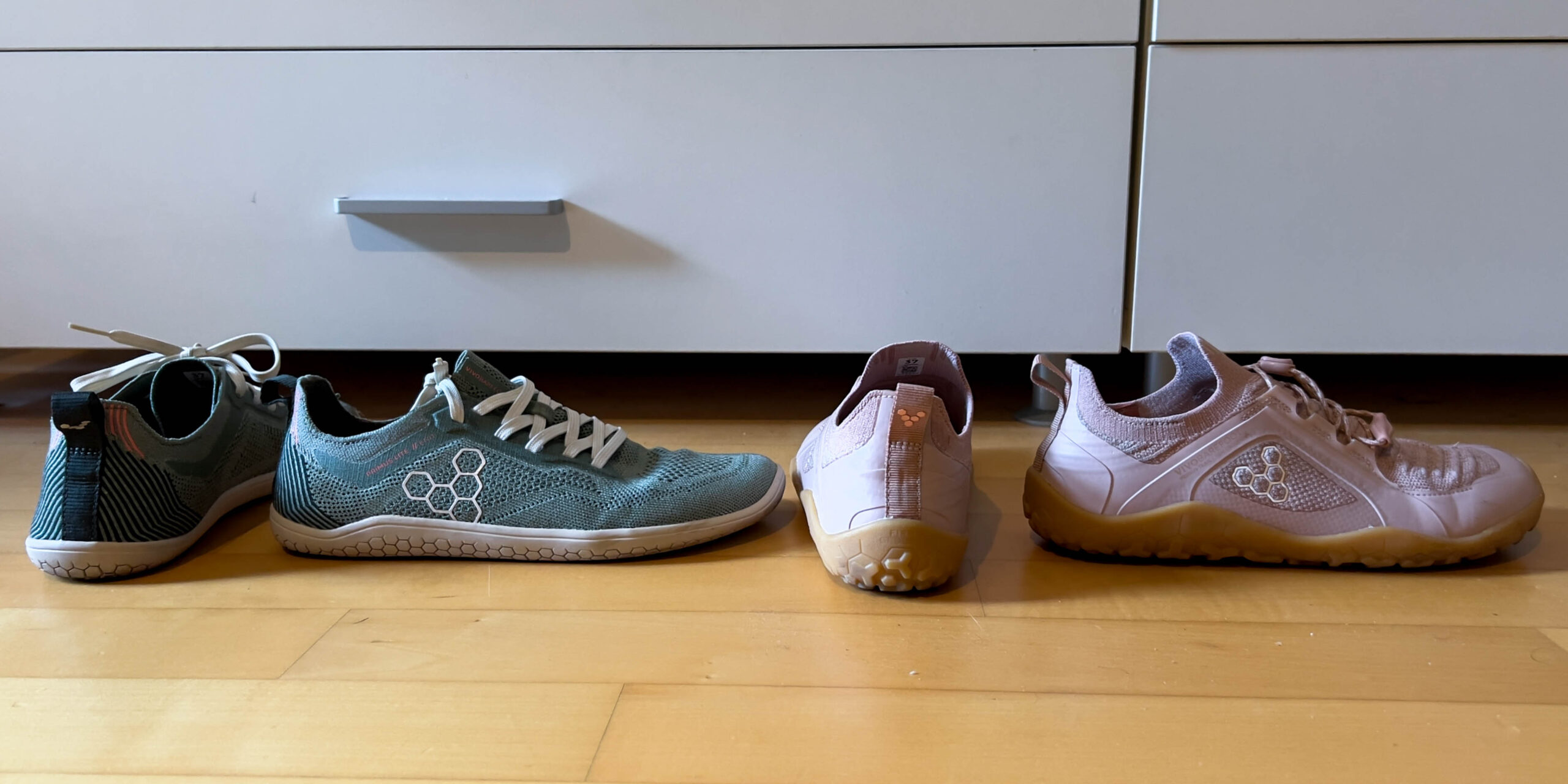
Both pairs lasted years, even after intense wear, and with the beloved blue on their absolute last legs, Vivobarefoot sent me two new pairs from the Primus range to put to the test: a new generation of Primus Lite (this time sporting an earthy green hue and flat white laces) and the slightly thicker and firmer Primus Trail Lite (in dusky coal pink with a quick tighten pulley lace system).
So how do the design changes fare and what adventure and activity scenarios is the Primus Lite range good for? Here’s my tried-and-tested look at this barefoot-feel shoe, its benefits and current setbacks.
Vivobarefoot Primus Review in a Snapshot
The premise of conventional sneakers and trainers is that their raised heels, arch supports, extra padding and cushioned soles do much of the heavy lifting that your feet should be doing themselves. Vivobarefoot’s philosophy in their design is that their ultra-thin, wide, and closer-to-the-ground construction in a 2–3mm sole of natural rubber, zero heel drop, and a toe box wide enough to let your foot splay naturally on impact, strengthens the feet over time.
Primus Lite Knit Natural
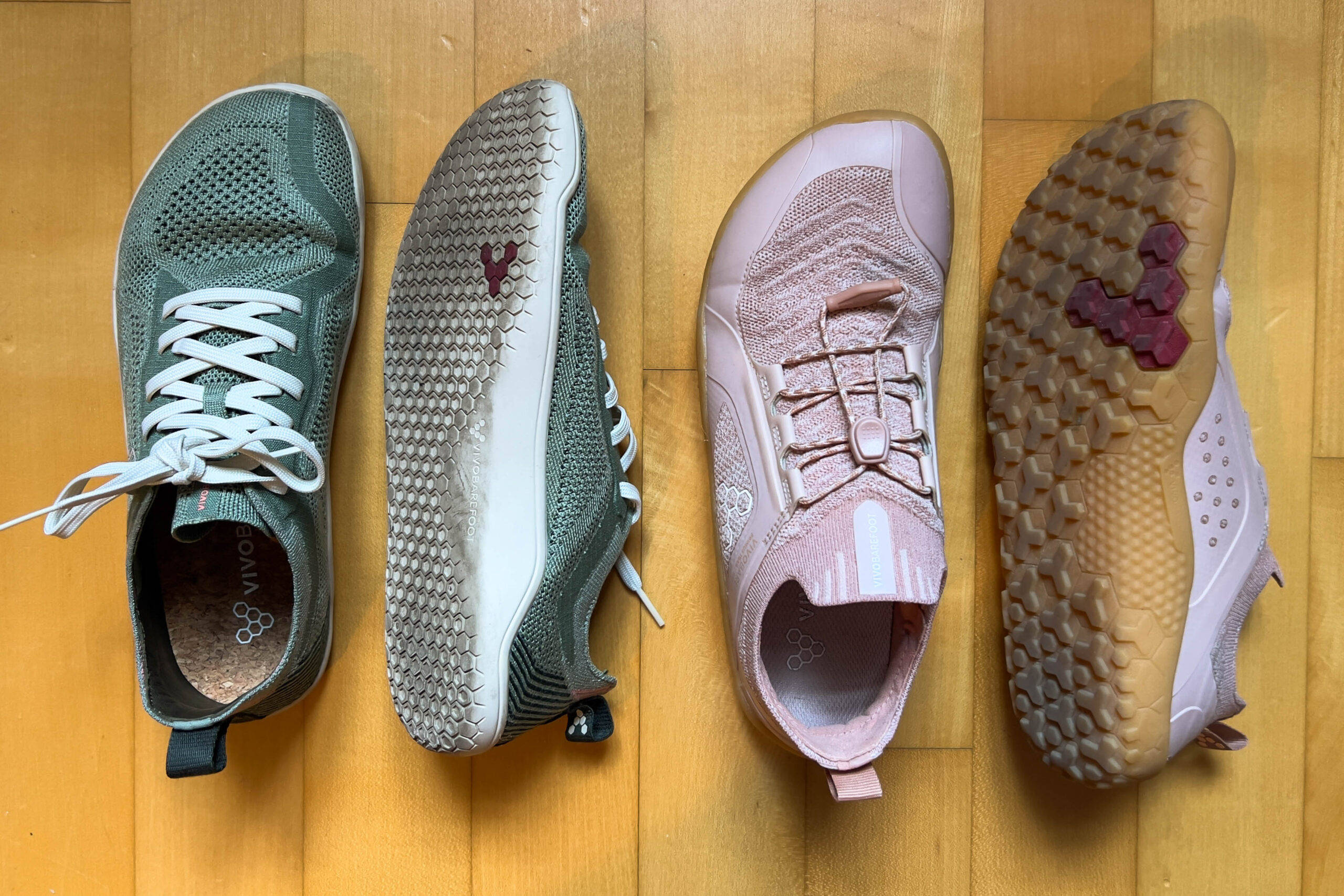
The Primus Lite Knit Natural remains light at 188g and is a more flexible shoe with a knitted upper and a lace-up, sock-like construction, allowing more stretch in movement and improved wind resistance. The 2mm sole is made of natural rubber and offers more ground feel and sensation underfoot than the slightly thicker Primus Trail. For comparison, the Primus Lite IV, which has a more breathable mesh outer, weighs 171g and has the same 2mm sole.
Best for: everyday city wear, casual hiking, long walks, and home workouts. In short, these are the ones I prefer for everyday use.
Retail Price: €160
Primus Trail Knit FG
The Primus Trail Knit is designed with a knitted upper, sock-like construction, a fast-close pulley lace, and a firm-ground outsole with a 3mm sole and 2.5mm tread-depth lugs. They weigh 360g.
Best for: trail running, biking, canyoning and light hiking. The one to pick when you need a little extra grip and support.
Retail Price: €160
All Vivos are made predominantly from recycled and plant-based materials. They also offer a Revivo service to repair worn-out or damaged shoes.
Primus Lite Sizing
I am an EU size 38 in shoes and have narrow feet, but I’m on the small side of 38 and often have to play around with 37.5-sized shoes, whether it’s sandals or hiking shoes. With Vivo shoes, I’m either wearing thin socks or no socks (when using in water), and I know the sizing runs a little larger than usual, mostly because of the wider toe box.
With this in mind, I find that I always have to size down to a 37 and still have a little room. However, there is a size guide and foot measurement instructions on the website to help you calculate the optimal fit.
Breaking in more robust Primus
As the design has evolved, the shoe has become more robust. Which is great, but I really have to wear my Vivos in a lot longer now. I first got blisters on the bone edge under the big toe while the shoe moulded to my foot and the material softened with wear.
Vivos are designed to be robust, handle more demanding conditions, and remain lightweight while retaining barefoot-feel properties. Each generation has become a little stiffer than the last, but these are design changes I expect to make the shoe last longer.
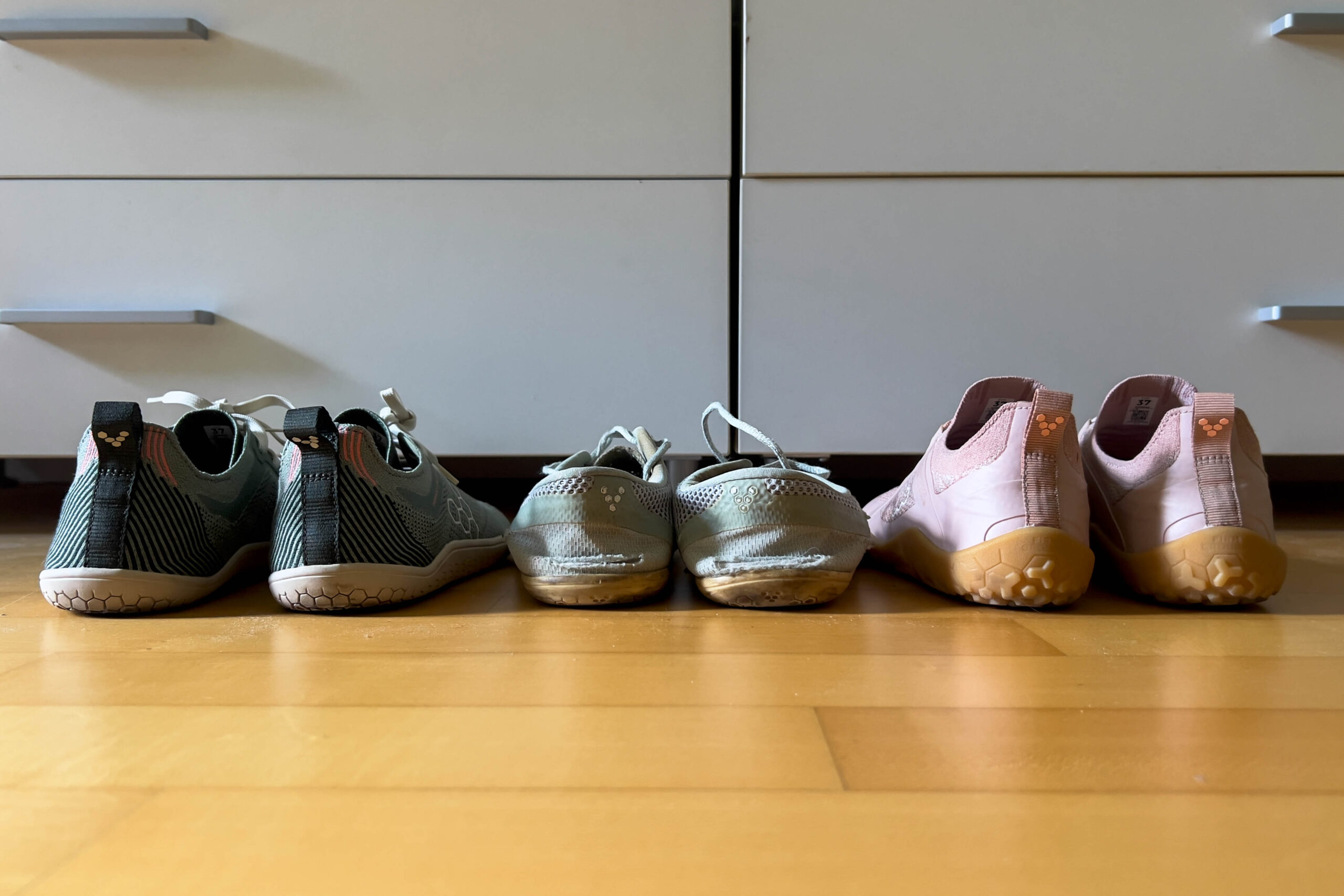
My previous Primus were bendy at the heel, and over time the material snagged. Now the heel has a more solid knit covering and a loop heel tab that, while designed to help you put the shoe on more easily, also adds an extra layer of protection.
I am hoping these extra-robust layers also help prevent damage to the knit – though there is always that risk on heavier terrain rather than from general movement.
Foot fatigue or foot strength?
On foot fatigue, I’ve never had it wearing Vivos. In the first few weeks, I did notice a little more muscle ache in the feet and legs when using them for many hours, but more akin to workout pain, not soreness from bad shoes. Vivobarefoot claims that six months of wearing their shoes increases foot strength by 60%.
Where I’ve Put the Vivobarefoot Primus Lite to the Test
Here’s what I’ve actually put the Primus through, and where they don’t quite cut it.
Canyoning and water wading
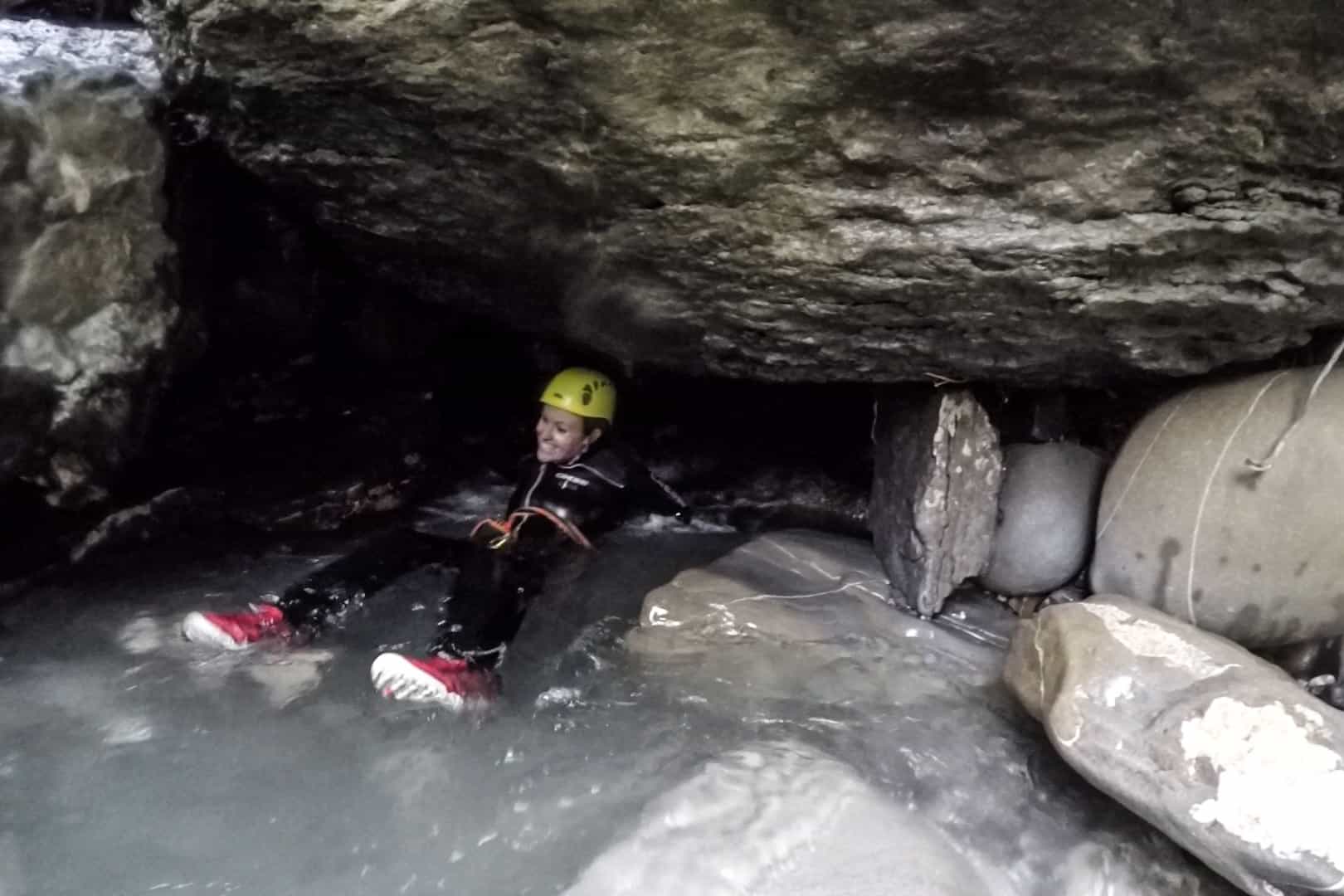
With a low pain threshold and terrible balance, I am pretty useless going barefoot in water where there are tiny stones and rocks. I’m from the 1980s jelly shoe generation and prefer some kind of foot covering. With most canyoning tours you are given slip-on shoes, but I’d rather my own and ones that lace up and feel more like a comfortable trainer rather than a rubber slip-on sock.
The Primus holds up well here: lightweight and comfortable, flexible for clambering and wading, and with good grip on submerged stone. The shoes fill with water, but drain fast, and the fit stays snug enough that your foot isn’t sloshing around. Even with poor balance, I’ve always survived with the Primus light sole, though the extra grip on the Primus Trail would be great on harder canyoning circuits.
Mountain biking and trail cycling
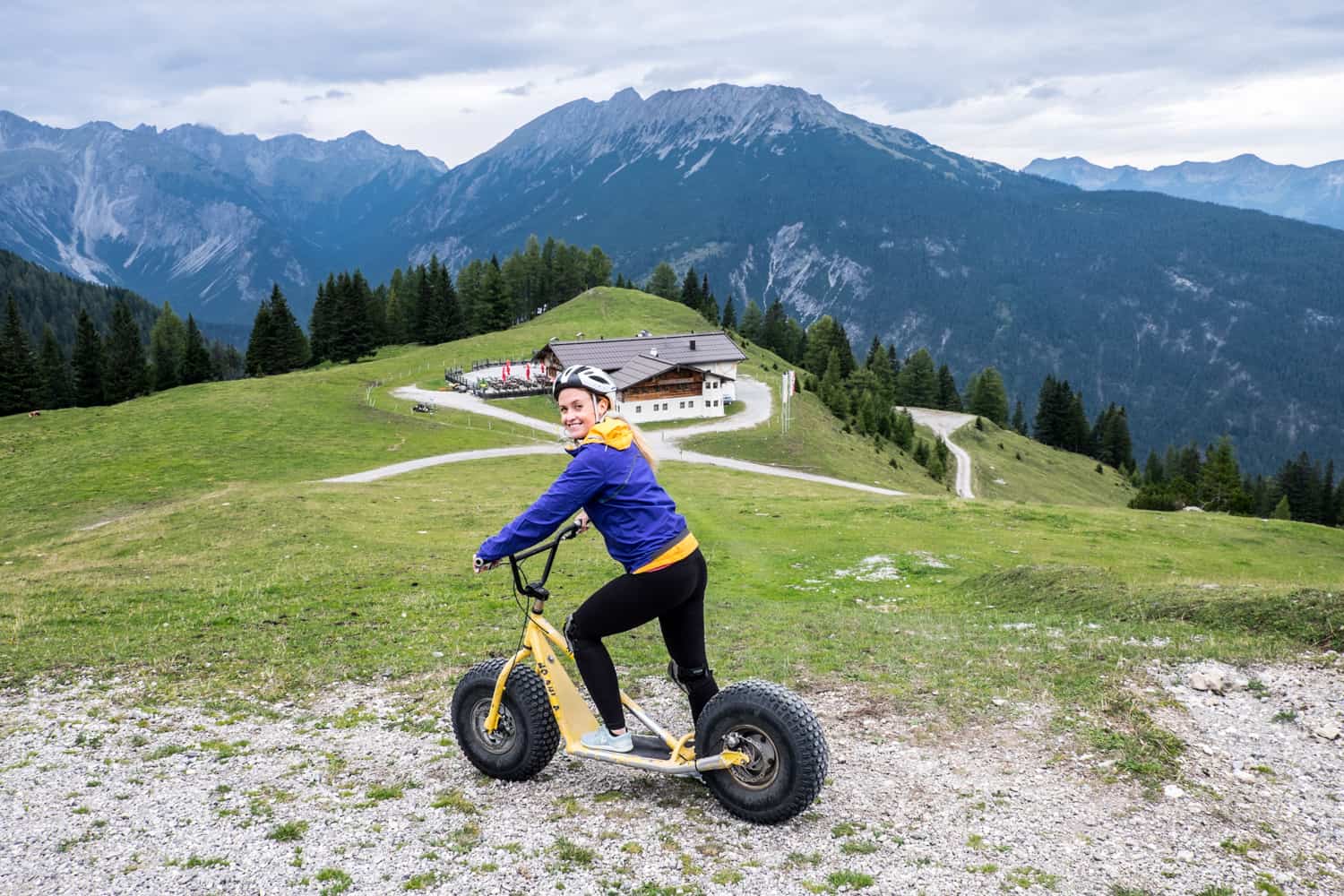
I’ve used the Primus on everything from e-bike days to mountain rolling and trail rides. The thin sole means you feel the pedal, which may sound uncomfortable, but it really isn’t; you simply have more control. The breathable knit upper holds your foot without pinching on longer rides, and the front of the shoe is wide enough that you are not putting too much pressure on your toes.
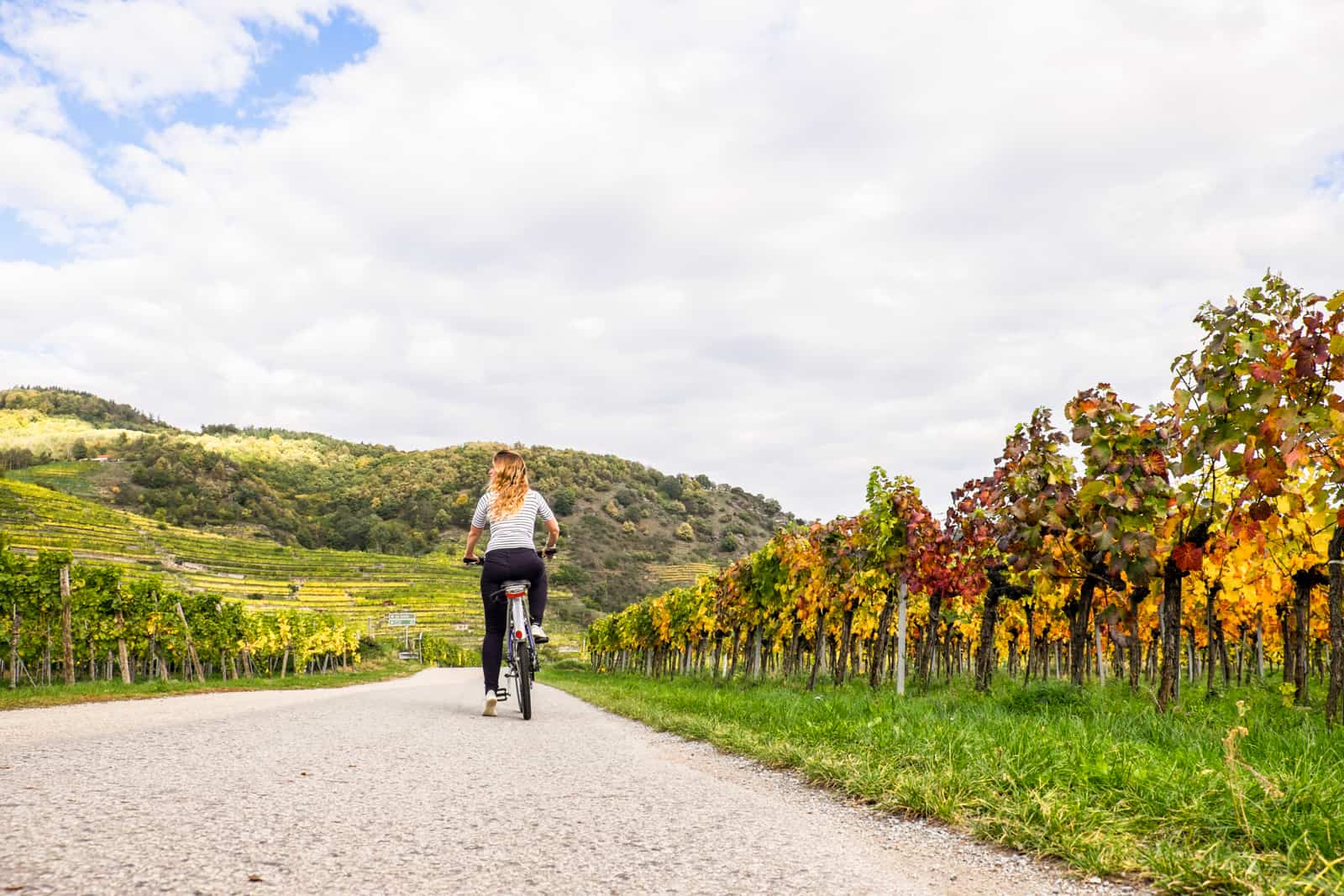
Serious downhill riders (which I am not) need something grippier and more protective. But for the average long bike ride with smaller ascents and descents, the Primus shoe is enough to feel closer to the pedal while retaining good grip.
Light forest hiking and climbing courses
This is where the Trail Knit is most comfortable. The lugs are enough for soft woodland terrain without being overkill; your step is light, and you feel the ground. On a Via Ferrata course, where there are often narrow ledges and less foot space, it helps to feel more closely gripped to the rock; chunkier shoes may make you feel as if you are stepping blind.
The only downside is the personal preference when it comes to lacing. The spring-activated pulley lock laces keep the shoes snug, but some may find them less controllable than traditional laces, especially on steep descents.
For long, challenging mountain hikes, I’m still going to wear my sturdier hiking boots, but in hot weather on gentler terrain, on Via Ferrata and high ropes circuits, the Trail Knit is a solid option.
City walking
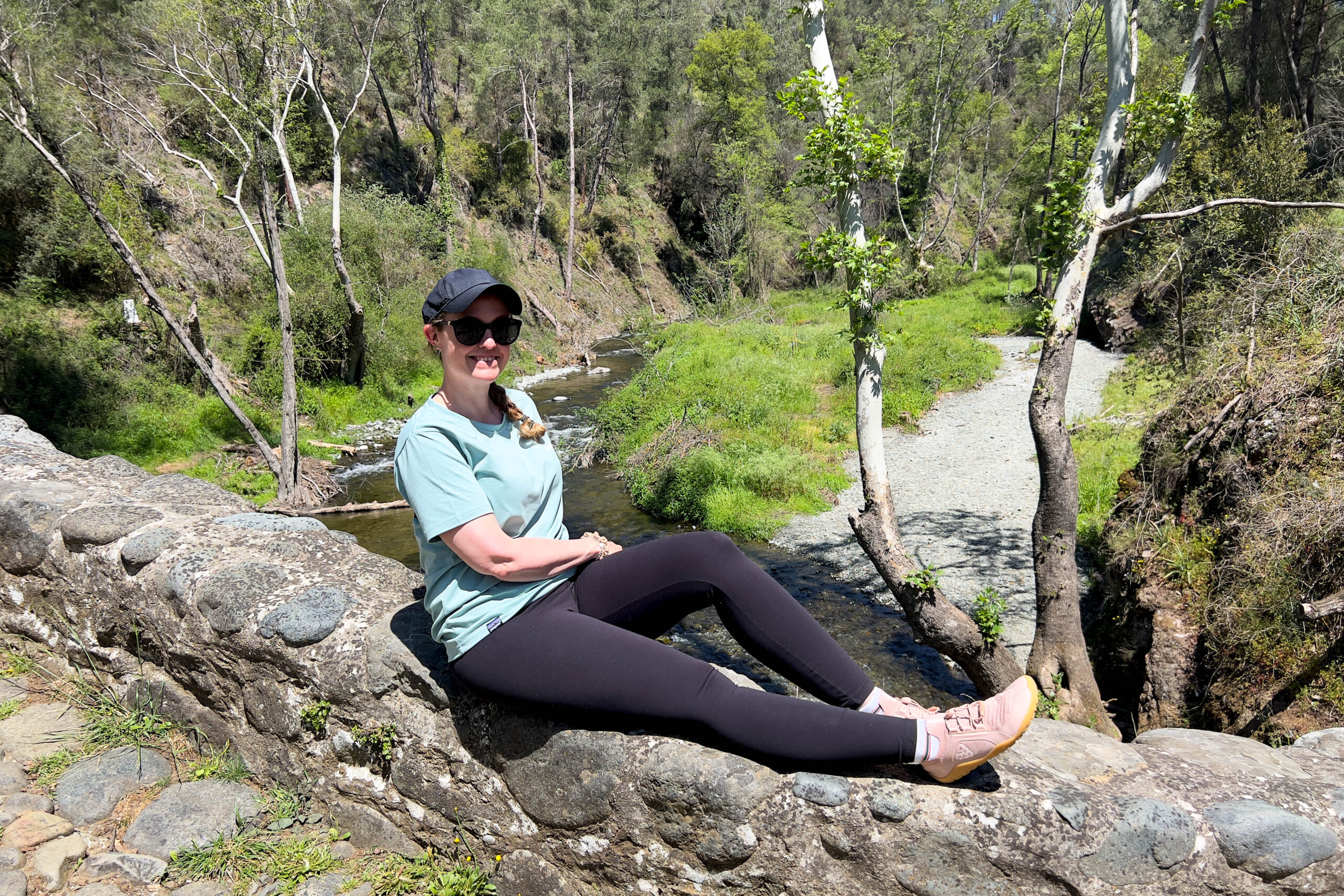
The thin rubber sole gives you pavement feedback. Some people might not like that and prefer an airy and raised feeling; I’ve grown to like it. On a more vain note, the colourway and style don’t scream practical ‘outdoor gear’; they look like fashionable, smart trainers.
However, the only downside of the Primus Lite range is that when traversing cobblestones and uneven gravel, you can feel every one. For the average paved city, they are superb, and if it rains, they dry out faster than almost any other shoe I’ve owned.
Home workouts
I live in an apartment where noise matters and heavy shoes are part of the problem. The Primus provides the ideal middle ground for lightweight landing, alongside stability and flexibility. The wide toe box lets your foot spread naturally during exercise; there’s no chunky sole that disrupts your base or limits heel lift. If you do any floor work or strength training, barefoot shoes are more functional and pliable than most trainers.
I am not a runner, so I cannot comment on the use of Vivobarefoot Primus in this particular context.
Vivobarefoot Primus Lite: Are they Worth It?
At €160 a pair, the Primus shoe isn’t an impulse buy.
Still, I’ve never replaced a pair of Vivos because they completely fell apart, only because I wore them into the ground over years of daily or extreme activity use. An approximate five years of wear per pair changes the maths.
If you are someone who moves between activities from trail to city to bike to living room floor and doesn’t want a different shoe for each one, the Primus could certainly be a good bet as a one-shoe activity all-rounder. The Trail Knit is a quick win for anything with a little more challenging terrain, and the Lite Knit Natural for everything else. Though I am eyeing up the white Gobi II leather sneaker for its ultra-smart, classic trainer-style look and barefoot benefits.



Leave a Reply