
Disclaimer: This post contains affiliate links to handpicked partners, including tours, gear and booking sites. If you click through or buy something via one of them, I may receive a small commission. This is at no extra cost to you and allows this site to keep running.
From the birthplace of Aphrodite to UNESCO World Heritage archaeological sites, I soon found there’s more to Paphos (Pafos) beyond its coastline resorts.
Cyprus, the third-largest island in the Mediterranean, has a wild and varied coastline, from the soft sands of party capital Ayia Napa and the luxury of Limassol to the ancient history of Larnaca and the resort-studded Paphos. Occasional headlines about British military bases and buffer zones do little to dent the island country’s appeal.
When Cyprus declared 2025 its record year for tourism, the western coastal wedge of Paphos was the mainstay, citing arrival numbers exceeding 30 per cent of the total, with low-cost, direct flights from across Europe bringing people to its 50-kilometre stretch of rocky coves and golden-sand coastline, including 16 Blue Flag Beaches.
But it’s not just a fly-and-flop destination. It’s a swathe of the island that bore a mythical goddess and a former capital city rebuilt by dynasties and empires, where Ptolemaic nobles were entombed, and Romans built their grand complexes – a cluster of ancient sites that are all minutes from your coastal hideaway. You can even inch closer inland to the mountains and be back before dinner.
Beyond relaxing at the resort, here’s how I spent my four days in Paphos.
Beachfront Hospitality – Where to Stay
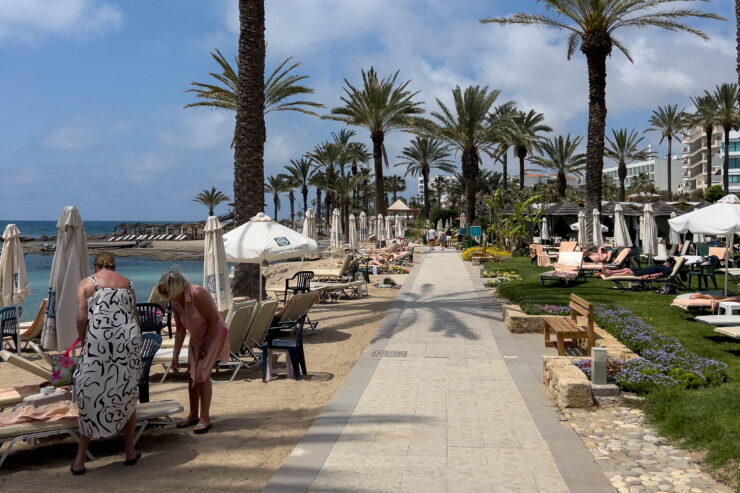
Dozens of beach resorts line the Kato Paphos coastline, steps from rocky coves, narrow sands and azure waters. You may want to stay closer to the central harbour and main archaeological sites; south of the harbour, towards the airport, is a quieter strip, away from the thick of it, but a 30-minute walk along the promenade to the harbour (3km). Bolt and local taxis are reliable here, if not renting a car.
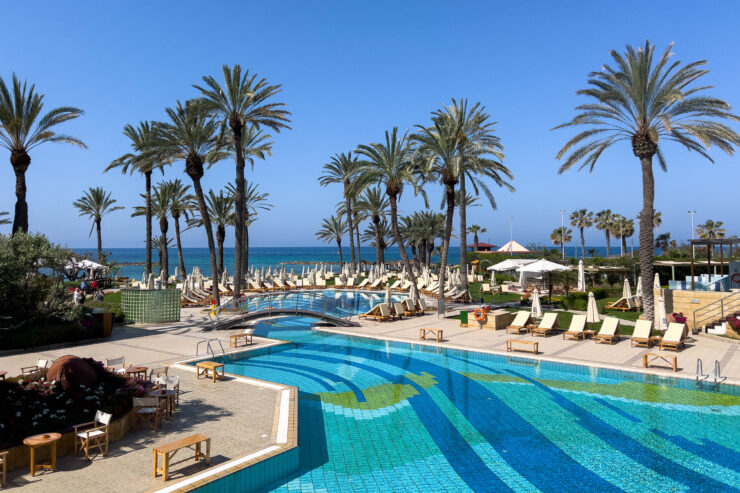
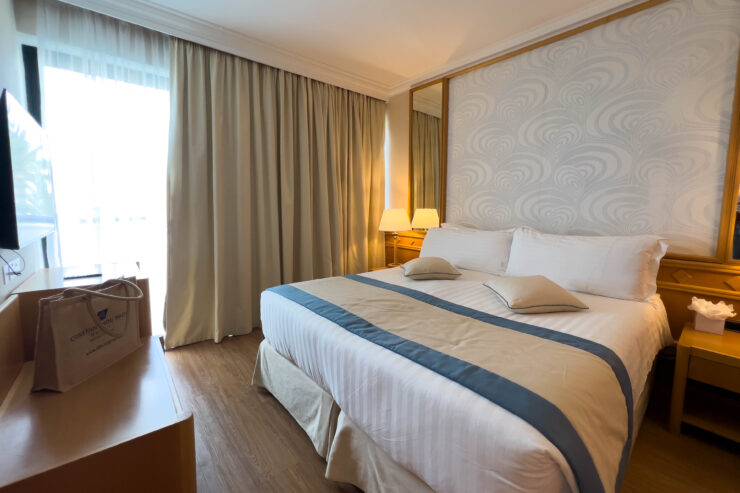
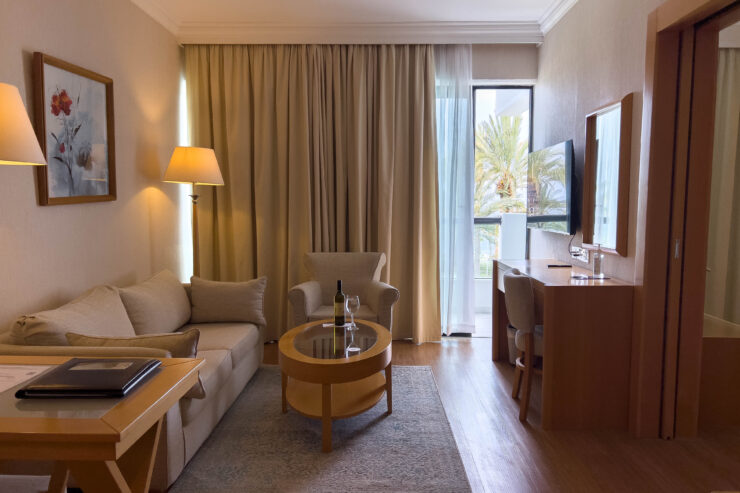
I checked into the recently renovated Constantinou Bros Asimina Suites hotel – a 5 five-star adult-only property on the southernmost Geroskipou beachfront, southeast of the centre. Its suites are styled in pared-back elegance with light woods, a linen palette and marble bathrooms, though the top draw is the balcony view over the Mediterranean and its watercolour sunsets (a bonus if your room has its own pool). There’s plenty to keep you here, including two interconnecting outdoor pools, tennis courts, sunbeds on green lawns and soft sands, and a rooftop bar. The enormous breakfast spread is a genuine highlight, and you’ll return each evening to a pick of four restaurants (a la carte and buffet) after a day of sightseeing; the beachfront Kymata was my favourite spot.
The Historic Harbour and Old Town
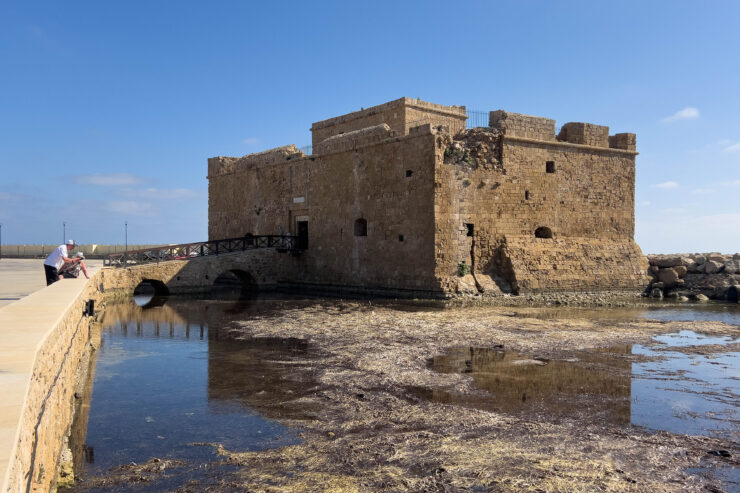
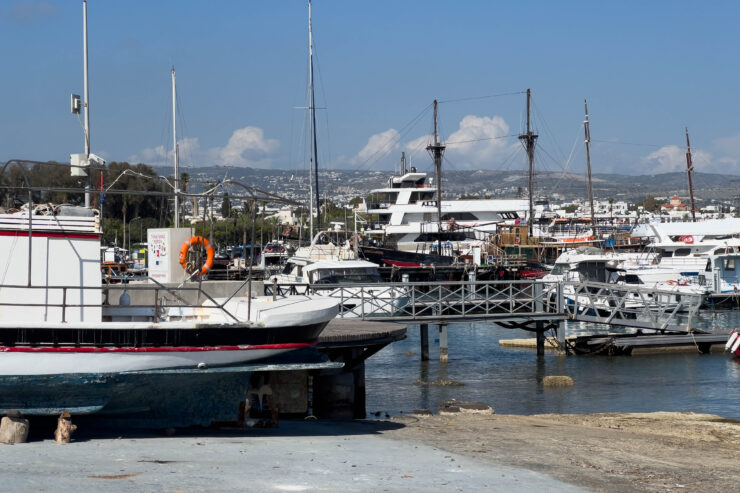
The ancient Paphos harbour remains a working port, today a promenade of seafood tavernas, like the meze feast-serving Theos, moored fishing boats, and glass-bottomed boats and day cruisers that head north to the Edro III Shipwreck, the Blue Lagoon and the Akamas Peninsula. The short path connects to the port’s beacon of history – the medieval Paphos Castle symbolising the defence of a stretch of coastline that has been fought over for centuries; built by the Byzantines in the 13th century and repurposed by the Lusignans and Venetians, rebuilt by the Ottomans in 1592 and used for salt storage by the British in the late 19th century.
The historic centre, Paphos Old Town, sits up the hill from the harbour, a compact bustle of local life spread amongst the stone remains of medieval, Ottoman and neoclassical architecture. A highlight is Ibrahim’s Khan, a former caravansary (traveller accommodation and stables) that was abandoned by the 1960s but, with EU funds, was revived as an arts, crafts and cultural hub and a retail space selling local wares and traditional products.
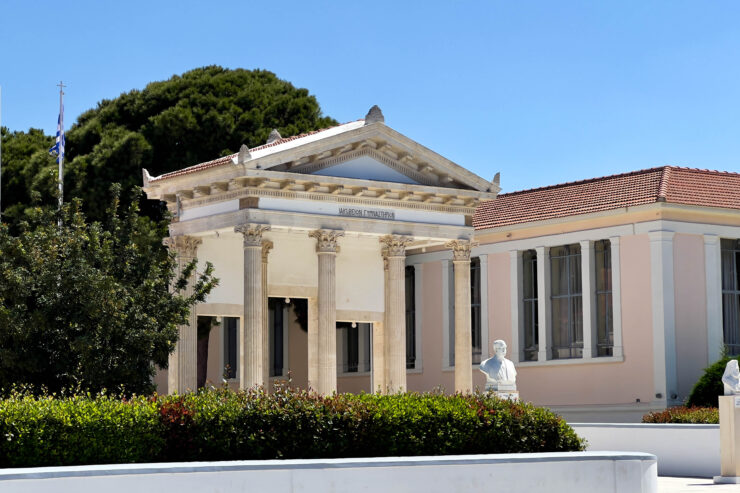
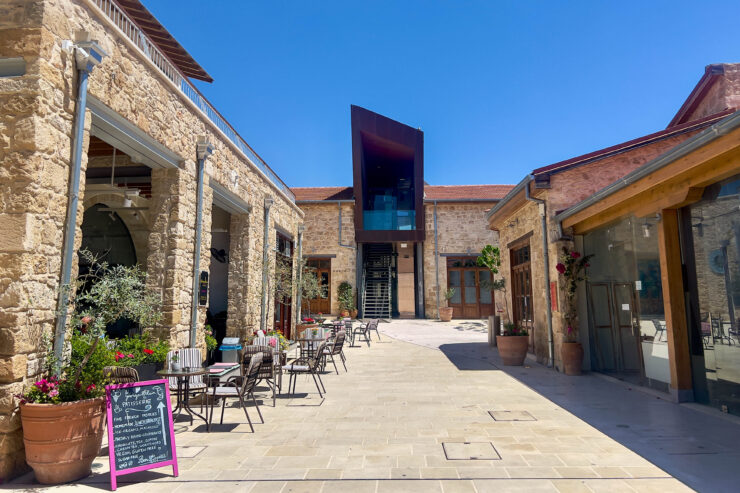
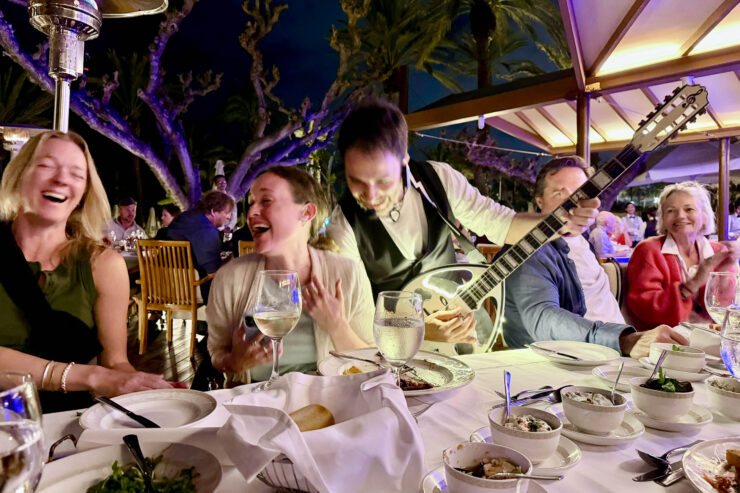
Many sites, including the century-old Municipal Market, bars and restaurants are more geared towards visitors, though you will find Cypriot kafeneio (cafes serving traditional Cypriot coffee using a small copper briki pot), al fresco joints serving the modern brew Freddo espresso (a shot of coffee topped with a mass of milk foam) and lively tavernas (Pagkratios featured live music during our evening feast).
A Roam Through Roman Paphos
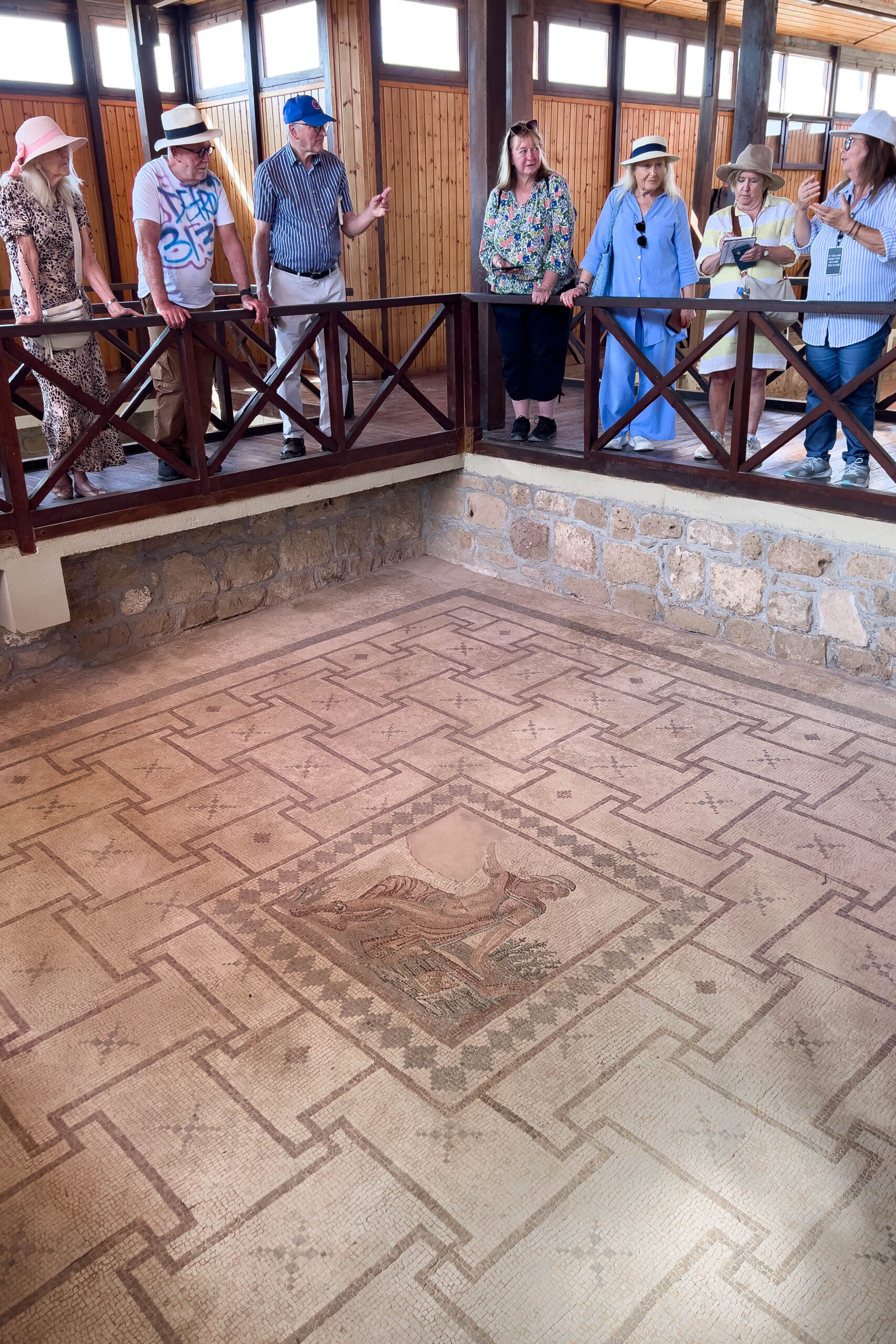
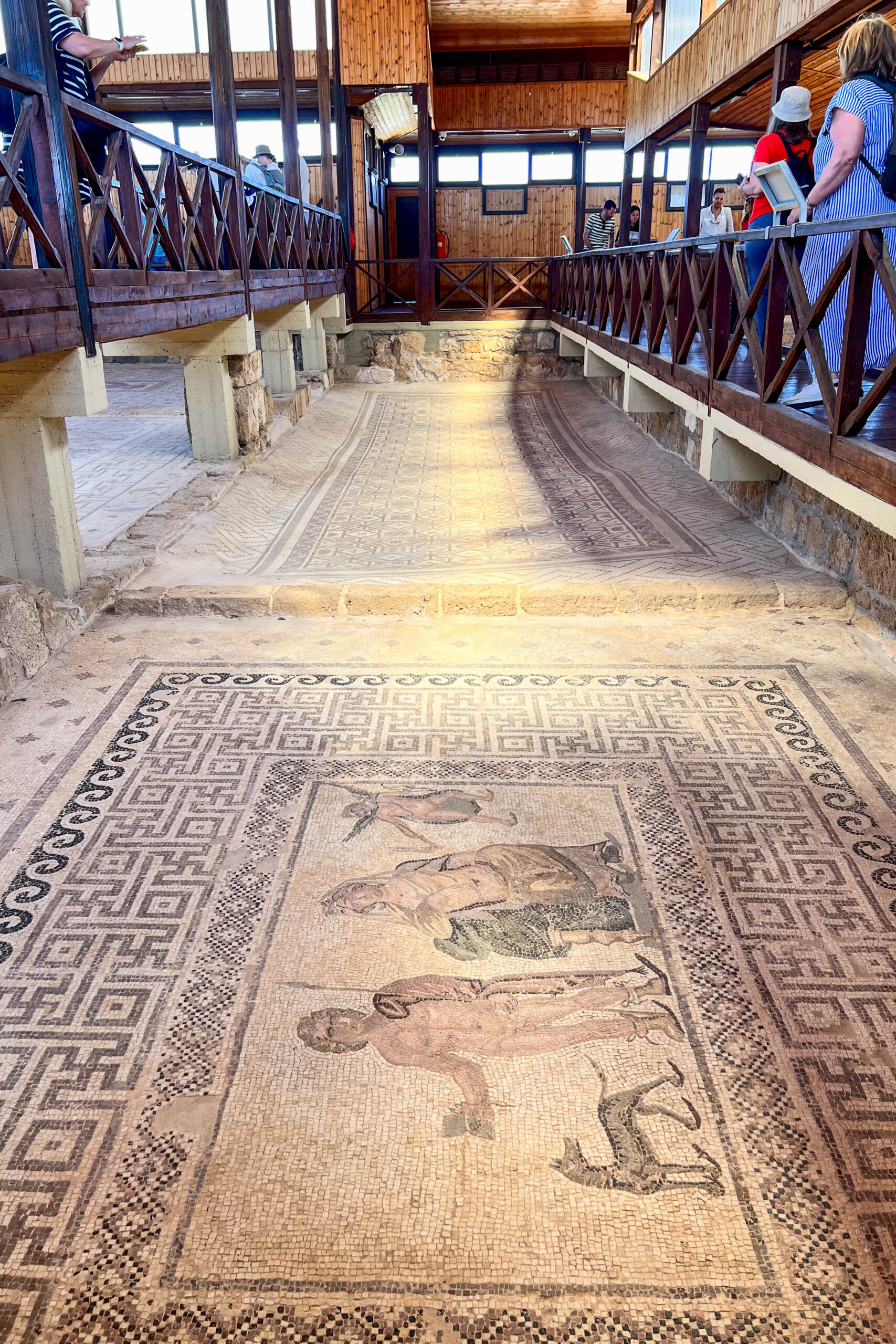
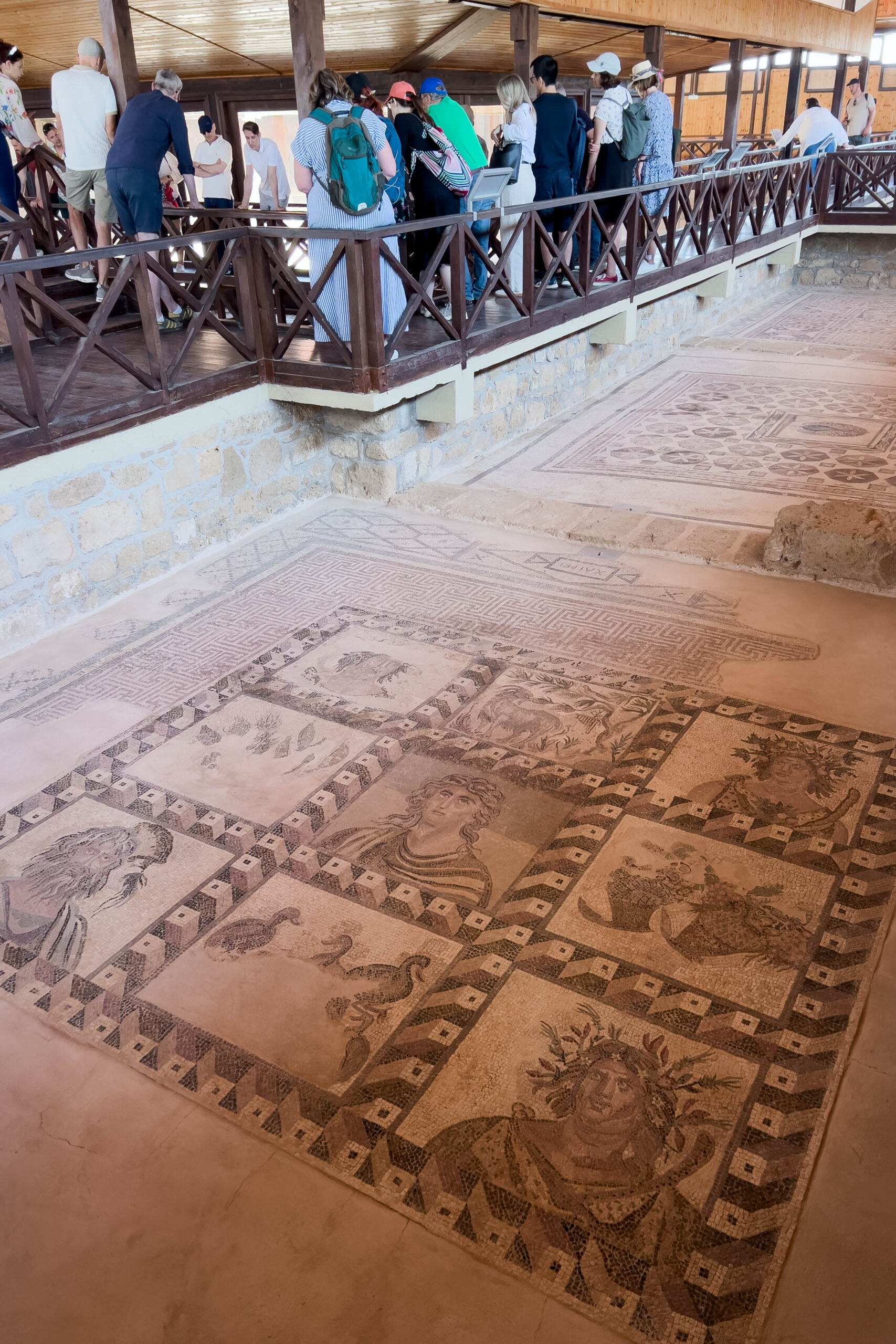
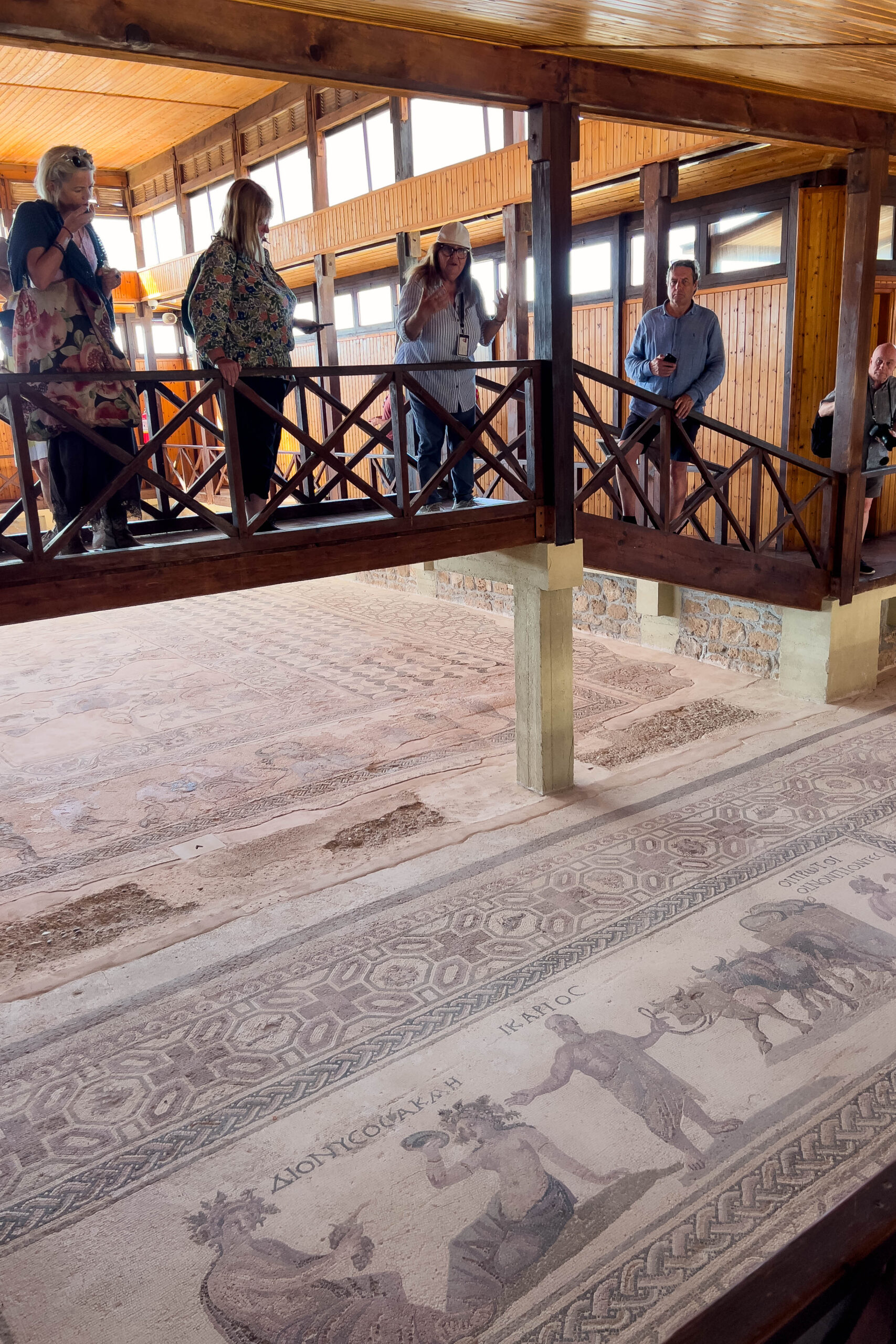
Archaeological sites ring the centre of Paphos, remnants of its time as the capital city of Cyprus from the 2nd century BC to the 4th century AD. Paphos Archaeological Park sits behind the Paphos Port shoreline, a UNESCO World Heritage Site since 1980 that holds a preserved cache of ruins including Roman villas (the houses of Dionysos, Theseus, Aion and Orpheus), the Odeon theatre, Agora marketplace, and the ruins of the fortified Saranta Kolones (Forty Columns) Castle.
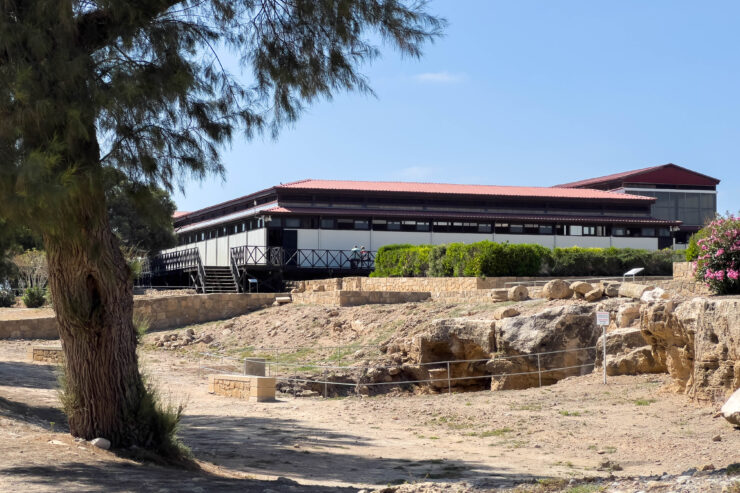
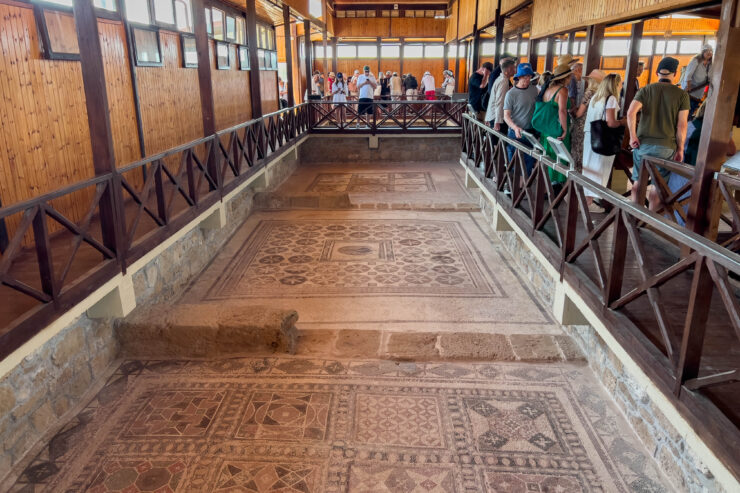
If you are going to beeline for one site, it’s the House of Dionysos, a Roman aristocrat’s villa filled with intricate late-2nd-century mosaic floors. From its elevated wooden bridges, gaze upon Greek mythological artworks that were lost to the 4th-century earthquake and remained buried beneath debris for centuries until their accidental discovery by a farmer in 1962.
Stepping Into the Necropolis of Nobles
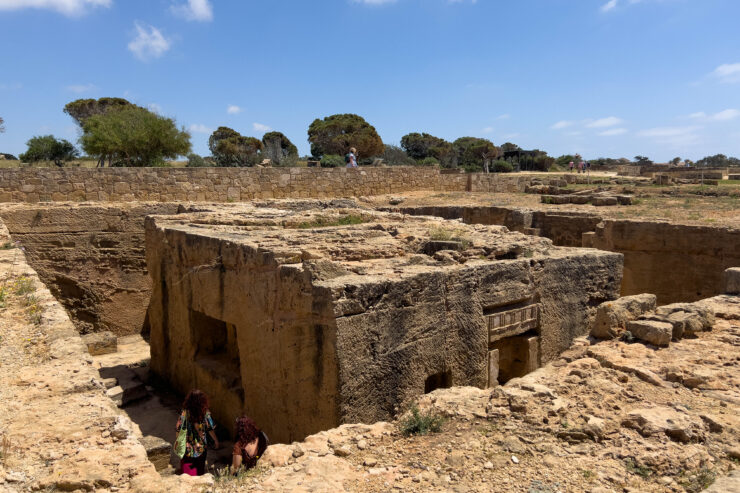
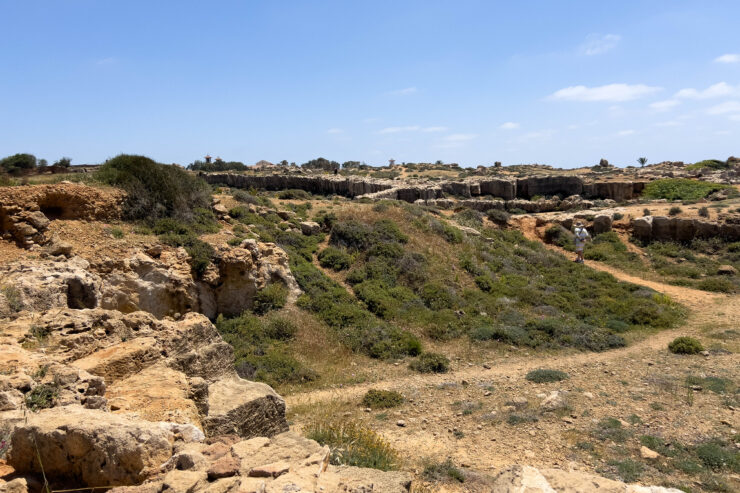
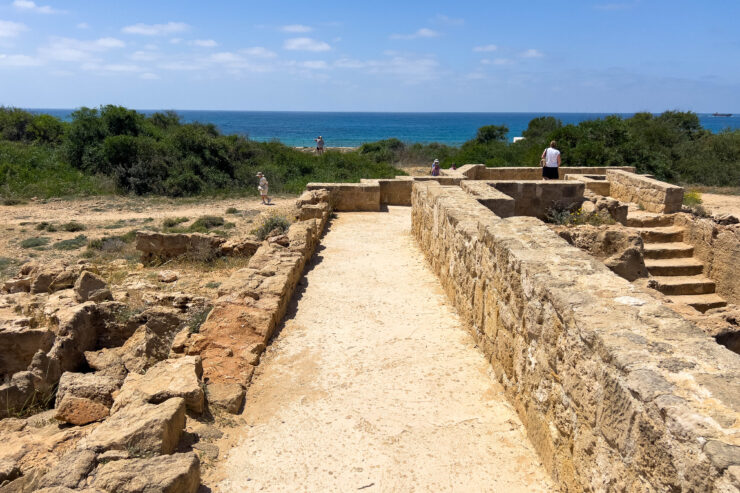
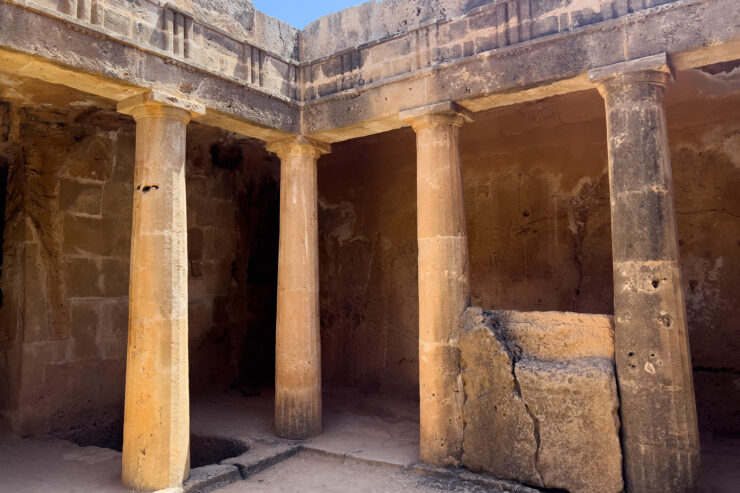
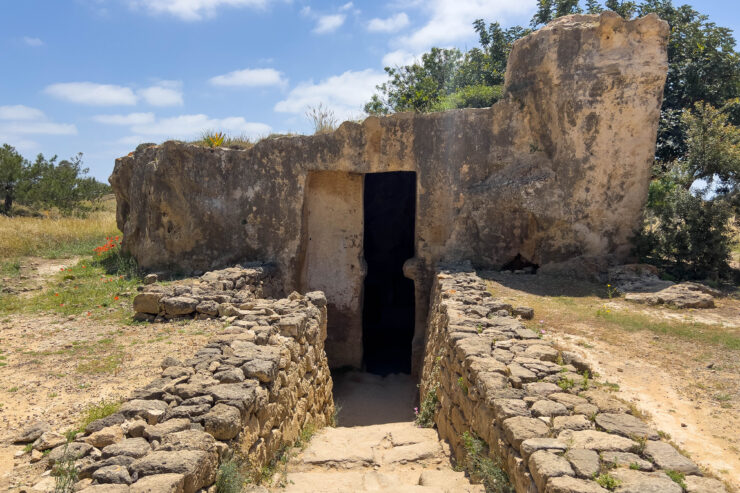
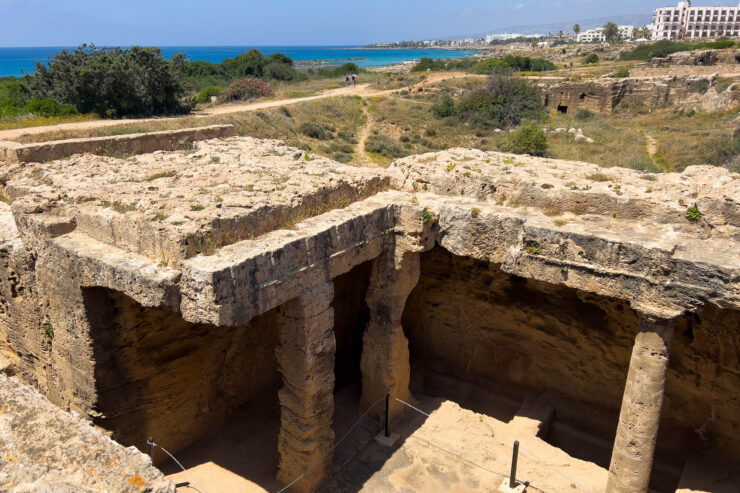
The Tombs of the Kings site is located north of the harbour and is part of the Paphos Archaeological Park (an additional ticket is required). The UNESCO-listed necropolis, despite its name, was not an ancient burial ground of kings; the arid plain, strewn with rock-carved subterranean burial sites, was built between the 3rd century BC and the 4th century AD for Ptolemaic aristocrats and senior officials. You can descend via ancient stone dromos steps into the larger villa-like tombs – open-air constructions with Doric-columned atrium courtyards, enclosed side chambers, pit graves and ossuaries.
Paphos & the Legend of Aphrodite
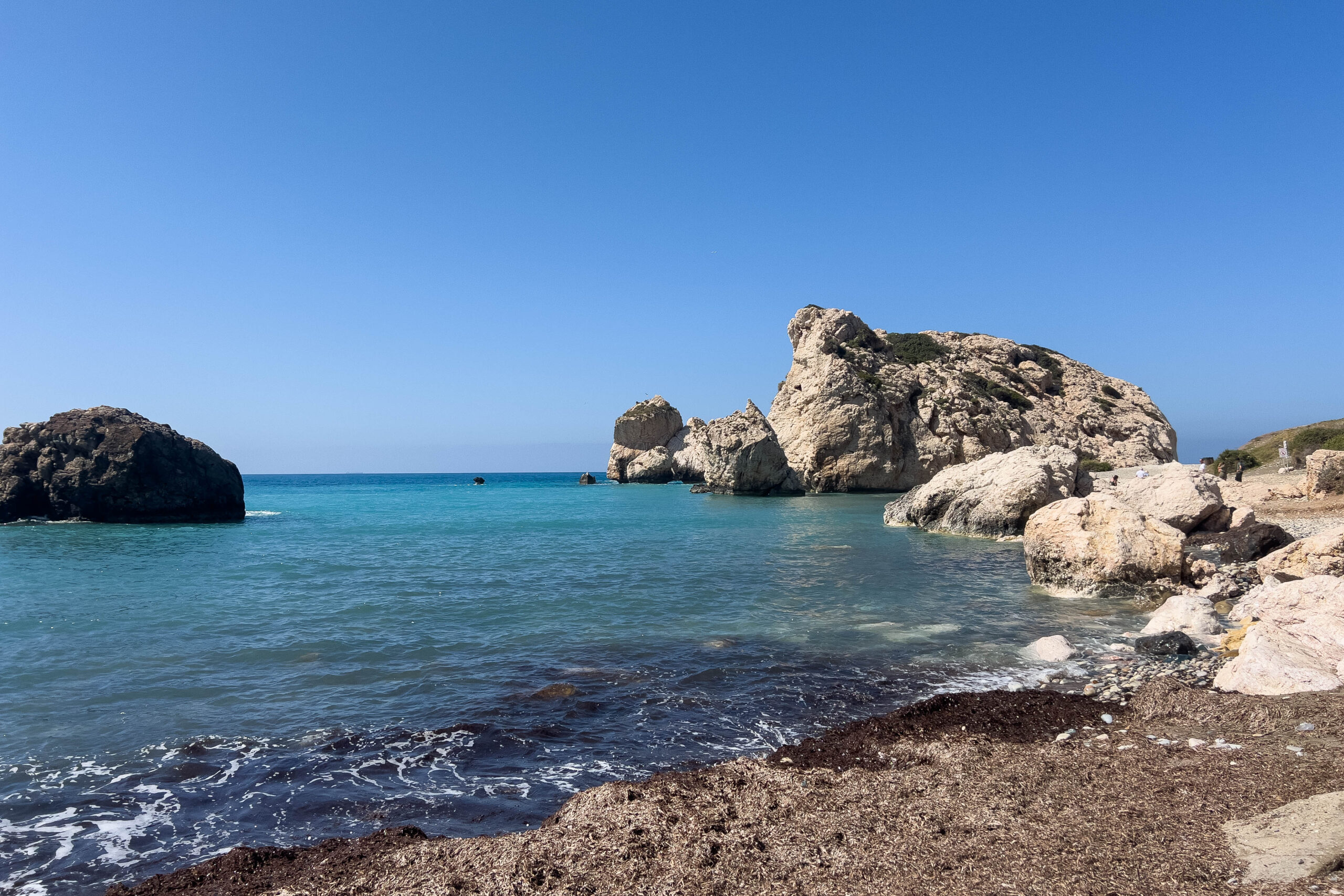
The mythically bound limestone sea stack of Petra tou Romiou rises out of the sea along the coast road toward Limassol; according to the tale of Greek poet Hesiod, these jutting boulders are where Aphrodite, the goddess of love and beauty, was born from white sea foam before being carried to the shore of Paphos on a seashell.
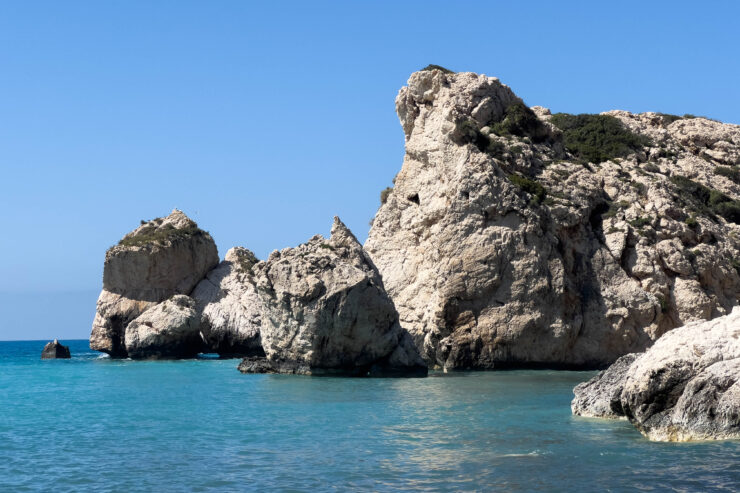
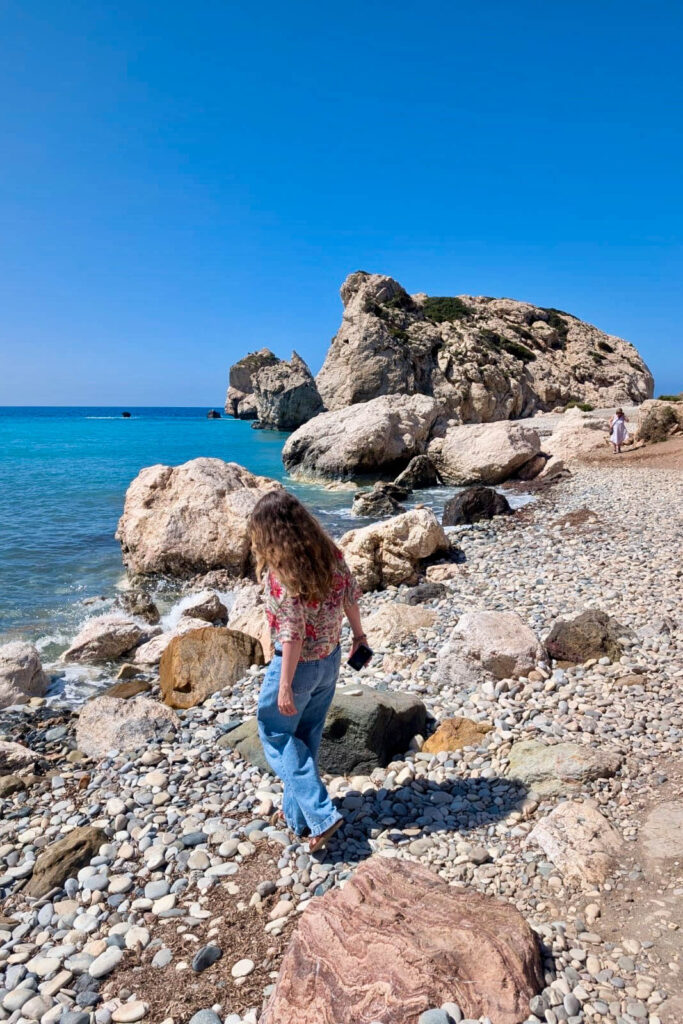
As legend goes in Paphos, if you swim around Aphrodite’s Rock three times under a full moon, the blessing of eternal love and beauty will be bestowed upon you. Often unadvisable with strong currents, though admiring this geological site from the pebble shoreline is just as fascinating as the myth it’s shrouded in.
The grotto Baths of Aphrodite, reached via a vista-packed nature trail through part of the northwestern Akamas Peninsula of Paphos, are where it is believed the goddess bathed. Though seeking eternal beauty is also hard here; bathing is prohibited.
Coastline to Mountains
Drive 60 to 90 minutes inland from Paphos, and you can get into Cyprus’ central mountain range. I toured the Troodos Mountains with local guide, Panicos Neofytou, winding the curved roads of the Troodos National Forest through valley viewpoints and vine terraces on the mountain’s southern slopes.
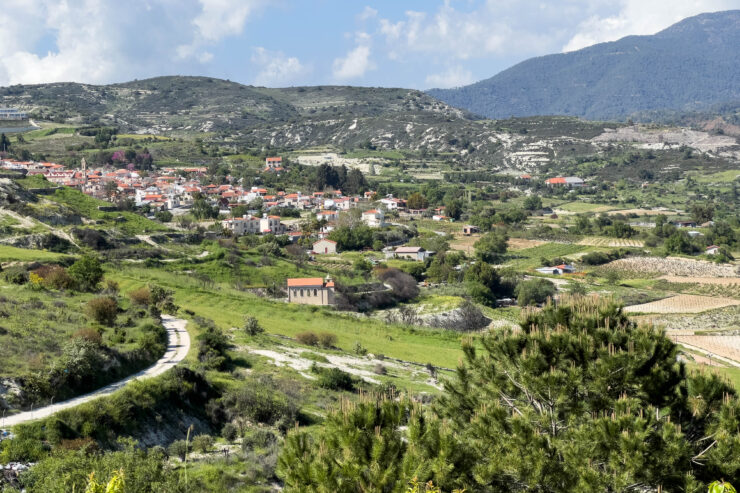
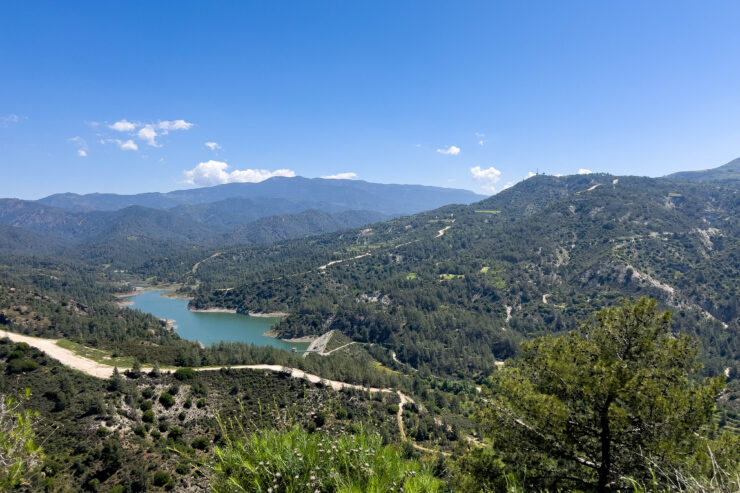
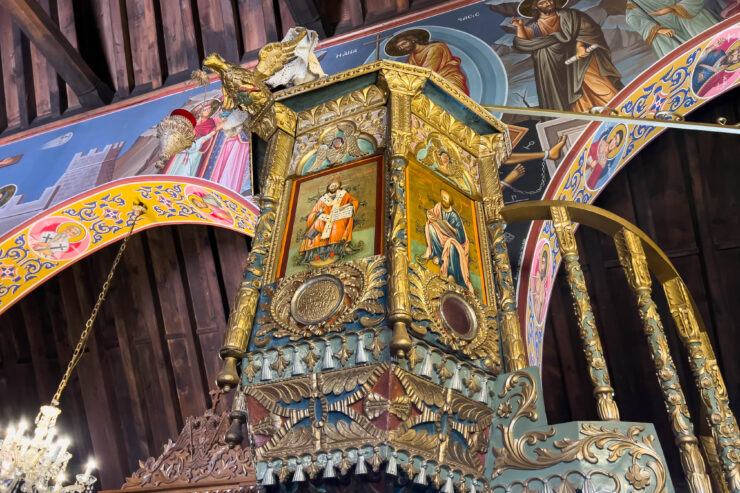
The full-day trip took us through the historic rural villages of Salamiou and Kelokedara, with their traditional stone houses and Cypriot coffee pit stops, and to the stop-the-engine viewpoint at Arminou Dam, with its stretch of vivid blue between foliage-blanketed foothills. We clambered around the Hantara Waterfalls, a cascade 8 meters high in a pocket of forest, and marvelled at the frescoes in the 18th-century wood-carved, gilt Orthodox Trooditissa Monastery.
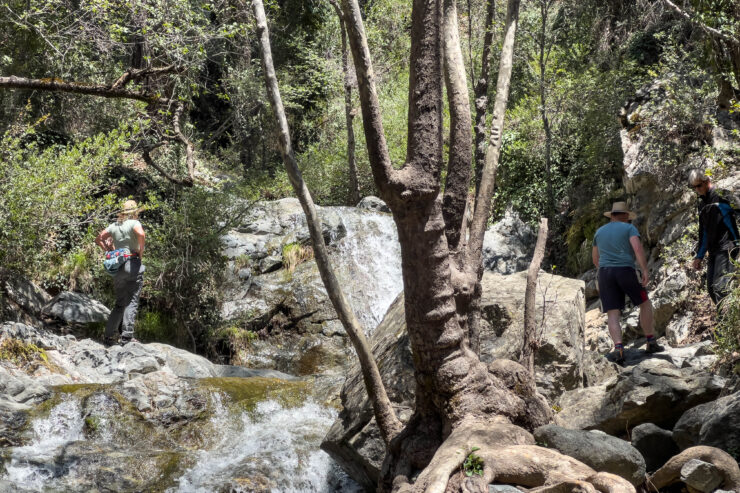
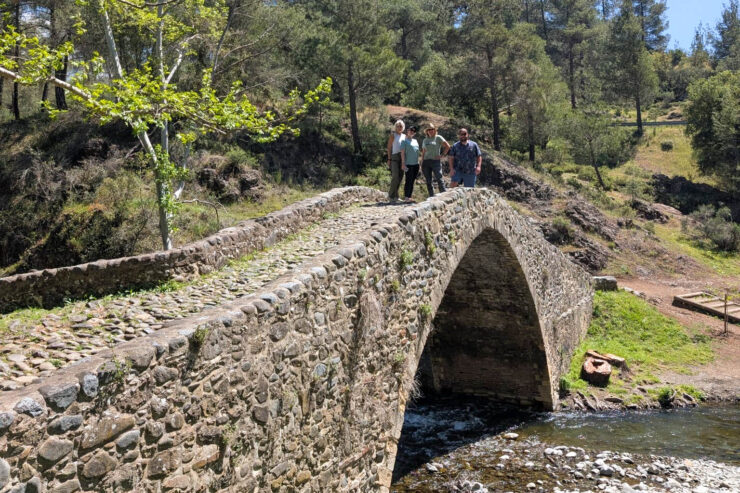
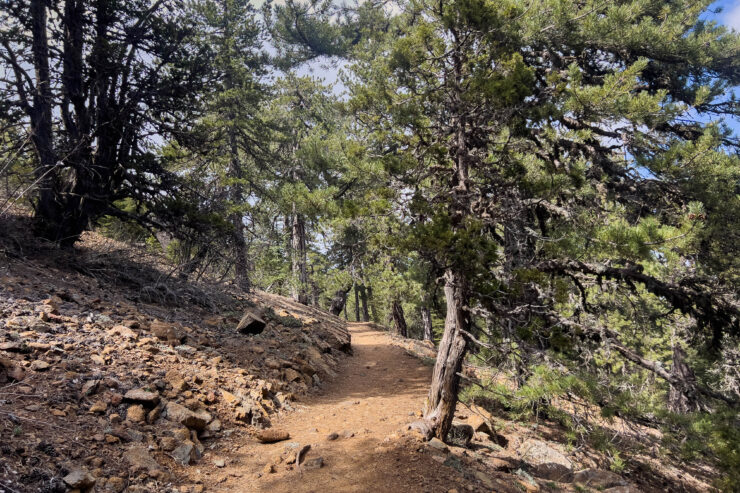
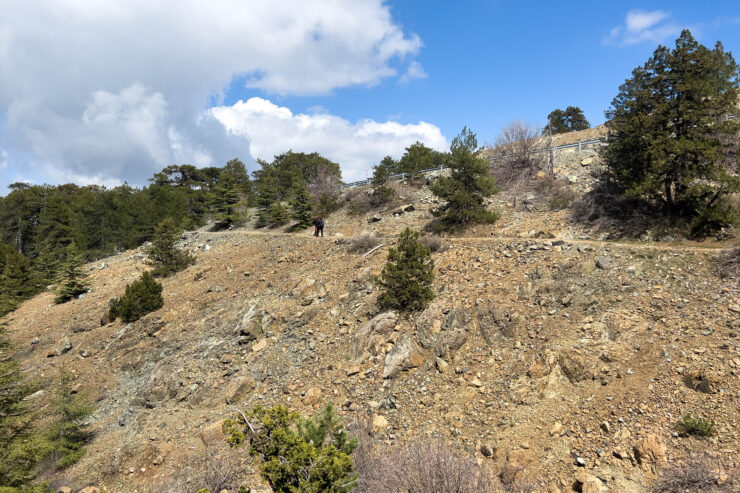
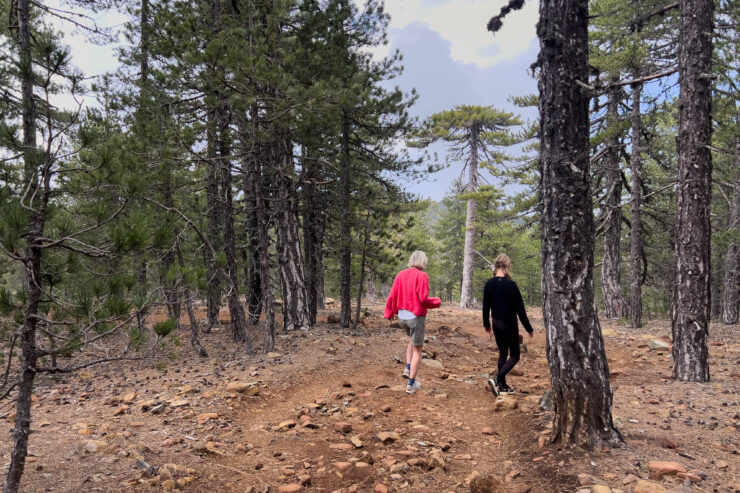
The afternoon was spent on short hikes, treading a small section of the trail to the 16th-century Tzielefos Venetian Bridge and taking the short track on the rugged giant black pine Artemis Nature Trail just below the 1,951-metre-peaking Mount Olympus summit to stand (close enough to) the highest point of Cyprus.
Paphos may be the gateway to a pearl-string of beaches, but its historical UNESCO sites and rugged natural landscapes show there’s more to western Cyprus beyond its resort confines, even if the sun, sand and sea resorts hold their own appeal.
This article is in collaboration with Pafos Regional Board of Tourism and Constantinou Bros Asimina Suites, who hosted me during my stay. All opinions remain my own.



Sandra says
Paphos looks like one of those places where the history is genuinely layered. The Tombs of the Kings and the mosaics are the obvious highlights, but I like how the coastline and the archaeology sit right next to each other. Roman mosaics in the morning, swimming off a rocky beach by the afternoon.