
Disclaimer: This post contains affiliate links to handpicked partners, including tours, gear and booking sites. If you click through or buy something via one of them, I may receive a small commission. This is at no extra cost to you and allows this site to keep running.
Outside the Old Town area, you’ll find its trendy New Town alter ego – a city much cooler than you think. Here’s what to do in Dresden, Germany.
Dresden is considered one of the most beautiful Baroque cities in Europe, and while sightseeing in the Old Town is obligatory, it is also very limiting to understanding its identity as a city scarred by post-war destruction and Soviet East Germany. When you visit Dresden, you’ll soon see two distinct sides of the city to explore.
Beyond the city’s cultural heart lies a more trendy, modern Dresden, where Soviet GDR landscapes have been reinvented and where culture intersects with vast green spaces.
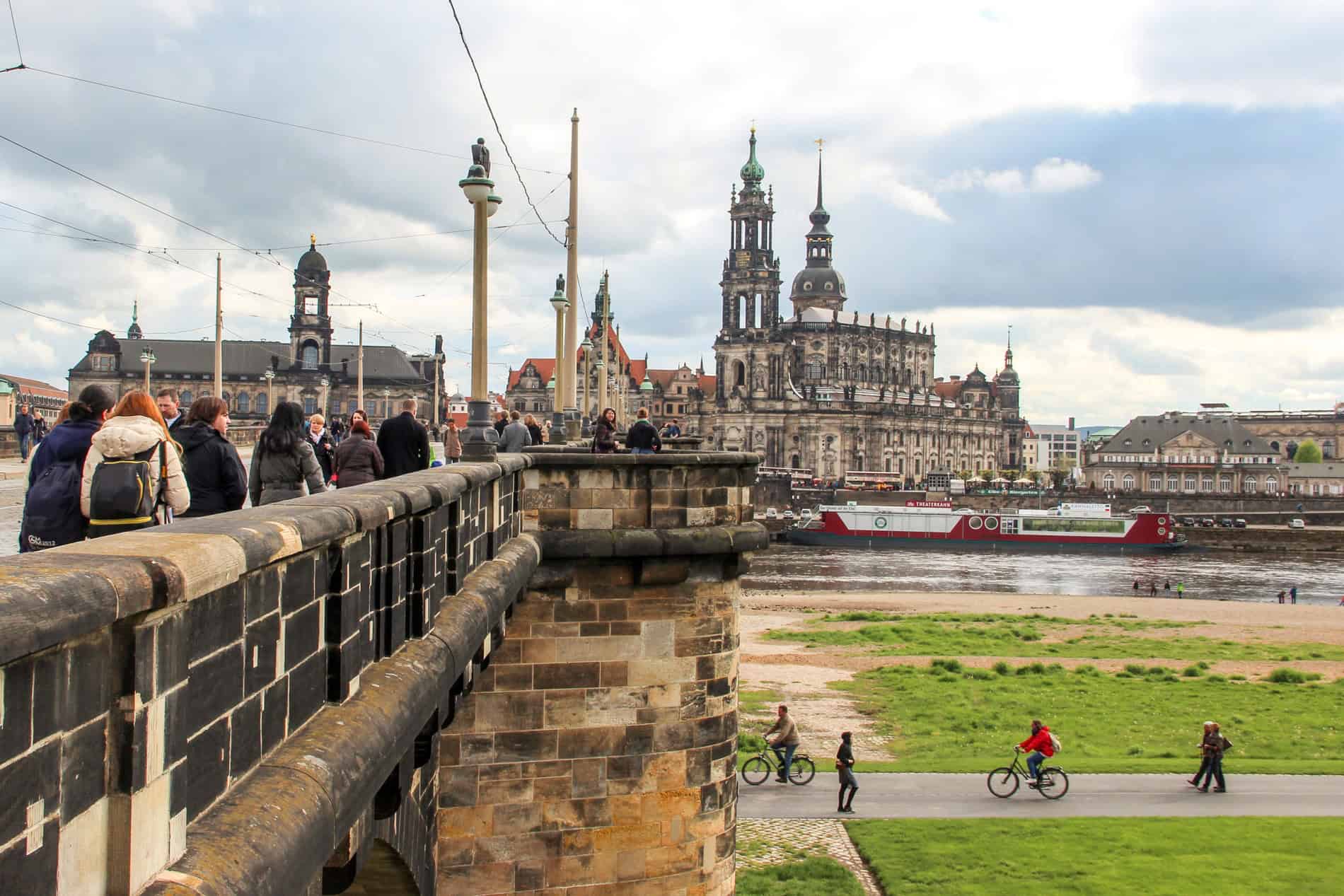
If you look at a map of Dresden, you will see that the Augustus Bridge and the Elbe River cut the city into two distinct parts, surrounded by parkland. It’s natural to veer towards the Old Town first, and it should not be discounted. I stayed here because it is a convenient base for exploring and centrally located for all transport networks. It’s also here that your journey through the city’s history will naturally begin and be slightly distorted. Here’s why.
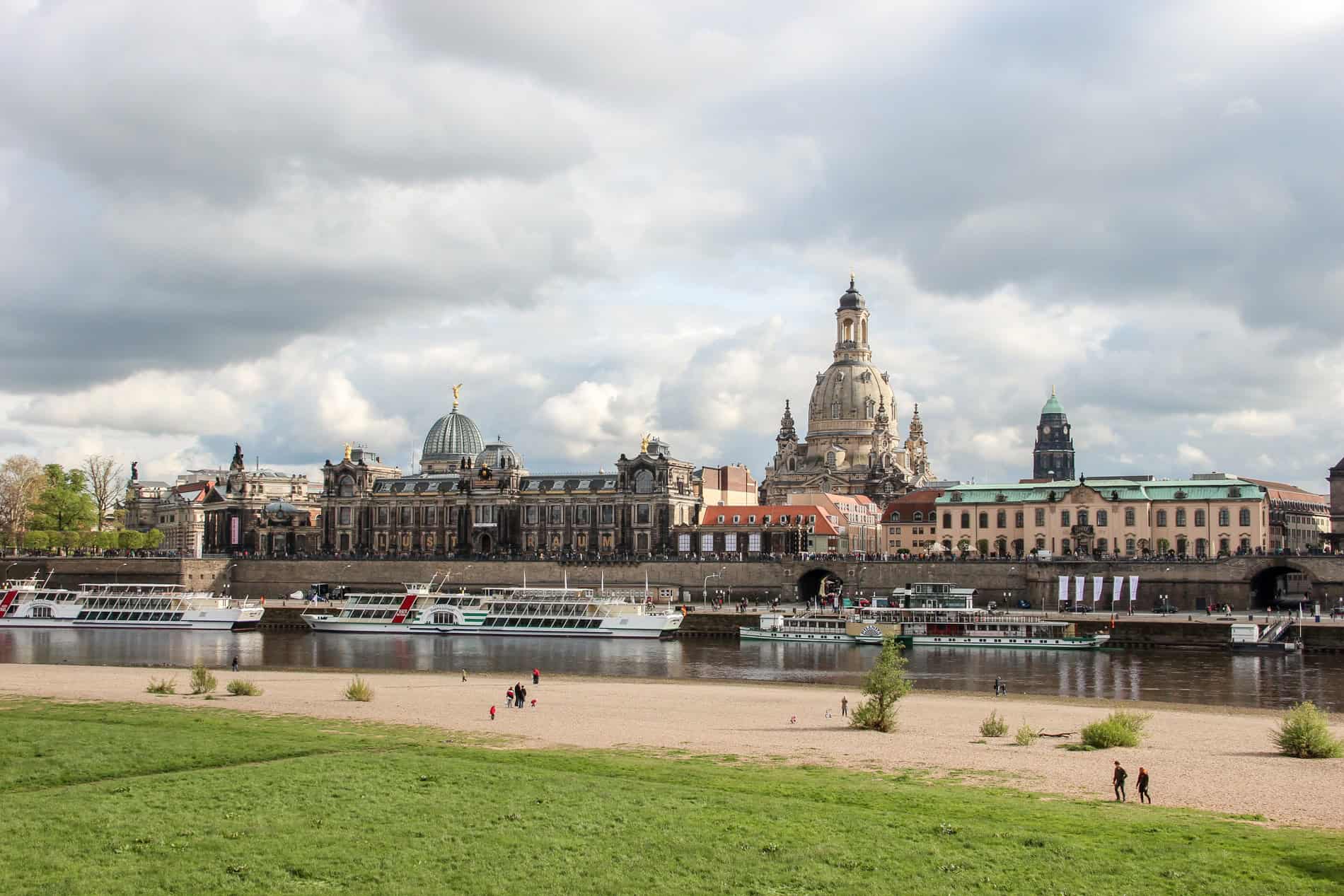
Dresden Aldstadt (Old Town) is New and Rebuilt
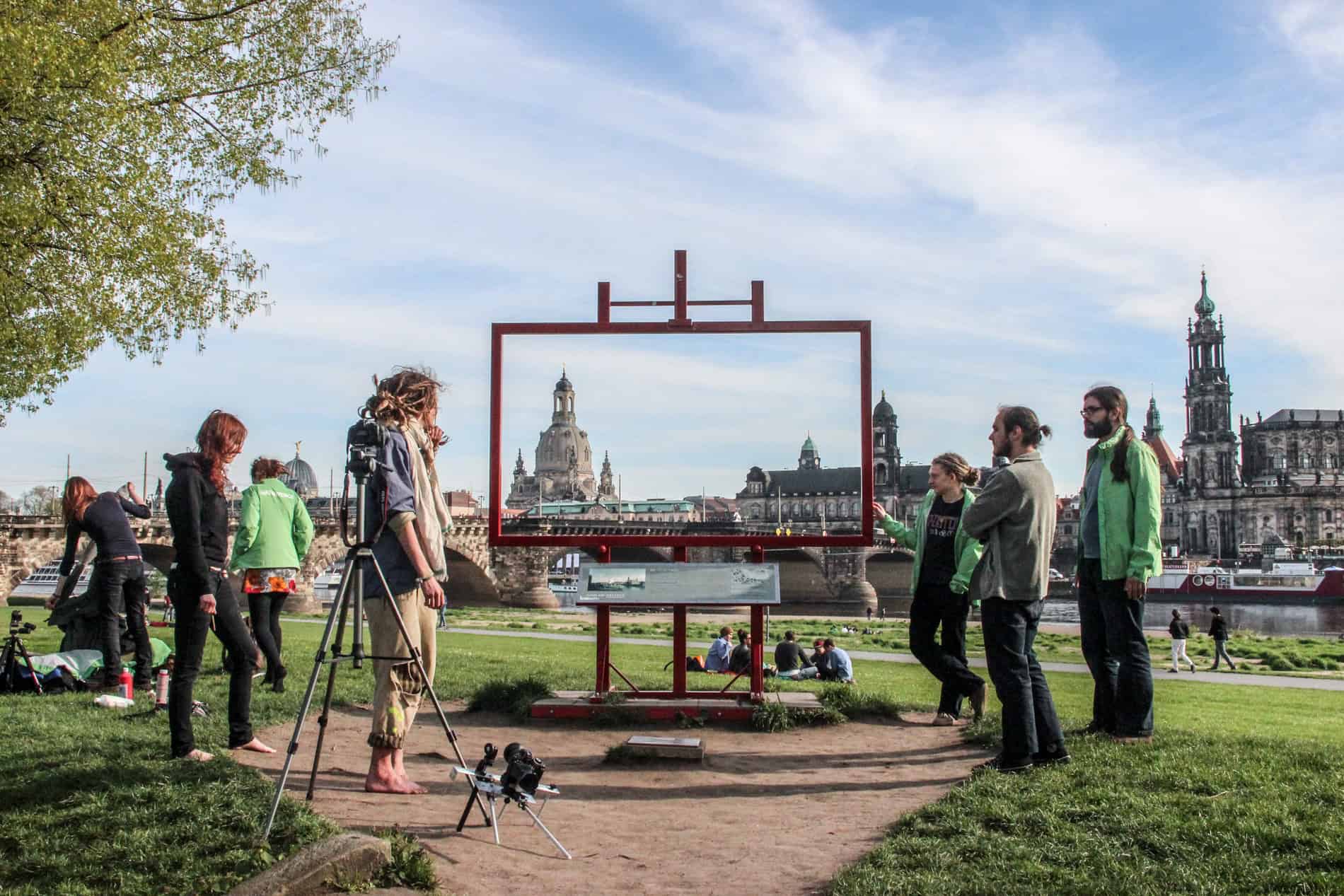
Our local guide asked us to identify the oldest building in Old Town Square, and we all pointed to the Frauenkirche (the Church of Our Lady), which is quite possibly the most prominent and beautiful structure here.
The nearby nondescript office-style building was the oldest, and Frauenkirche, pictured below (and the area around it), had been rebuilt within the last 20 years with donations from around the world as a monument to peace.
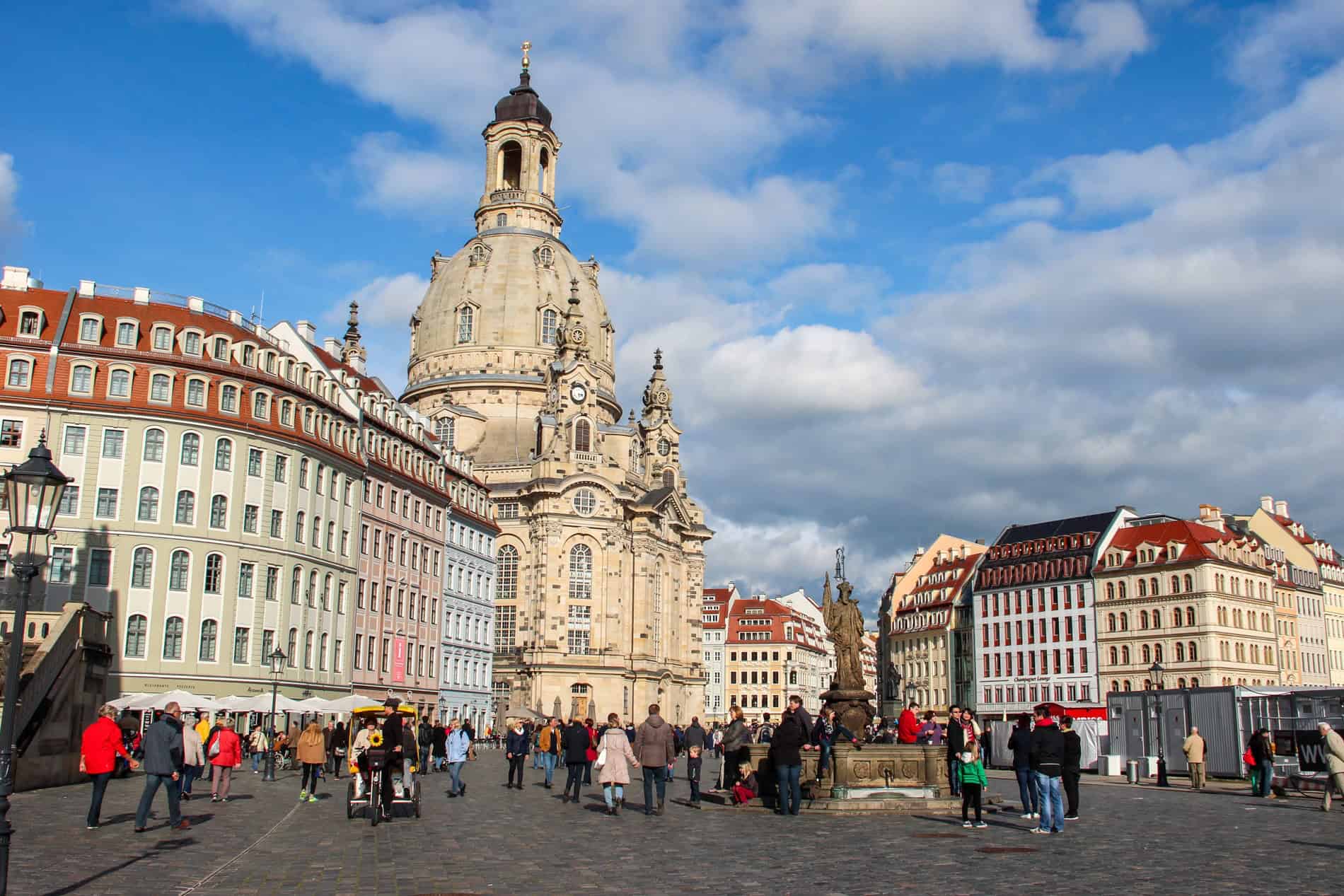
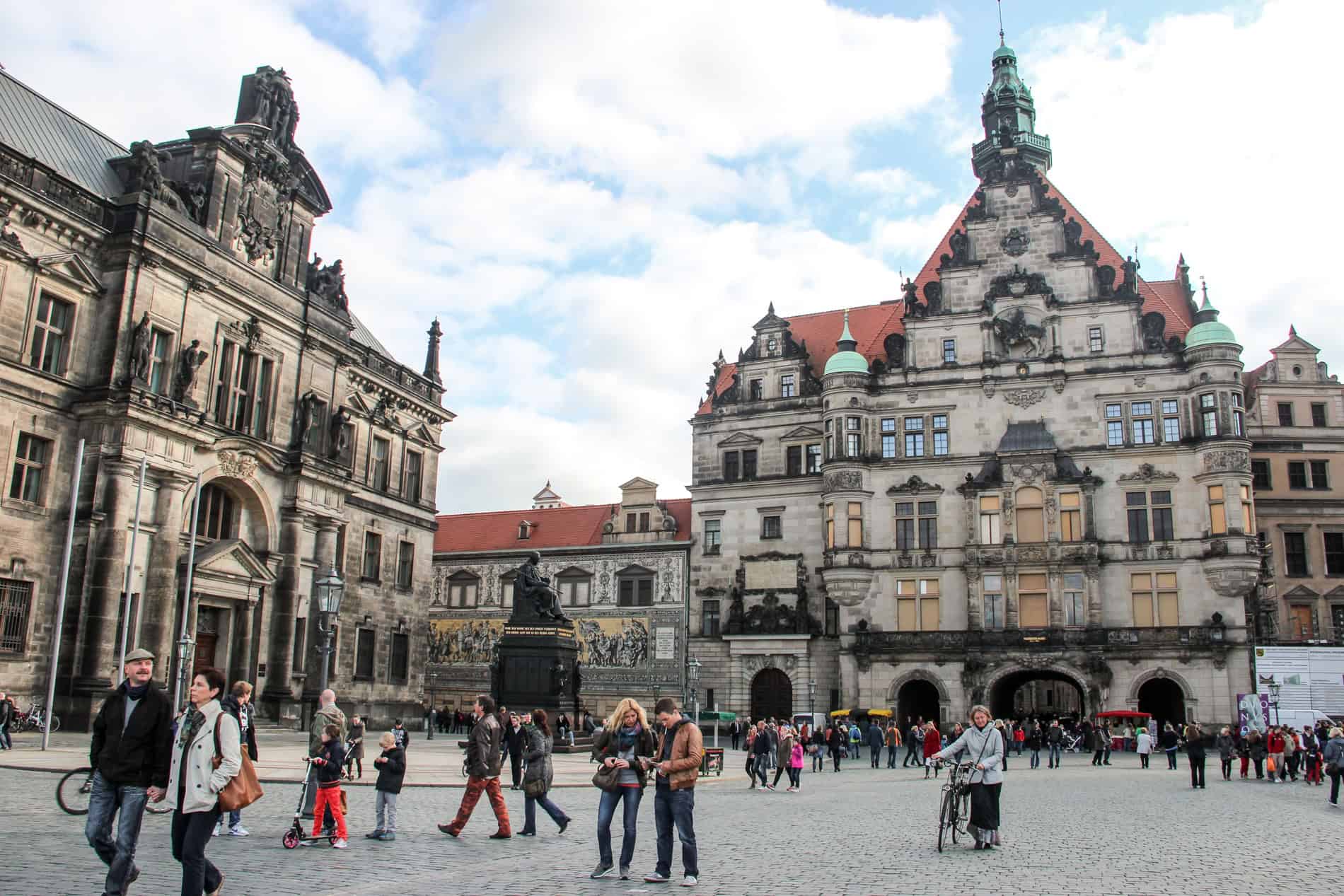
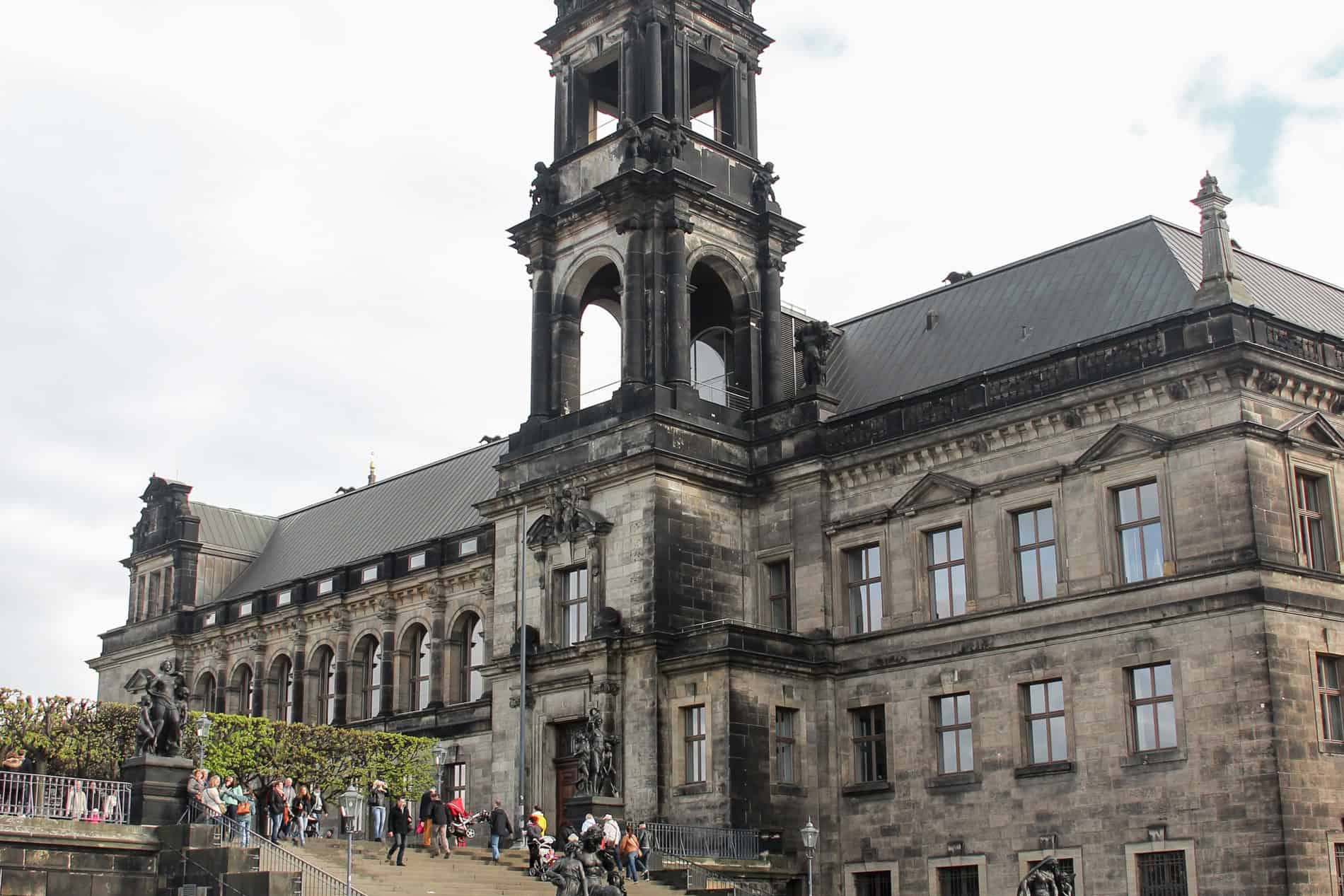
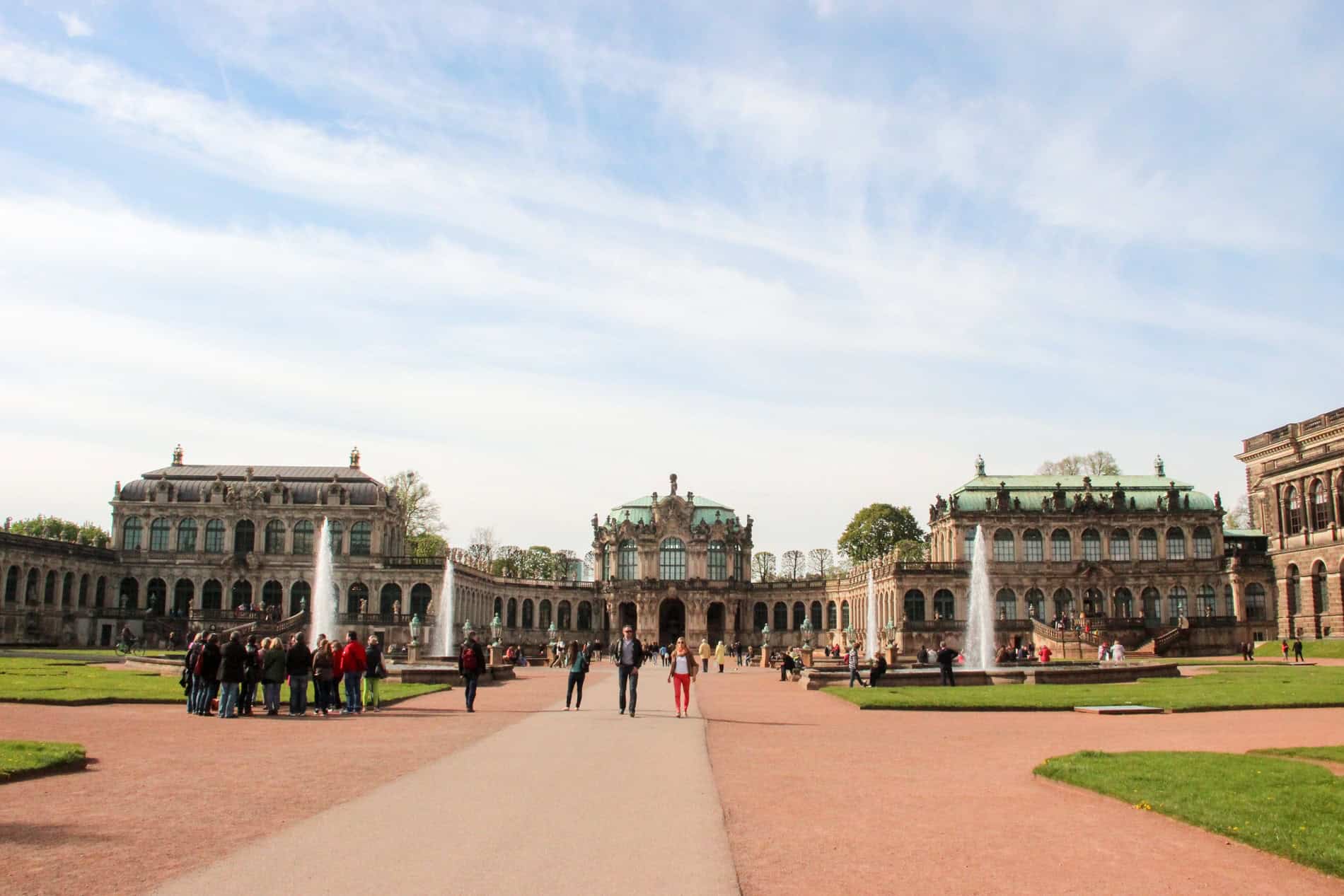
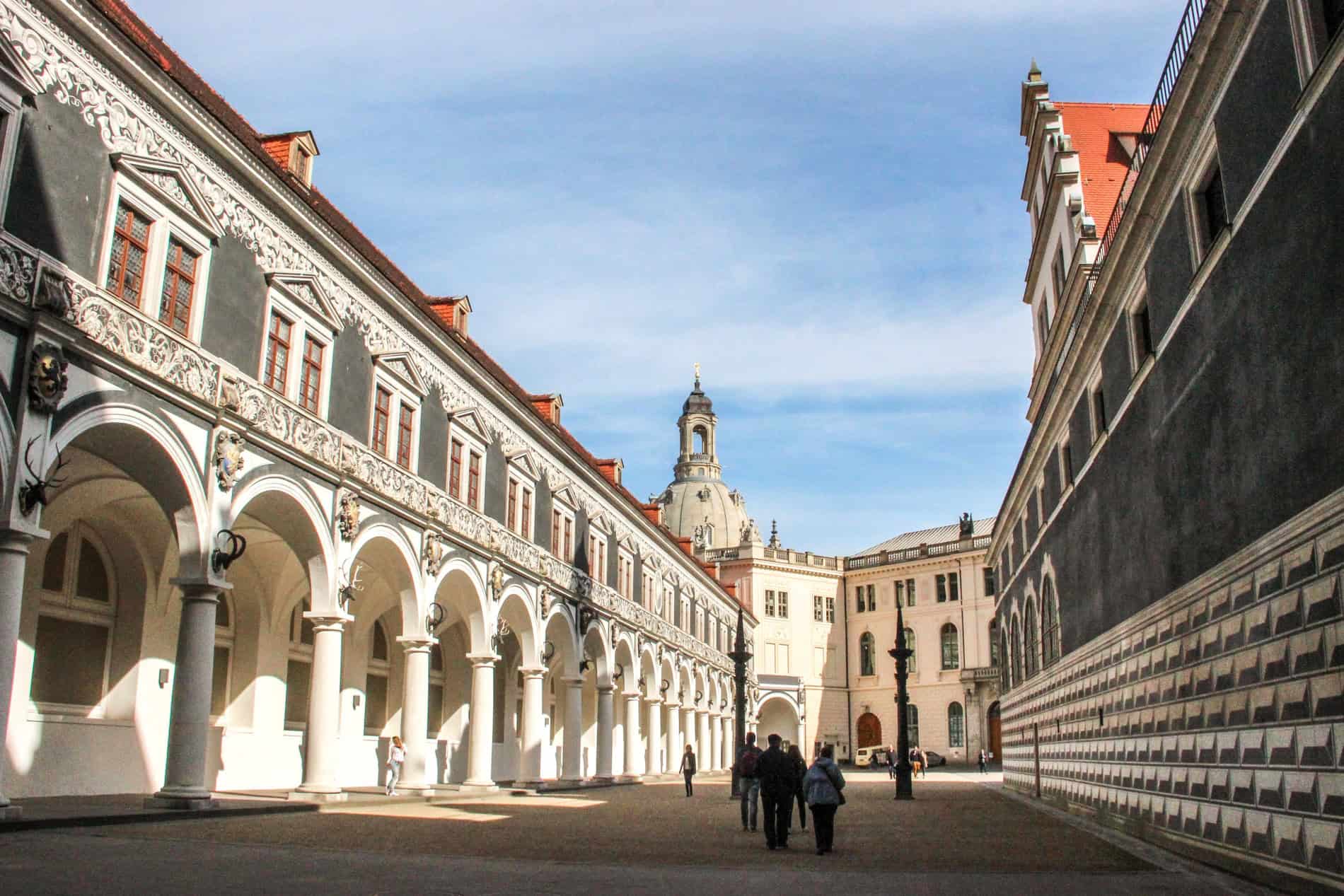
Following extensive damage from Allied bombing, which rendered 60% of Dresden to ruins, this area has been fully reconstructed. Before that, it was a space of rubble and desolation. While the Soviets kept some of the ruins as memorials of the war and built some ‘Stalin Baroque’ architecture on the east and west sides of the square, it wasn’t until the fall of the Berlin Wall that the city and its modern reconstruction sprang into life.
While some locals north of the river are quick to dismiss the Old Town as uncool and unprogressive, it is a preserved window into a history that could otherwise have been lost.
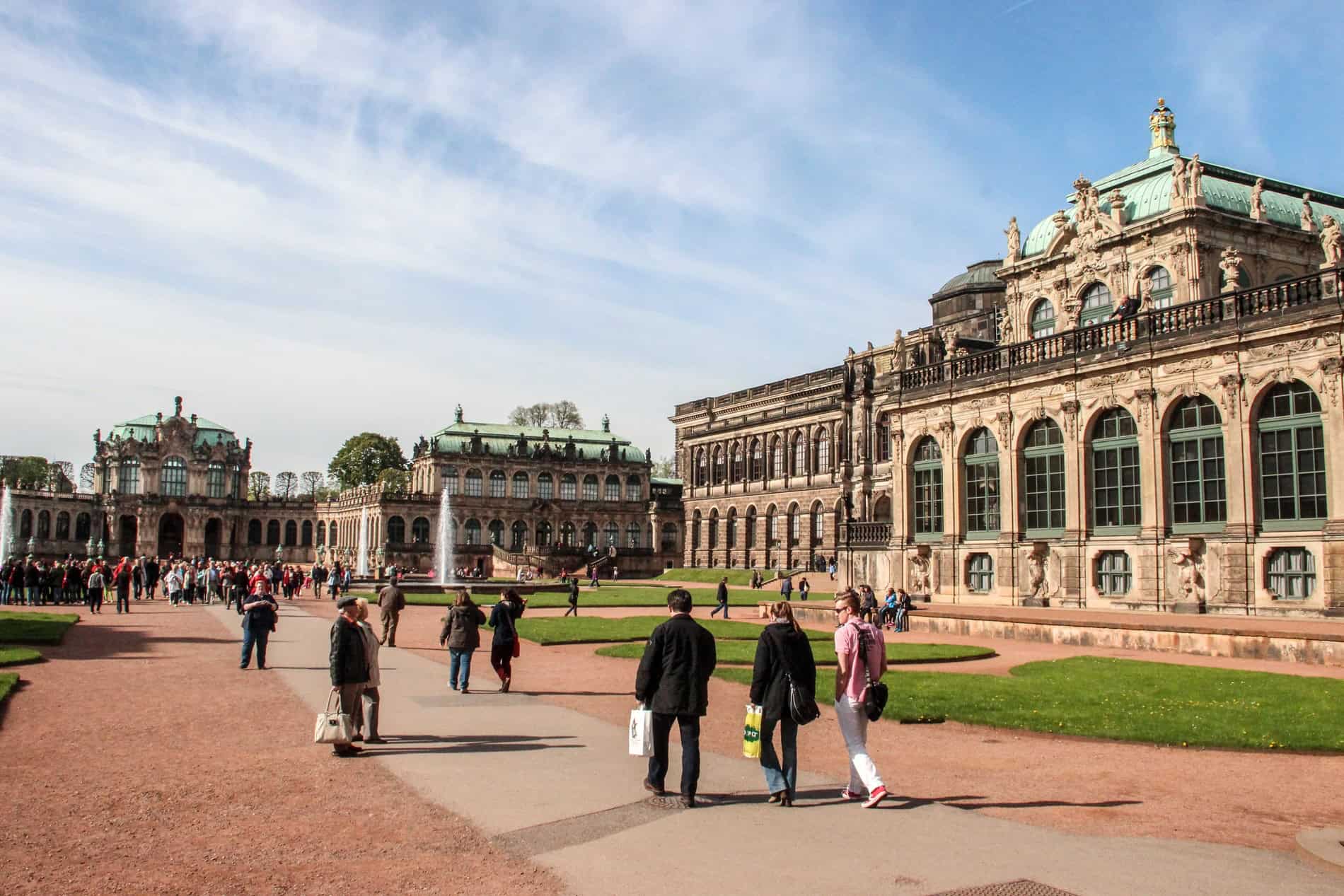
The ruins were rebuilt to appear old again, restoring Dresden to its former glory. The love of art and high culture brought to the area by the Saxons and later by the bourgeoisie remains. The city beats all year round, with Dresden’s Christmas Markets on this side of the river remaining among the largest in Germany.
You can visit the old master paintings and art collections at the Zwinger, admire the Royal Palace and Brühl’s Terrace, enjoy the sounds of the Semperoper Dresden (Dresden Opera House), and wander among other buildings renowned for this distinctive historical style.
Round off your sightseeing day in traditional feasting style by dining on sauerkraut, meat, and dumplings at the vaulted restaurant, Pulverturm.
READ MORE: What to do in Leipzig, Germany – Witnessing Urban Reinvention
Dresden Neustadt (New Town) is the Oldest
The makeover of the Neustadt (New Town) – the once bland GDR urban industrial landscape – is in full swing north of the Elbe River. Cities throughout Germany have either demolished Soviet-era architectural structures or reinvented them, and Dresden is no exception.
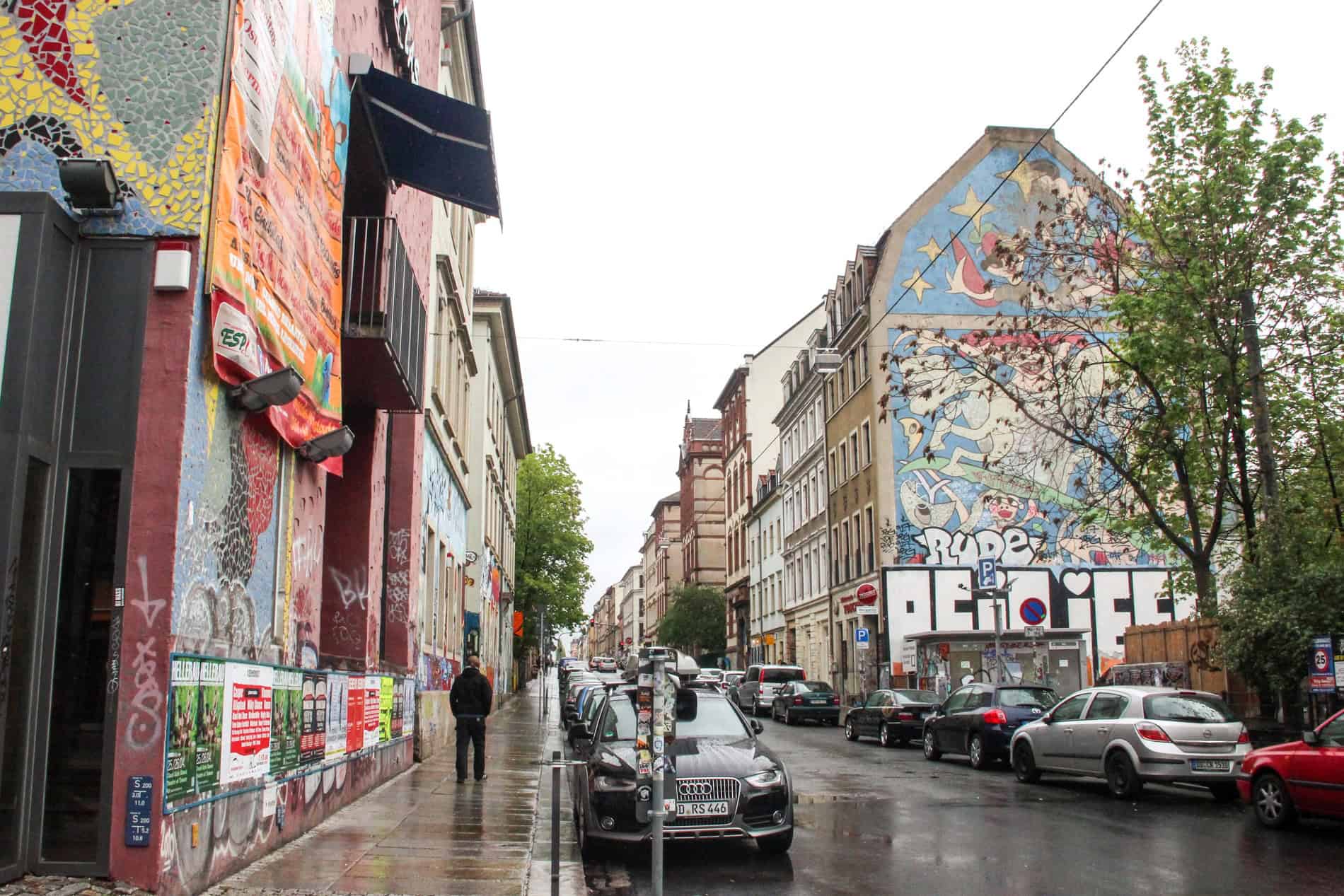
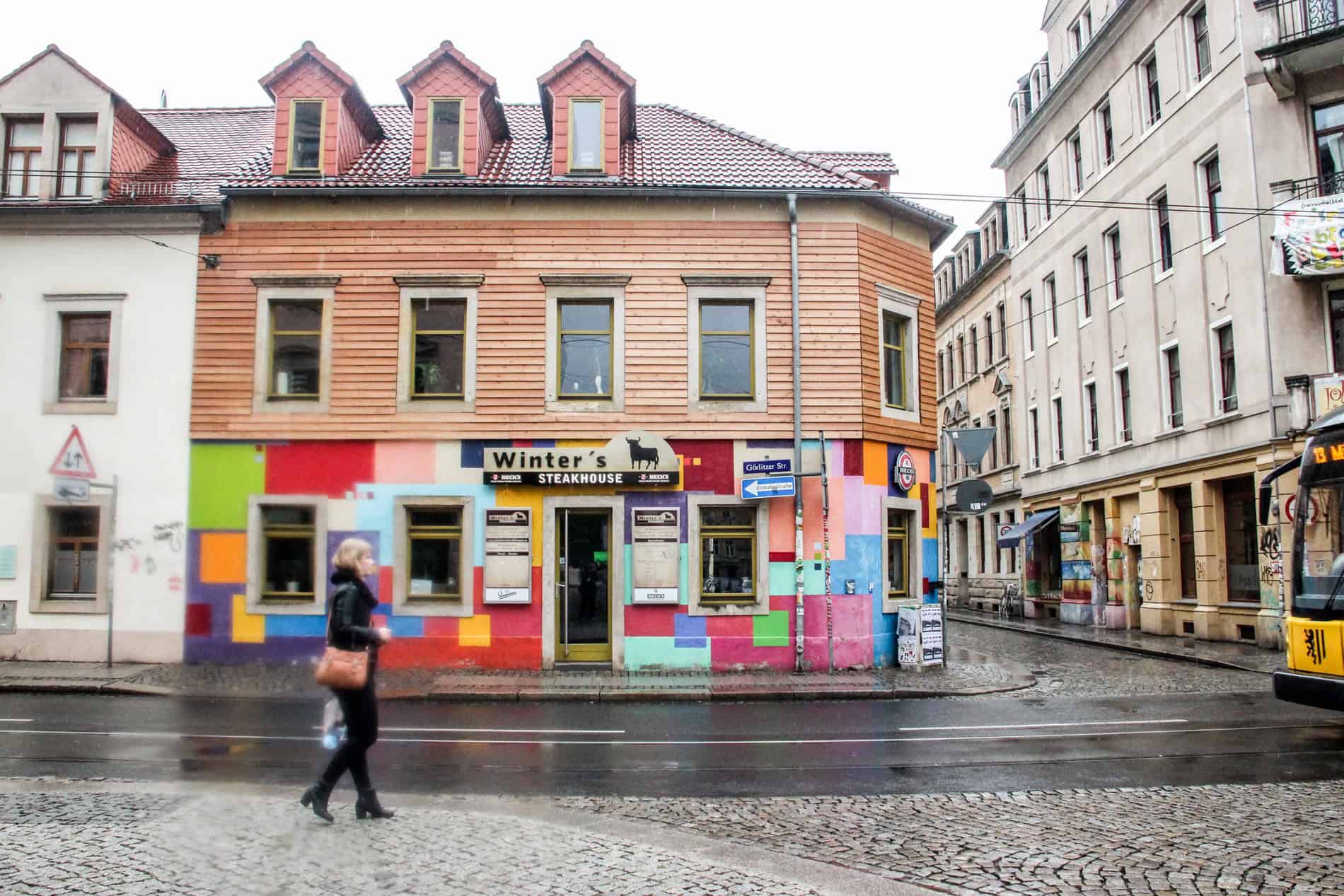
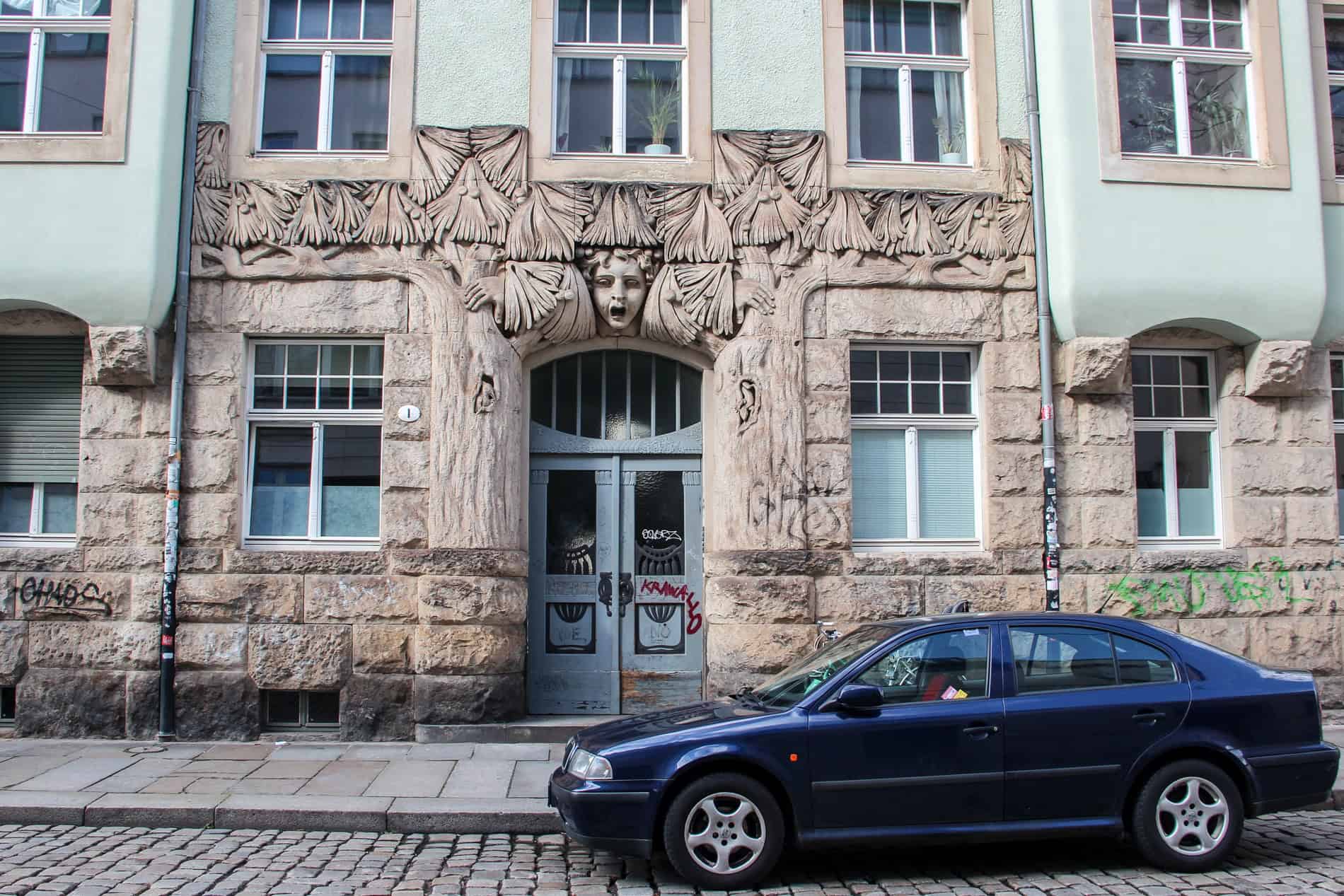
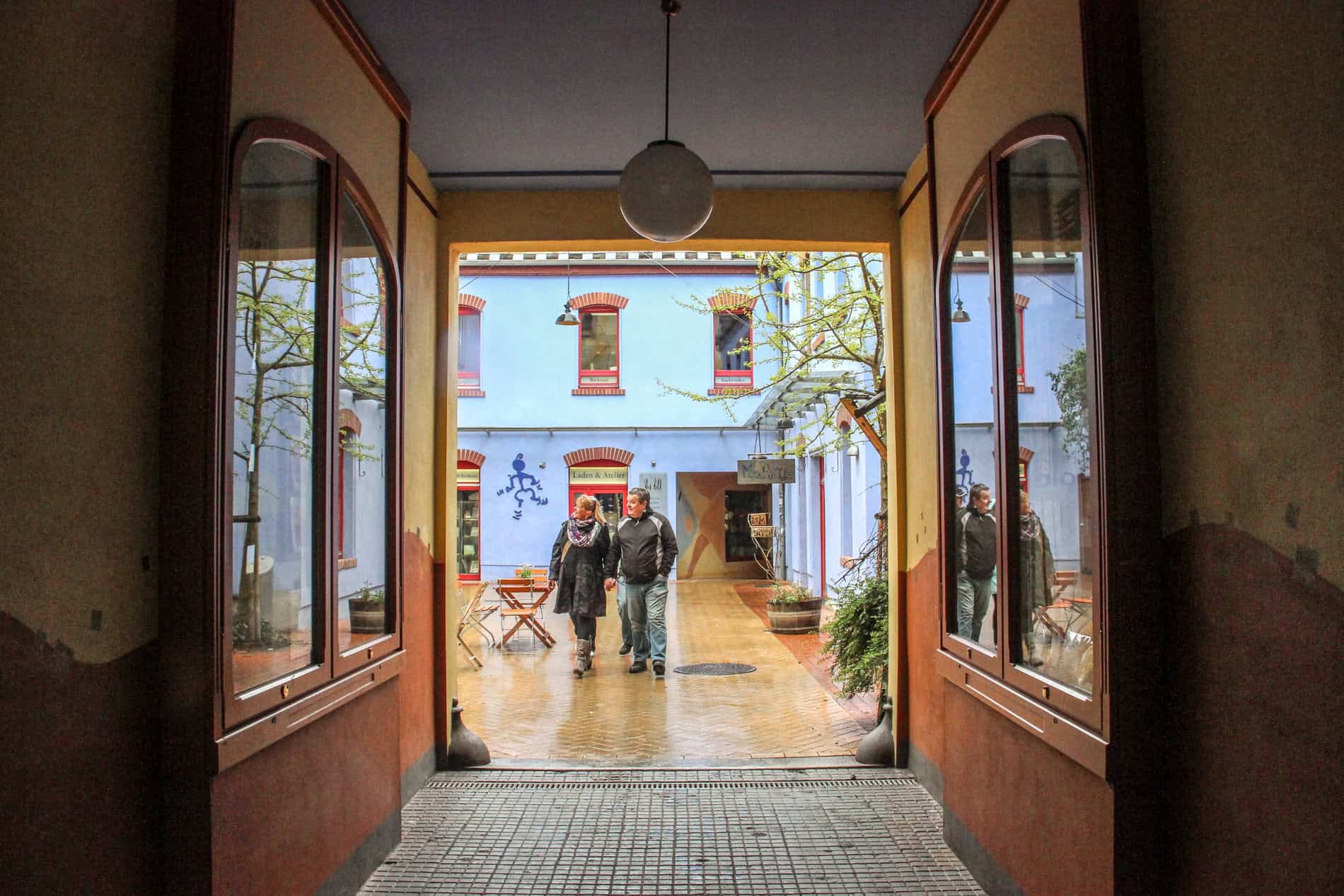
In central Dresden, reunification signalled the chance for residents, landlords, and artists to make a statement. Dark, dingy houses and backyards were given a distinctive, creative stamp, and high-rises were given a coat of modernisation.
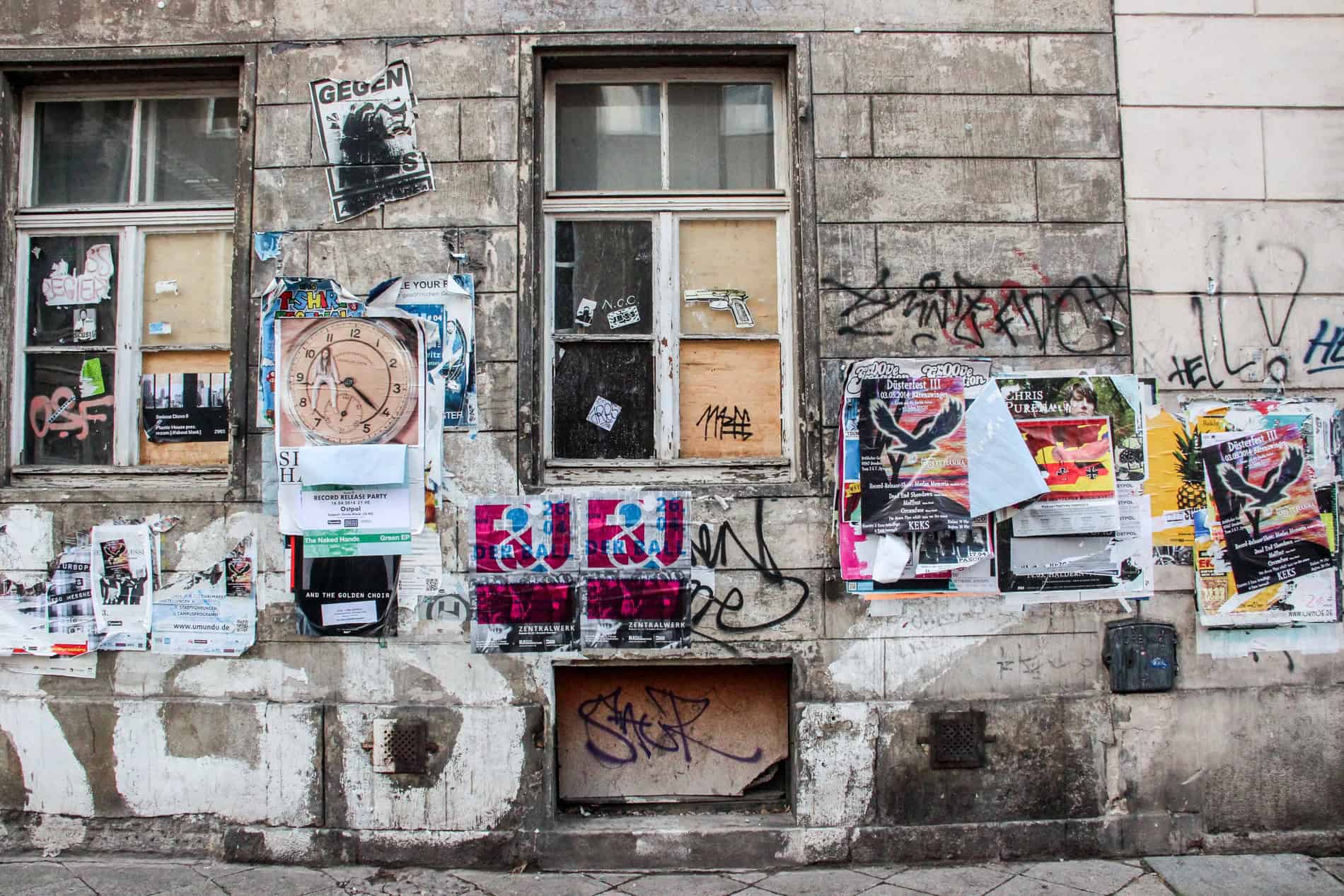
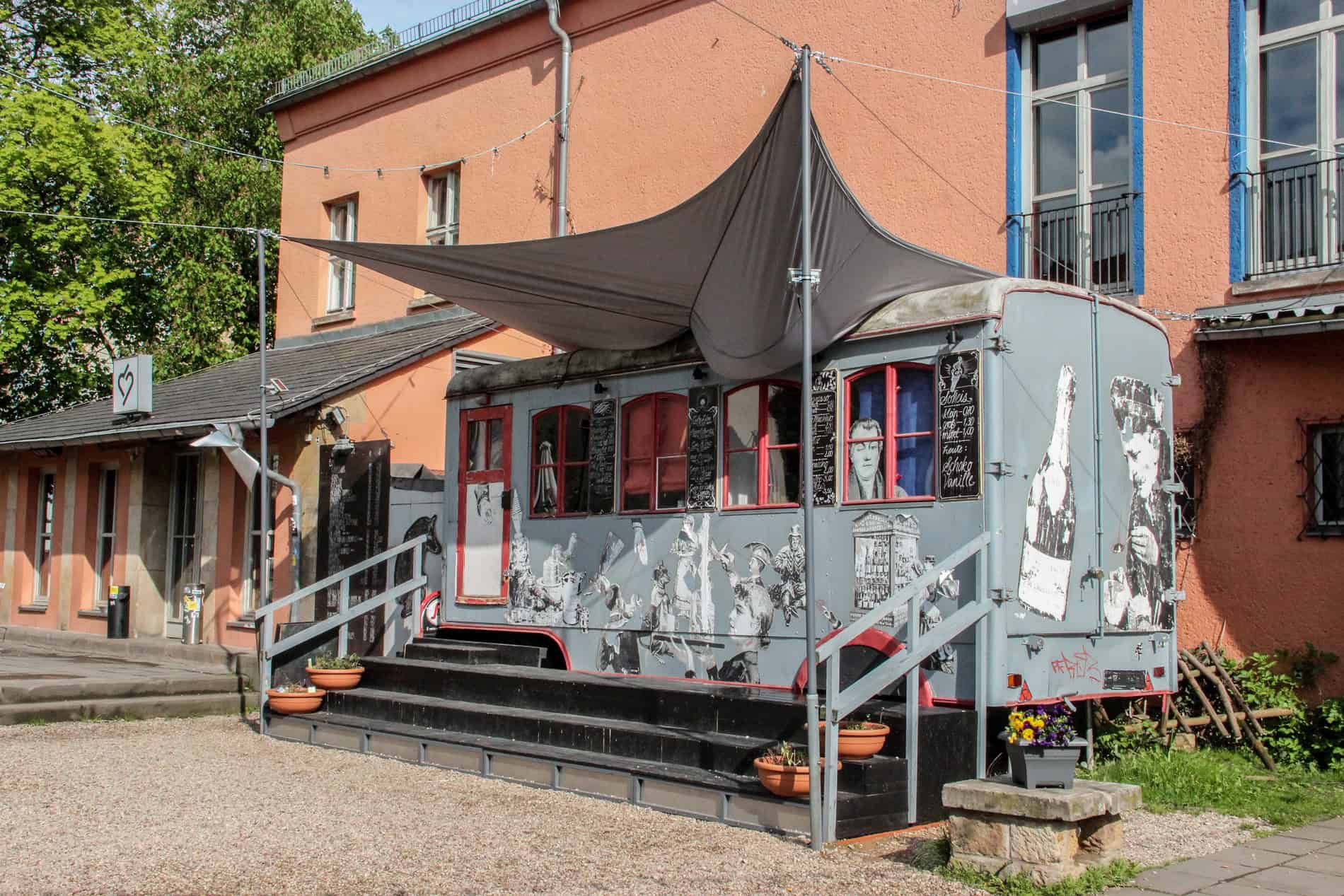
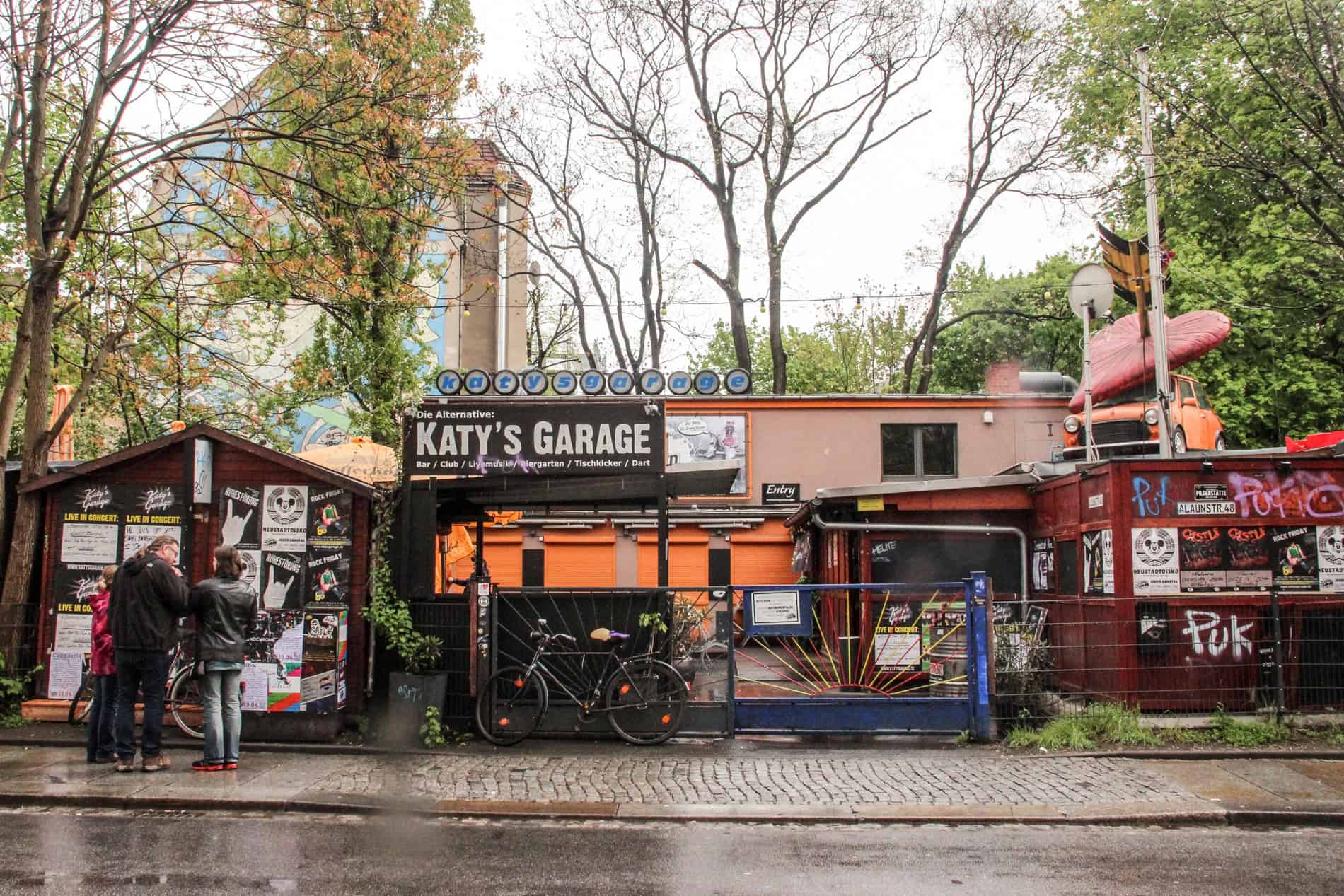
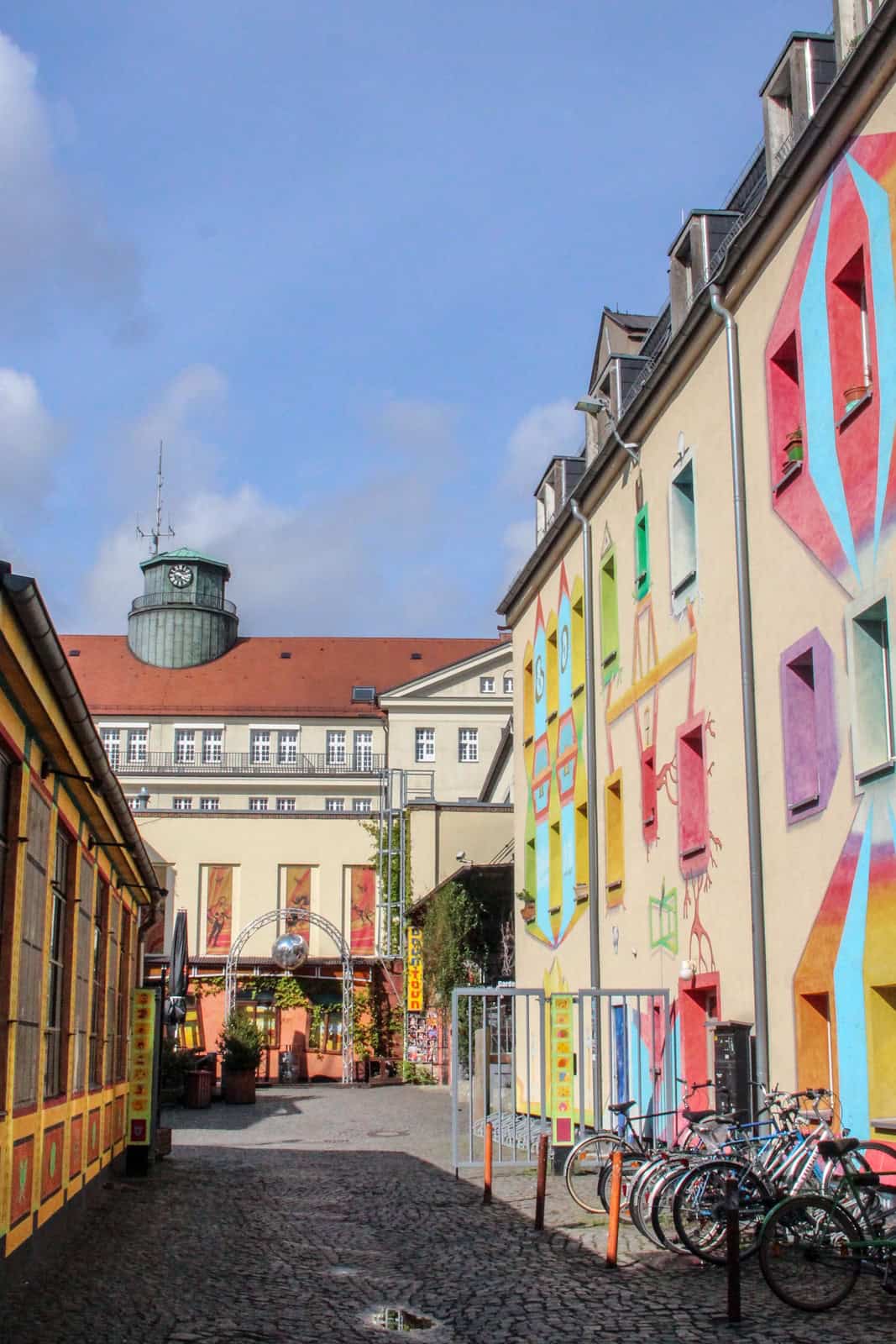
Walls were painted, covered in mosaics, or plastered with funky structures. Old run-down spaces were converted into vibrant cafes, bars, and clubs. Street art continues to serve as a social critique, calling out gentrification and the influx of moneyed residents who will raise rents.
Dresden, once known as ‘Tal der Ahnungslosen’ (the Valley of the Clueless) because it could not receive West German television signals and, therefore, only had access to the GDR’s propaganda-ridden TV, certainly speaks its mind now.
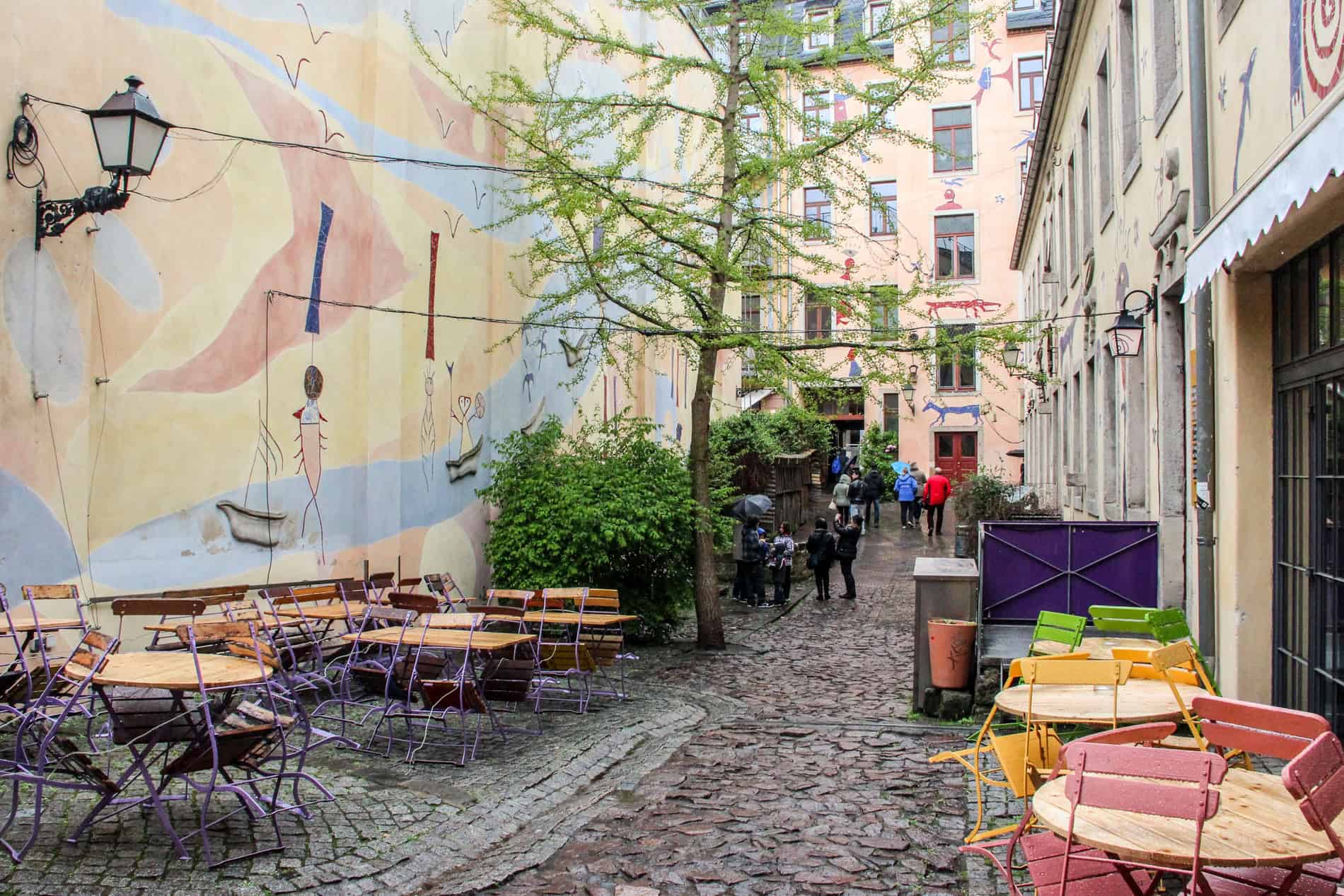
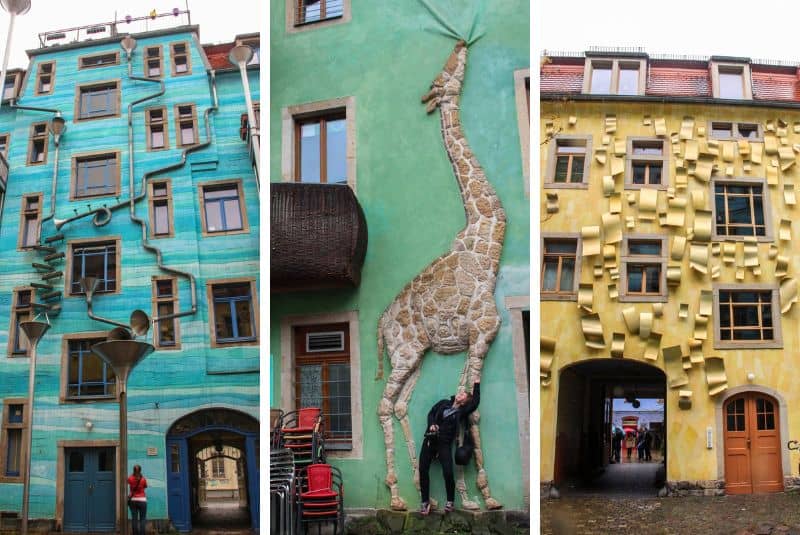
The quarter around Alaunstrasse and Louisenstrasse streets is the most interesting place to see this, and the most notable area to visit is the Kunsthofpassage (between Alaunstrasse and Görlitzer Strasse). It’s a labyrinth of small artistic courtyards, cafes, shops, and galleries awash in colour and theme. It’s quite possibly one of the most interesting sites in Dresden and a representation of the ‘alternative’ side of the city.
READ MORE: What is Berlin Like? Understanding the City Since the Fall of the Wall
Green Dresden – More than a Modern Metropolis
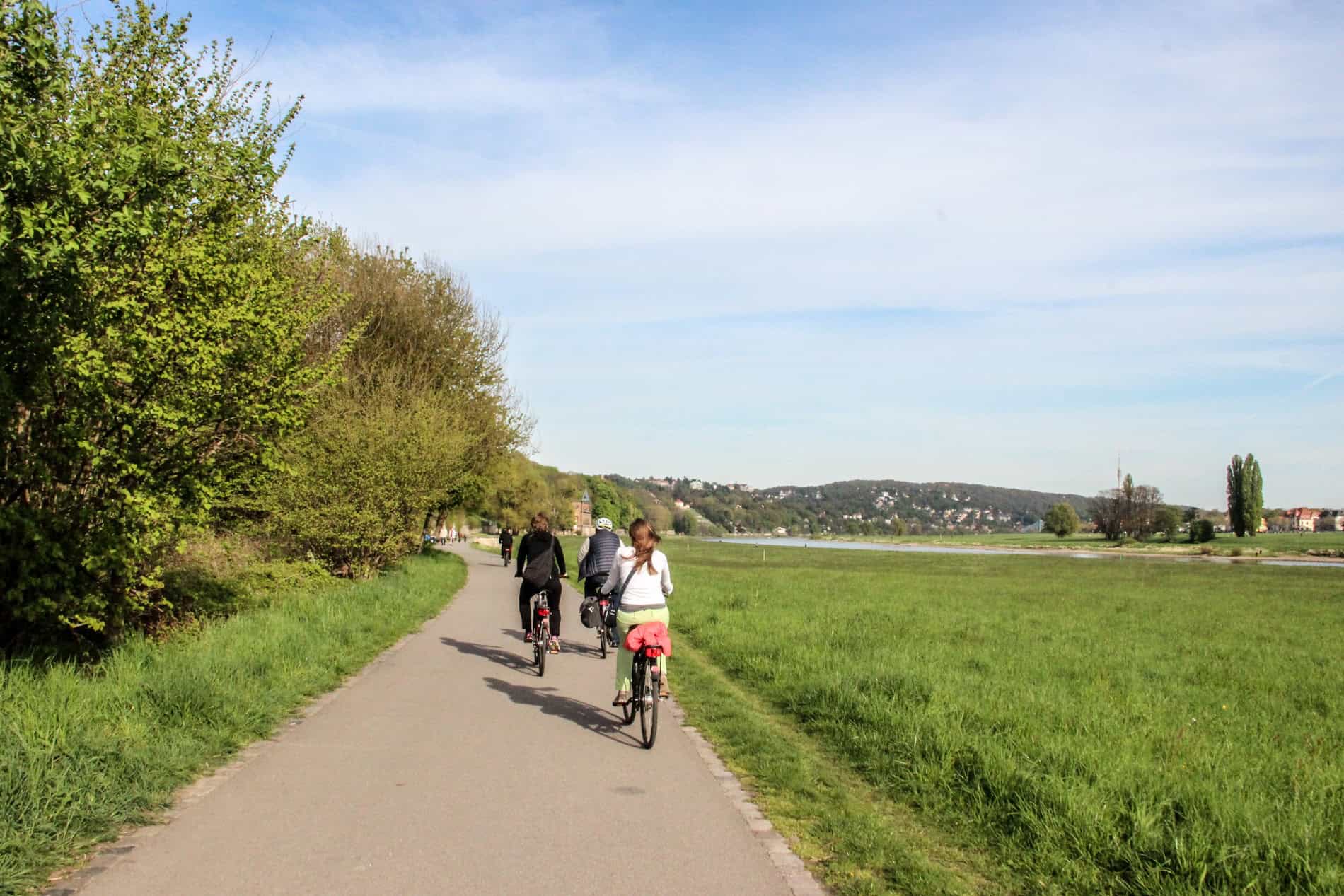
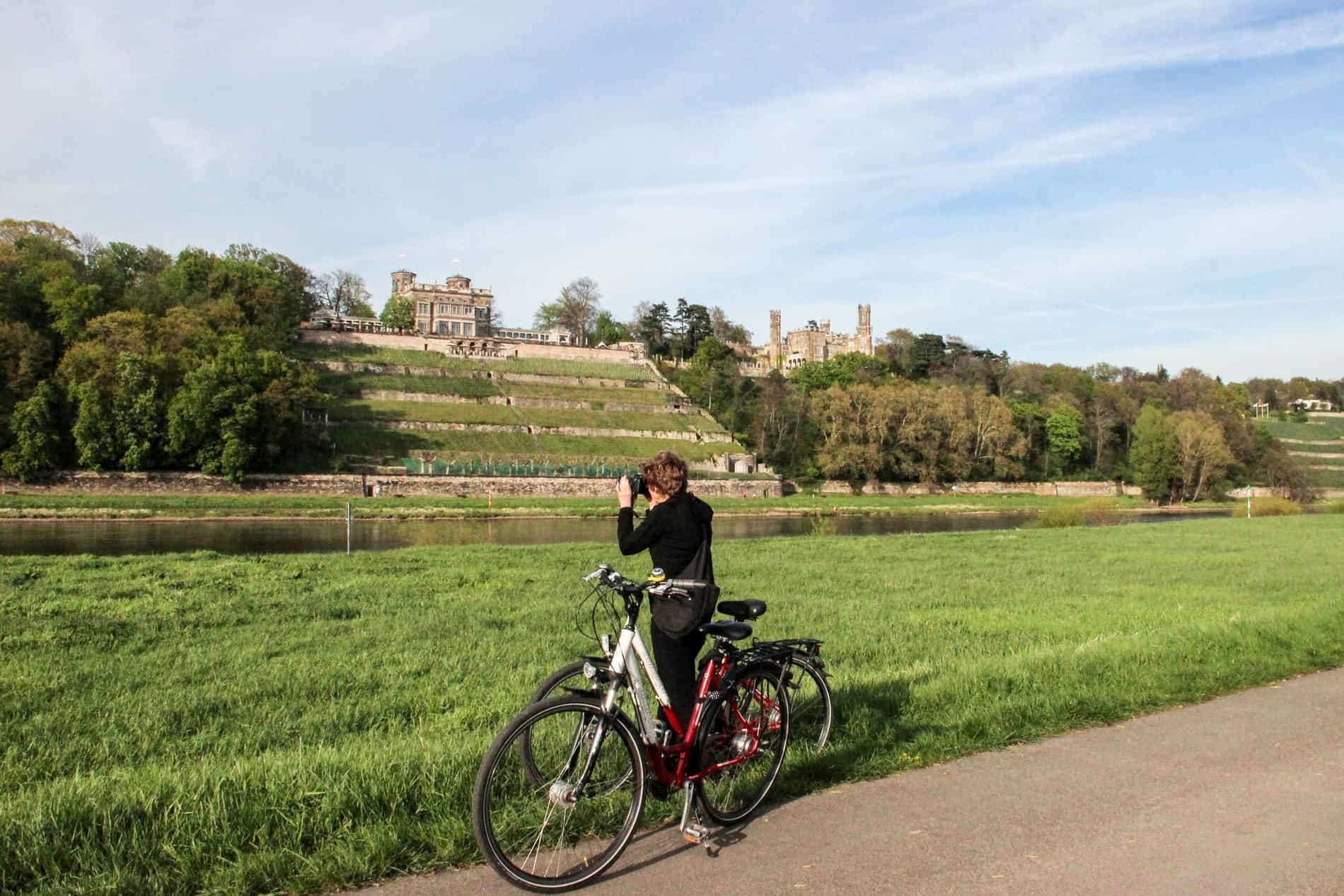
Dresden is a biker’s haven, and cycling through this compact city is one of the best ways to explore what it offers beyond the Old and New Towns. The 860km Elbe Cycle Route opens up another side of Dresden, easily explored and rich in cultural heritage.
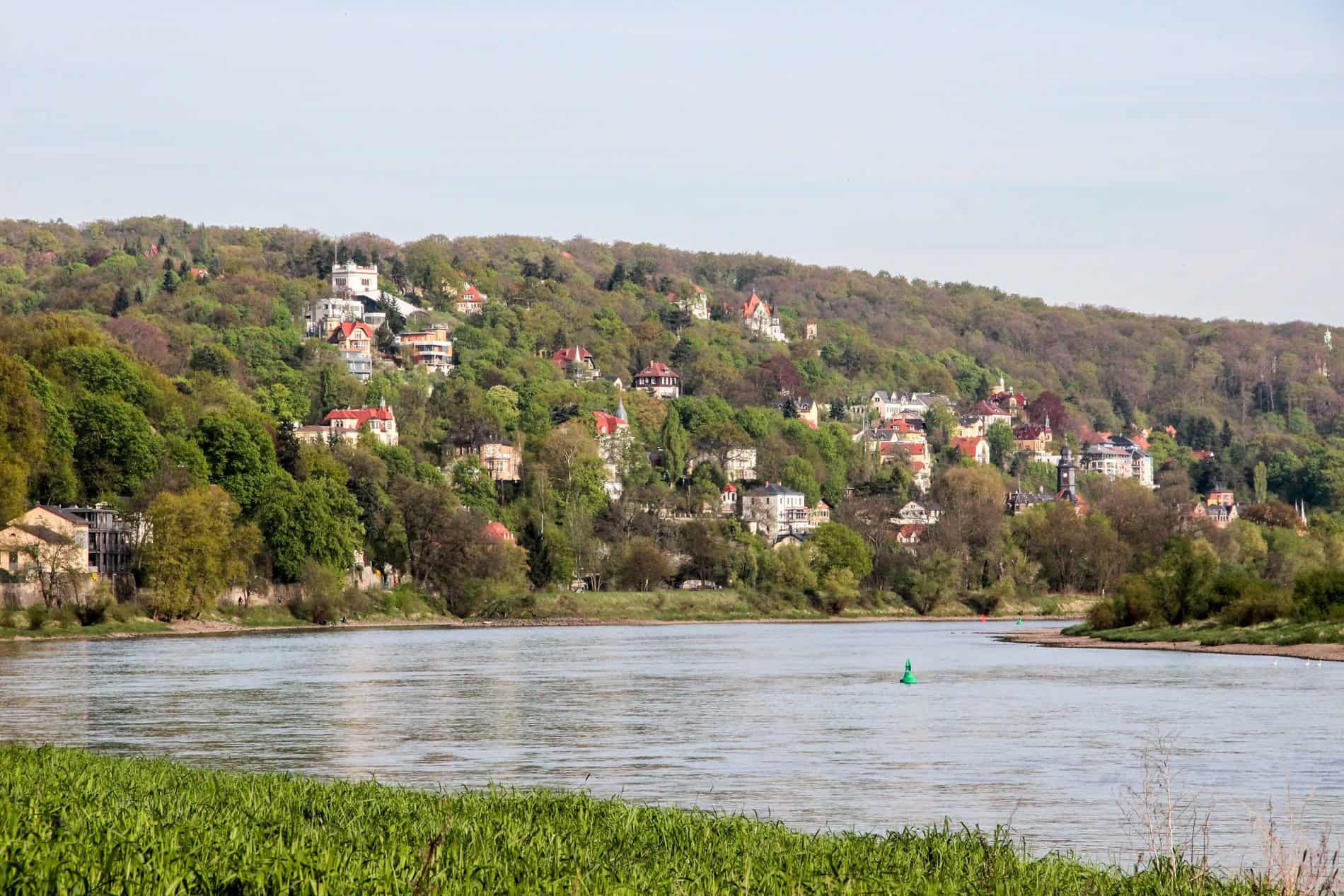
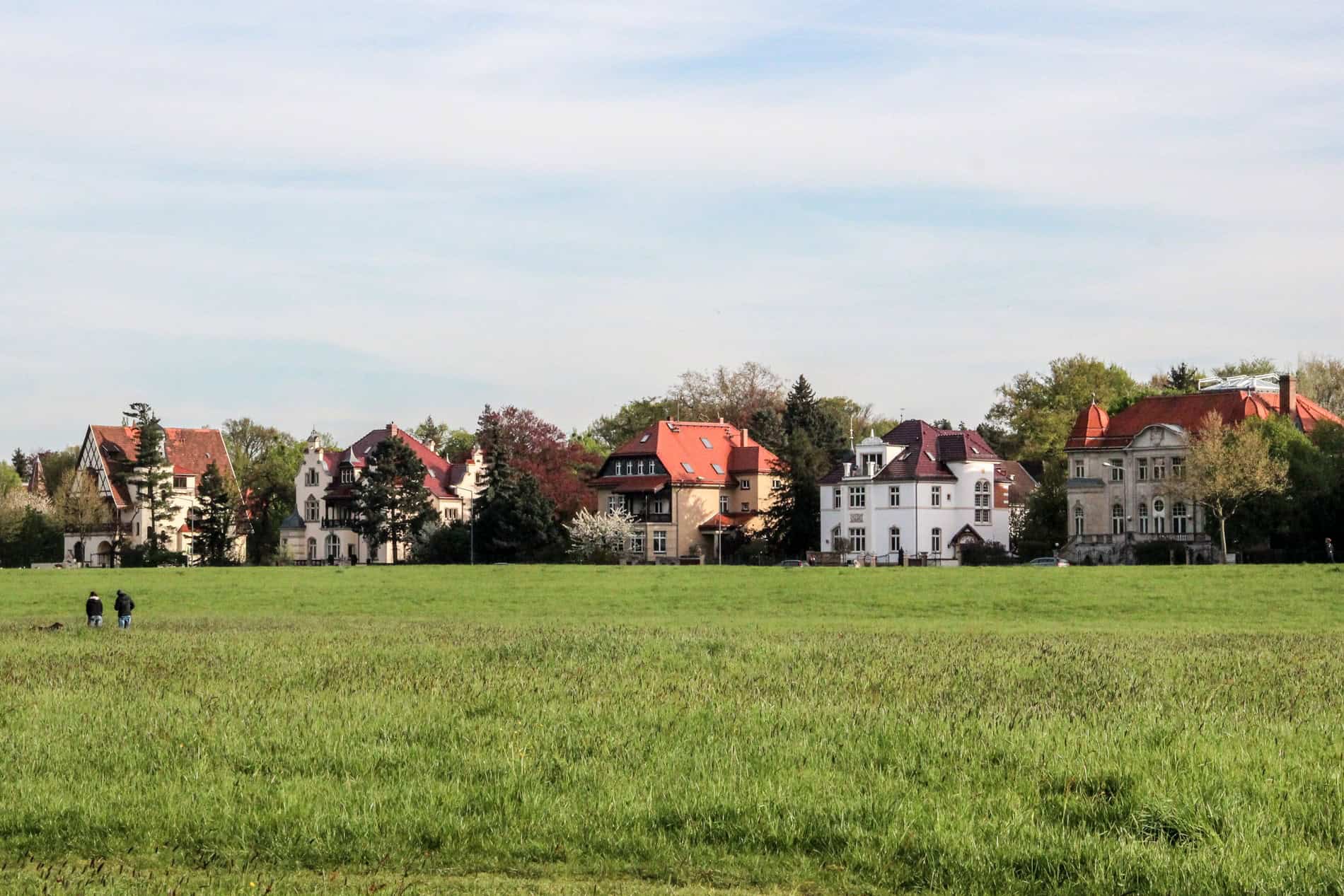
Considered one of the best cycle routes in Europe, I spent a few hours casually cycling along it, passing castles and palaces, parks and gardens, hillside vineyards, and luxury hotels. The accessible route is easy to follow and offers a conveyor belt of viewpoints, so you might well spend more time off your bike admiring your surroundings than on it.
READ MORE: Things to do in Erfurt, Germany – Socialist Rule to Stunning Restoration
Is Dresden Worth Visiting?
Dresden is much cooler than you think, especially when you venture outside of the Old Town area, which gives Dresden its classic reputation. It’s a city in flux, having evolved continuously since the postwar destruction and socialist occupation. Still mending, repairing, and catching up, there will always be more to Dresden beyond your first visit.
Dresden City Tours
There are many ways to get around Dresden’s attractions and learn about the city’s history.
Walk: Take a 2-hour walking tour with a local guide, and hear the stories that have shaped the city.
Bike: Take a 3-hour bike tour around the Altstadt, the Elbe Valley, and the new town’s hip neighbourhoods.
Boat: Cruise down the Elbe River and see a conveyor belt of Dresden’s historic landmarks from the water (with commentary).
Bus: The Hop-On Hop-Off Sightseeing Bus lets you explore the sights at your own pace (the ticket includes admission to select landmarks).
Things to Know to Visit Dresden
Getting there and getting around
- The 108 km railway line from Dresden to Leipzig was the first long-distance rail link in Germany, opened 175 years ago in 1839. Deutsche Bahn (DB) allows you to book tickets for routes throughout Germany and connections to Europe.
- Details on bike hire and tours in Dresden are available on the Next Bike website and mobile app. Alternatively, many guesthouses and hotels offer bike hire.
- Culture vultures and those planning to use multiple transport links may be better off using the Dresden Welcome Card, available from the tourism office. Prices start at €17 for a single-day card and €24 for a two-day card. The card provides unlimited access to the city bus, tram, and train, free admission to museums, and discounts at 120 other tourist attractions.
Where to Stay
Hotel Suitess (Aldstadt) – Classic-elegant rooms near Frauenkirche and Altstadt sites with a spa, restaurant-bar and a perfect roof terrace. From €150.
Boutique Hotel Rothenburger Hof (Neustadt) –Modern hotel decked in colour and plush furnishings, plus an indoor pool. From €200.
Hostel Lollis Homestay Dresden (Neustadt) – Hippy, art-strewn hostel with dorms, private rooms and a ground-floor apartment in the thick of new town life and enterprise. From €50
Travelling in Former East Germany
Like Leipzig, Dresden also played an important role in the Peaceful Revolutions across GDR cities in 1989, leading to the fall of the Berlin Wall. To visit sites significant to this period, visit the Dresden Revolution Trail. The Stassi Museum (former state headquarters) is also in the centre of the city. The Bautzner Strasse memorial is adjacent to the former prison.
You can also consider combining your trip to Dresden with visits to other former East German cities, including Erfurt, Potsdam, and Weimar.
My trip to Dresden was supported by Dresden Marketing, a perfect fit for my Fall of the Wall series of articles and completing my journey through the towns and cities of former (GDR) East Germany perfectly. As always, all opinions remain my own.



John StVincent says
The price of the Dresden City Card: 9.9 euros for ONE day and 29.9 euros for TWO days, is that correct?
Becki says
Yes, it’s more because it has more perks, such as additional free admission to 13 museums.
Lynn Chen says
I like your blog so much. One of my friend who met you in Korea recommended your blog to me. I enjoyed a lot reading it. I will visit Europe in one week and go to Dresden to meet one friend. Thank you for sharing your trip before I go. It gave me inspiration to my trip:)
Jen Seligmann says
I’ve always wanted to visit Dresden. I’ve read so many cool things about the city from its brilliant architecture to cool bars and nightlife. I love that it is becoming one of the greenest cities in the world too. Great wrap up Becki.
Dale says
With all of those magnificent historic buildings (including the rebuilds) and all of that amazing street art, we’d be fools not to want to go should we make it back to Germany again in the future.
It certainly looks more interesting that Frankfurt which turned out to be a bit of a bore.
Stef says
I just visited Dresden in March, it’s a really nice city! your photos reminded me a lot of my weekend there 🙂
Naomi says
It’s so nice to see a blog about Dresden! My grandpa was from there and I love the city – although the stories my mam tell me when it was East Germany, the transformation of the city is incredible. I’ve only been briefly twice but I would love to go again to discover the city properly.
Becki says
I bet your mum has some very interesting stories to tell! You have a perfect excuse to go back!