
Disclaimer: This post contains affiliate links to handpicked partners, including tours, gear and booking sites. If you click through or buy something via one of them, I may receive a small commission. This is at no extra cost to you and allows this site to keep running.
Here’s where you can experience the legacy of nobility in Palazzo in Malta without spending like an aristocrat.
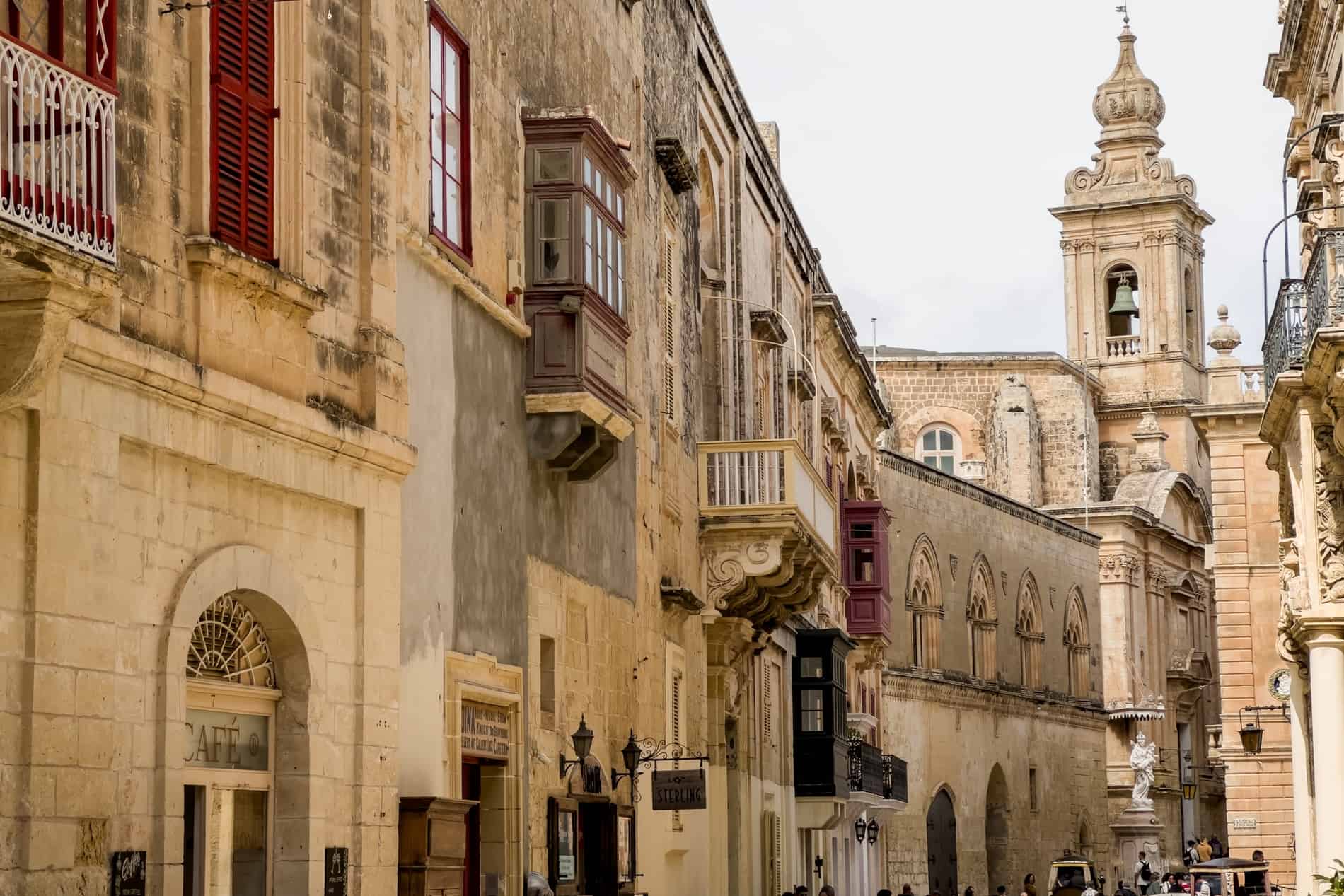
Plenty of exquisite buildings across Malta line the streets, with their elegant facades, pretty balconies and grand doorways – a traditional architectural style known as Palazzo. Many of these heritage structures date back to the 17th century, built by the Maltese aristocracy as private residences and passed down through generations to this day.
While many remain private homes, plenty of Palazzi in Malta are now accessible to visitors. Some have been renovated into plush hotels, and others have been turned into museums documenting the lives of some of the island’s famed noble families.
Your experience of Malta’s rich culture, history and legacy should begin in the fortified city of Valletta. One of Europe’s first planned cities, ignited by the visions of the Knights of St John, you will soon feel the air of nobleness and aristocratic grandeur seeping from the avenues of palatial buildings.
So, where can you find it all?
The History of Nobility in Malta
The Maltese nobility has historically ruled over Malta for over 400 years – titles still accepted even when parts of the island were under foreign rule.
Beyond Palazzo, like the Grandmaster’s Palace, key sites such as St John’s Co-Cathedral, Teatru Manoel (Europe’s third oldest theatre), and the partly ‘restored’ Royal Opera House offer a window into an aristocratic lineage that defines Malta.
These titles, tied to important administrative roles and duties, have been passed down through generations and were even recognised and accepted by the United Kingdom when it occupied Malta. Their presence adorns Malta with name plaques on owned buildings and discreet historical buildings you would easily walk past.
However, with nobility in Malta slowly fading, its history is no longer the supremacy of locals. Noble Malta is closer to hand than you may think, and you can experience the legacy that has become a defining design feature of the island.
READ MORE: The Best Places to Visit in Malta – Island Hotspots to See
Stay in a Palazzo in Malta
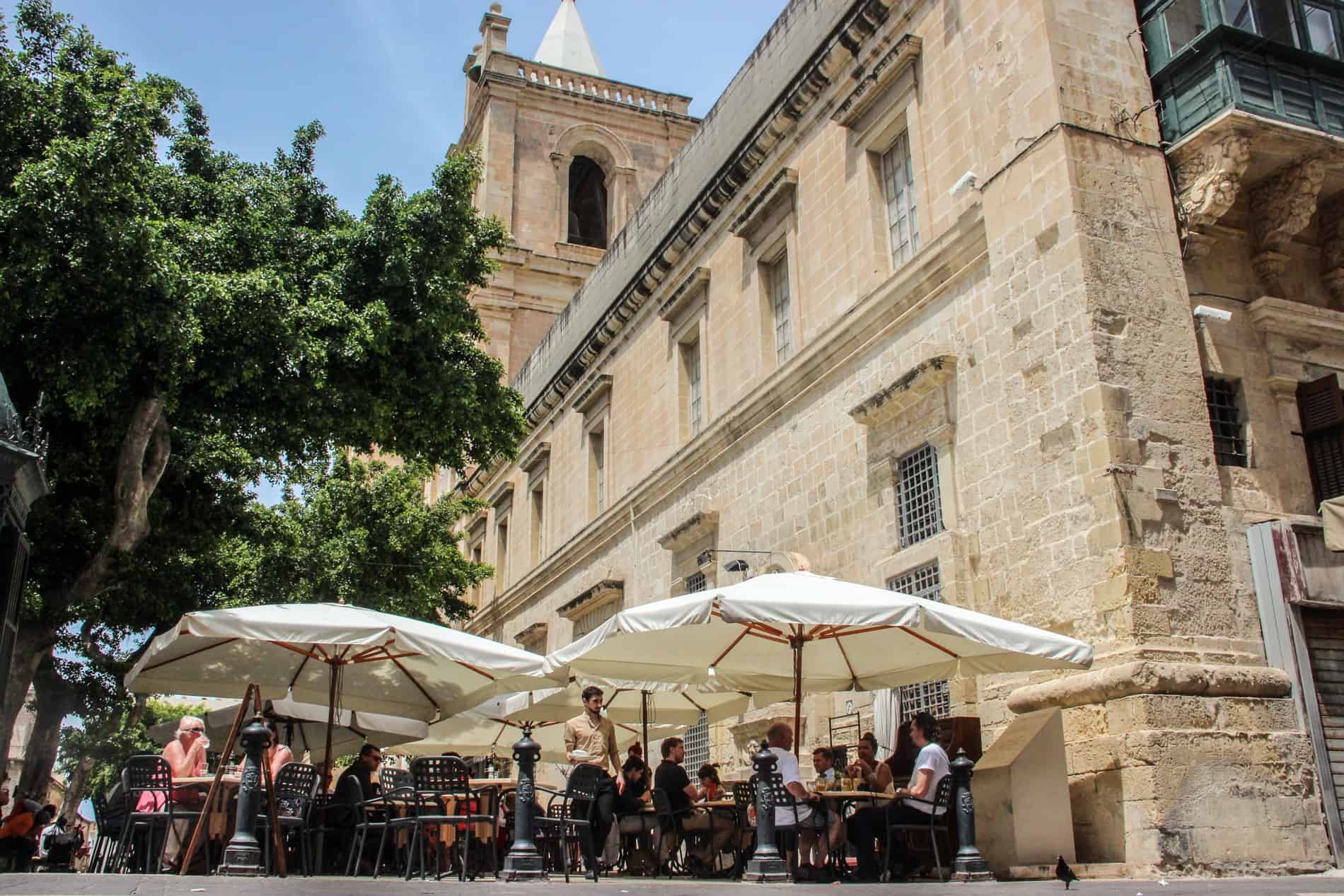
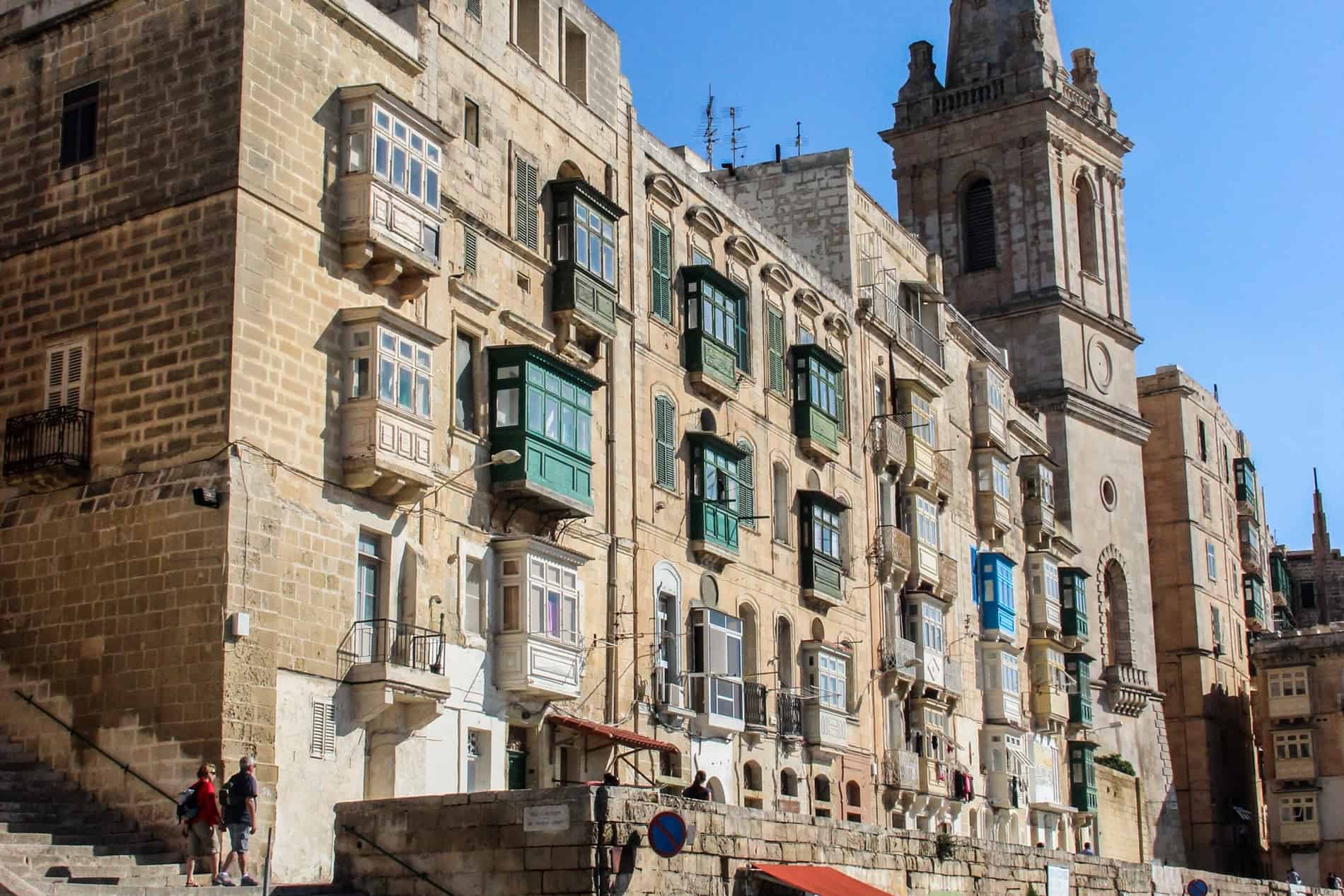
A Palazzo is the closest thing you will get to living the high life in Malta. Many restored baroque buildings have been lovingly restored and turned into beautiful living spaces. Here’s a selection you can stay in, located in the historic heart of Valletta.
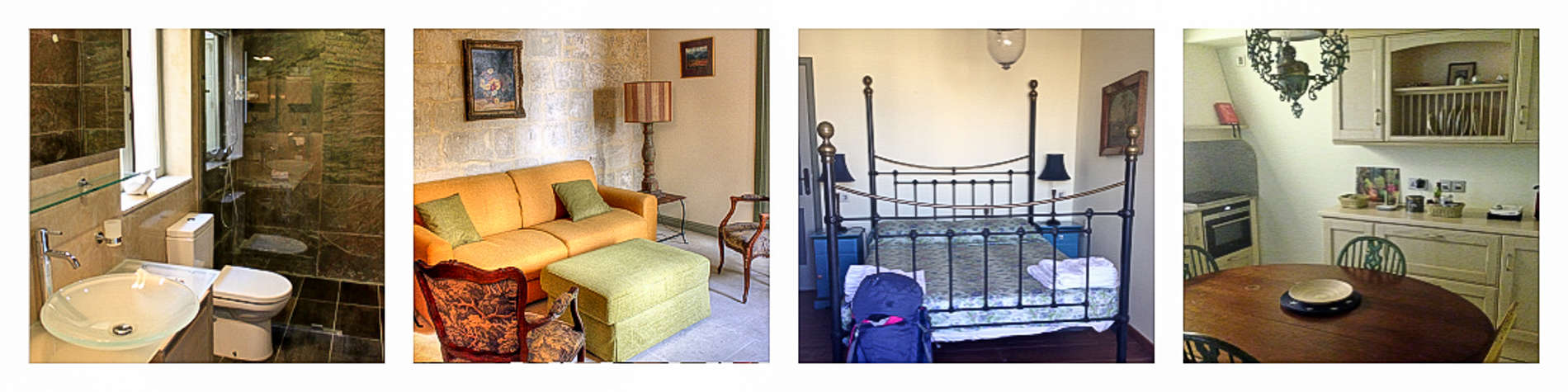
At the start of my Malta trip, I stayed in the restored 17th-century Palazzo Prince D’Orange in the main hub of activity, including the bustling Merchant’s Street and the main historical sites. While indulgent, A Palazzo is not always significantly pricey. Palazzo Prince D’Orange’s five luxury suites vary in size, character and décor, starting from €120 per night.
It oozes history and classicism while being furnished with modern sophistication – the perfect introduction to Malta’s charming UNESCO World Heritage capital city. I resided in the Alexander Suite, which was like a mini apartment, complete with a kitchen and lounge area and a harbour-view balcony.
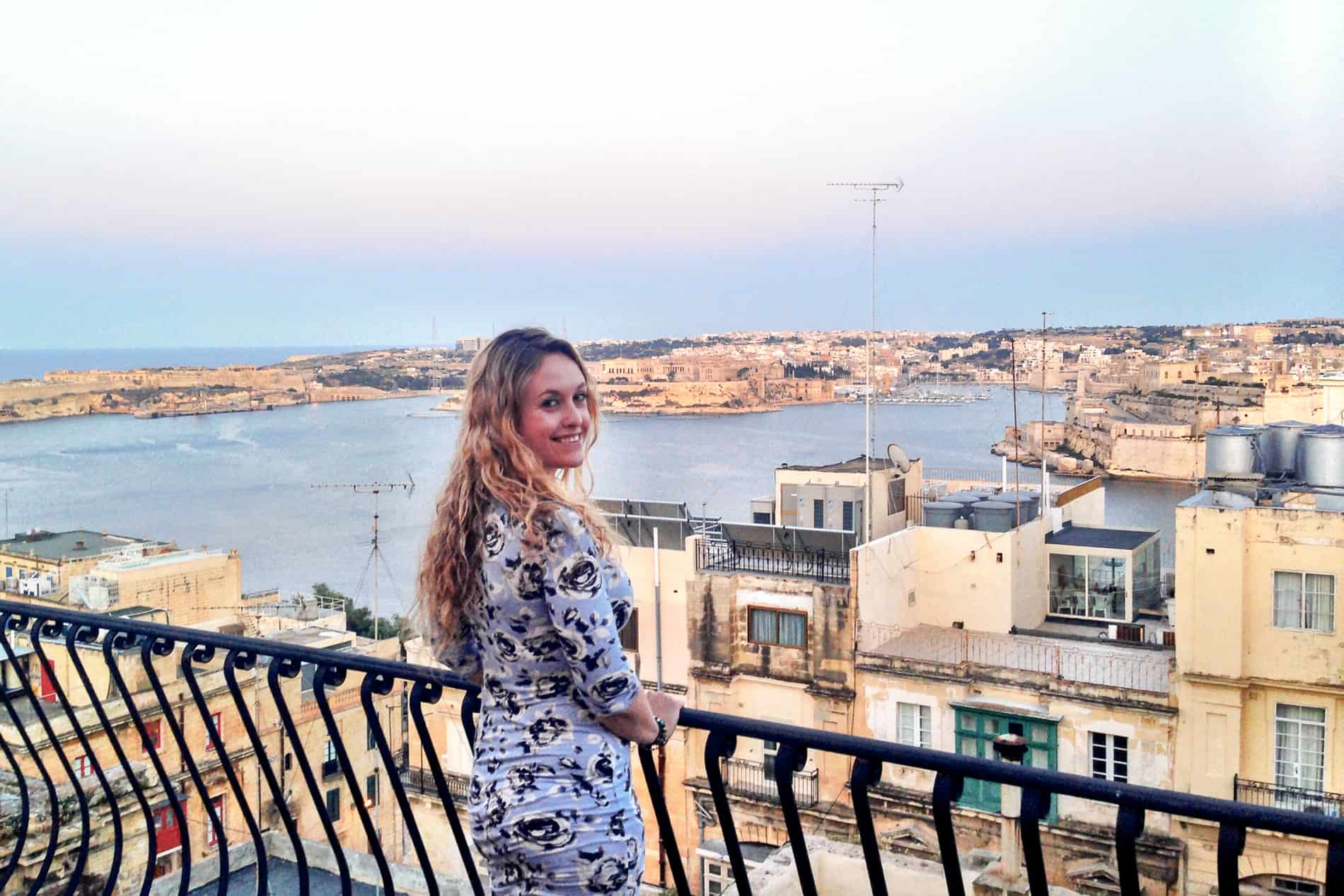
Palazzo Ignazio is a 4-star boutique hotel near the Grandmaster Palace, with a roof terrace view over central Valletta. You can spot it by its ash-blue balconies and doors.
Palazzo Consiglia is a 5-star hotel that retains baroque decorative features, including exposed limestone walls and a vaulted-ceiling dining room. It’s one block behind the Lower Barrakka Gardens and close to the Valletta ferry terminal.
U Collection Luxury Suites is comprised of elegant-modern studios and apartments decked with period furniture within a restored 17th-century building.
Palazzo Valletta Suites are luxury abodes listed as neither a hotel nor a B&B. Each suite has a private street-level entrance.
Stay With a Noble Family
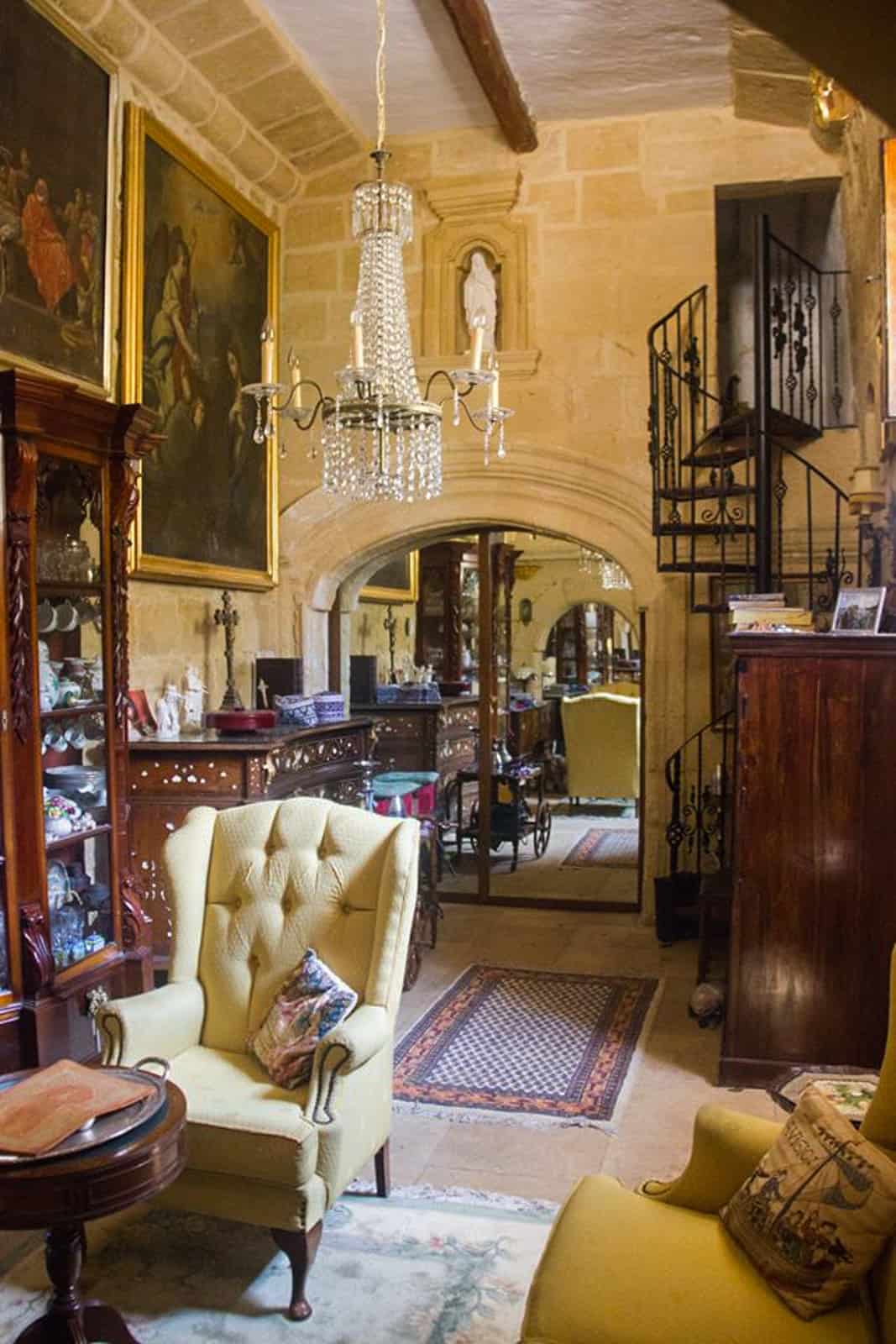
This option is great if you have Maltese connections. When my friend invited me to stay at his home in the peaceful village of Zebbug, I had no idea I would be in such a stunning hideaway. While the house itself was not a noble Casa, his family is – descendants of the Noble family of Testaferrata. Generations of Maltese history and closely loved family antiques blanket the 700-year-old property, which even includes a chapel.
Visit Palazzo Open to the Public
Many Palazzos have been lovingly restored over the years, keeping historical facades and interior features to preserve the building’s history. Whether it’s a larger Palazzo occupied over the centuries by Grand Masters, French and British Lieutenants, or a stunning family Casa passed down through generations, visitors can step inside a handful of palatial structures.
Casa Rocca Piccola – Valletta
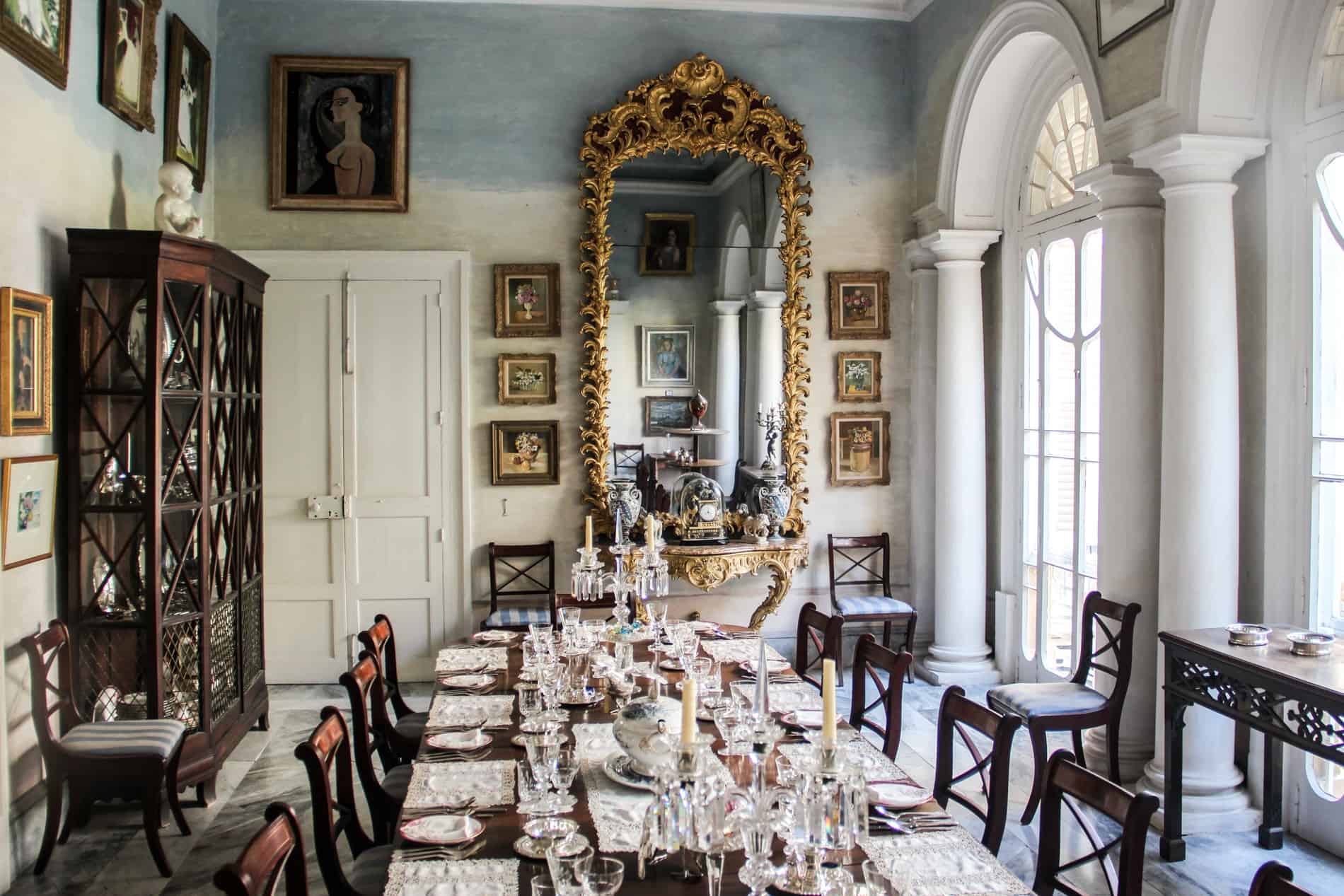
Further down Valletta’s main Republic Street is Casa Rocca Piccola. I was first drawn to it after seeing a sign for a tour of the house that included a visit to its ‘World War II Air Raid Shelters’ (Malta being the most bombed place in Europe during the war).
While privately owned and still an occupied family home, Casa Rocca Piccola’s owner, Nicholas de Piro (9th Baron of Budach and 9th Marquis de Piro), was the first member of the Maltese aristocracy to open the doors of his 50-roomed home to the public after returning to Malta from the United Kingdom in 1990. He’s also related to my friend’s family.
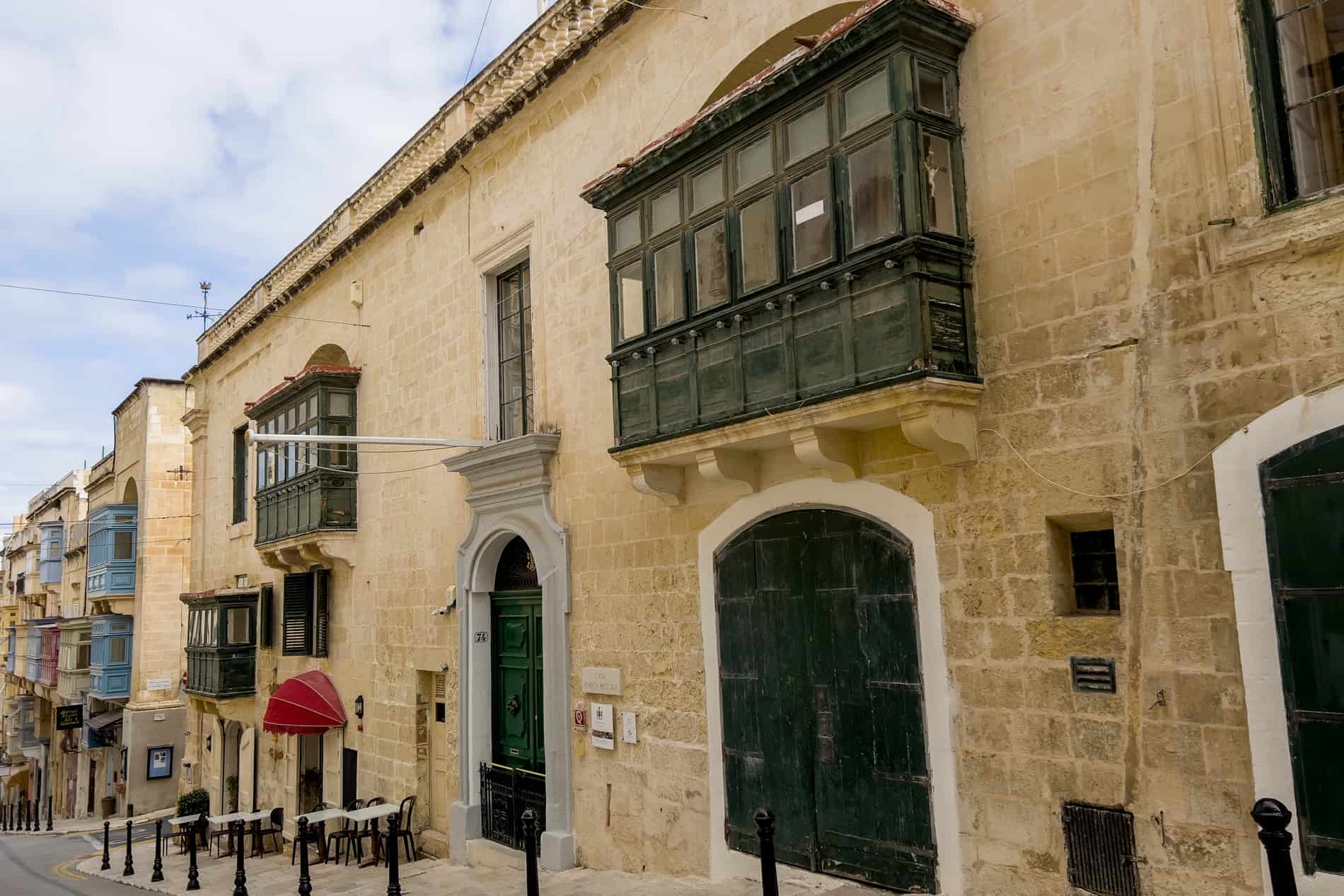
From dining rooms, a four-poster bedroom, the ‘Chinese Room’, and a chapel, this house is a window into the customs, traditions, and aesthetic riches of typical Maltese nobility. Unfortunately, you don’t get to meet Nicholas de Piro unless hosted on a Champagne Tour.
At the end of the tour, you visit the air raid shelters – a well-constructed maze of underground living space. It was the largest in the area, said to host around 30 people, although it could fit 100 when busy. Interestingly, you’ll soon spot more than one entry/exit point in the shelter, as it used to connect to the underground city of tunnels, halls, and walls of Valletta, which are still waiting to be opened to the public.
Find More Palazzos in Valletta
To add to this cluster of Palazzos near the Grandmaster Palace, you’ll find Palazzos now in a new lease of life and use.
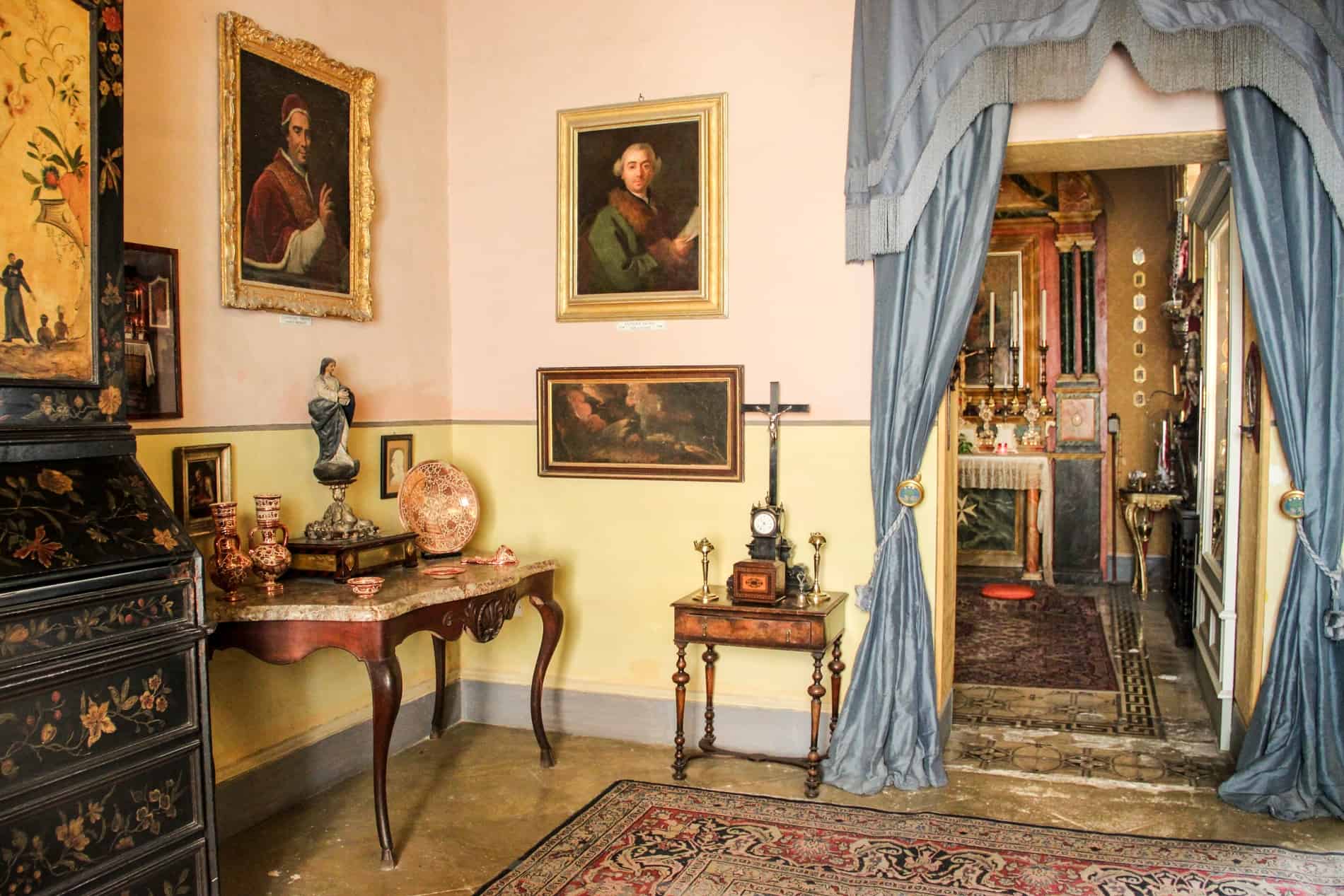
Palazzo Messina (Messina Palace) is a few doors from Casa Rocca Piccola. It’s a 16th-century building that was once connected to the larger Palazzo, Casa Rocca Grand. You will see an information board at the door detailing this.
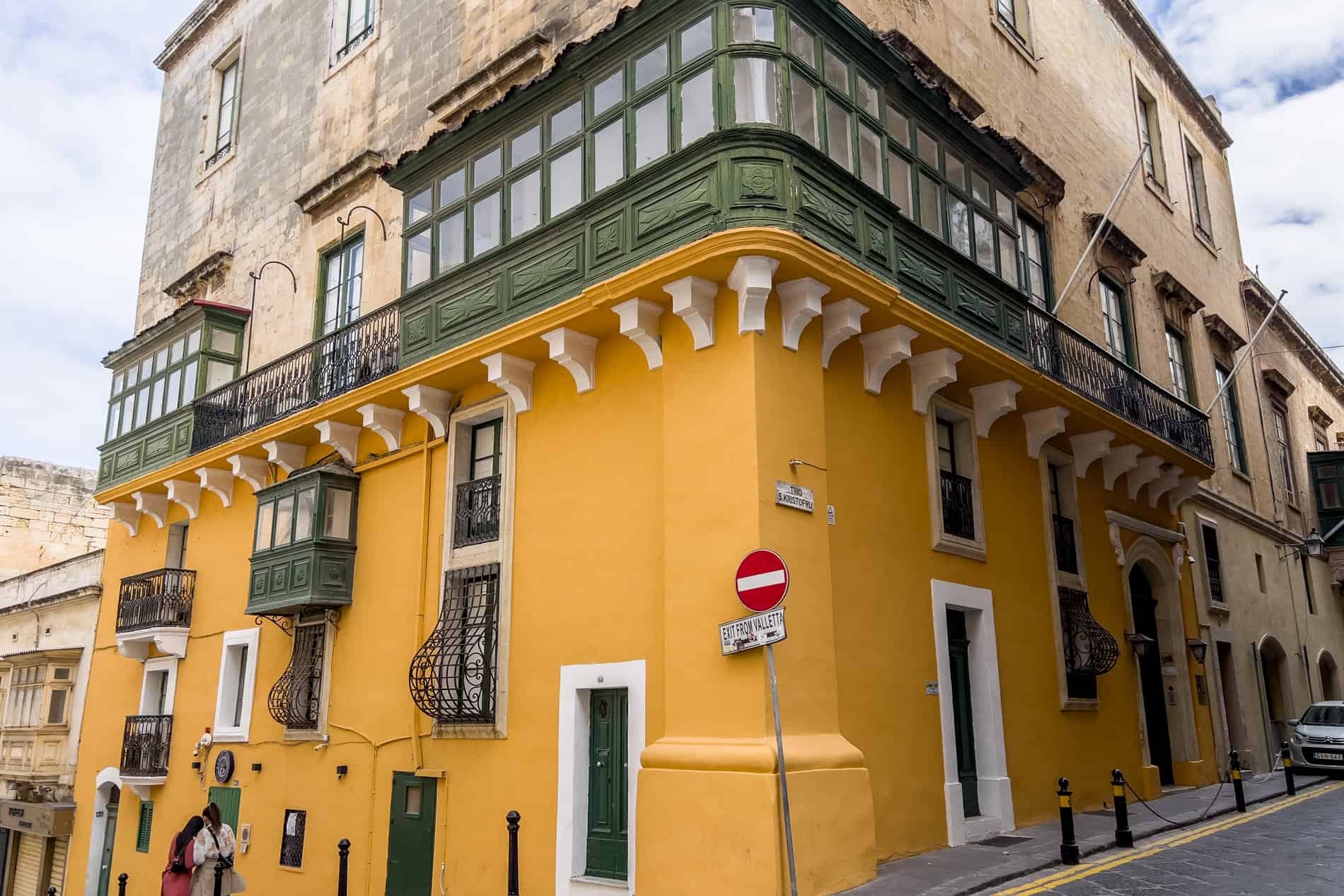
Palazzo de La Salle is an art museum, Palazzo Pereira is an events space, and Palazzo Preca is a family-run restaurant.
Palazzo Parisio in Valletta is a governmental building, although the public can access and look around parts of the ground floor. Palazzo Ferreria on Valletta’s main street houses shopping outlets on its lower floor.
Why Visit Maltese Palazzos?
In Malta, centuries-old history is still alive today. Soak up its grandeur, richness and long family lineage before it ends completely.
Would you like to live like a noble while in Malta? Which option would you choose?



Leave a Reply