
Disclaimer: This post contains affiliate links to handpicked partners, including tours, gear and booking sites. If you click through or buy something via one of them, I may receive a small commission. This is at no extra cost to you and allows this site to keep running.
From temples, tombs and slow journeys on the Nile, to understanding the delicate tourism situation as the country always tries to catch a break, there’s a lot to understand and even more to enjoy when you travel to Egypt. After travelling extensively across the country, here’s my first-hand experience of being there and how best to see it for yourself.
Planning a visit to Egypt put me in two minds. One, there was the overwhelming (and childlike) desire to explore all that remains of Ancient Egypt and a civilisation so incredibly timeworn yet within our reach. On the other hand, like many solo travellers, I struggled with the constant negative press around Egypt as a developing country and the safety concerns since the Arab Spring of the Egyptian Revolution in 2011.
In reality, I could have spent a few weeks in the country covering some serious, ancient ground, taking in every site and still having time to soak up the atmosphere of Egyptian cities. Like me, your main question will be whether to travel independently and organise each aspect yourself, or to take a tour, as I did, and cover an incredible amount of ground in 10 days.
From travel tips on when and where to go and how to get around, to responsible travel decisions and tackling general safety concerns, I’ve pulled together this comprehensive Egypt travel guide after spending nearly two weeks there. I hope it helps with your dream trip tracing ancient history.
Best Time to Visit Egypt
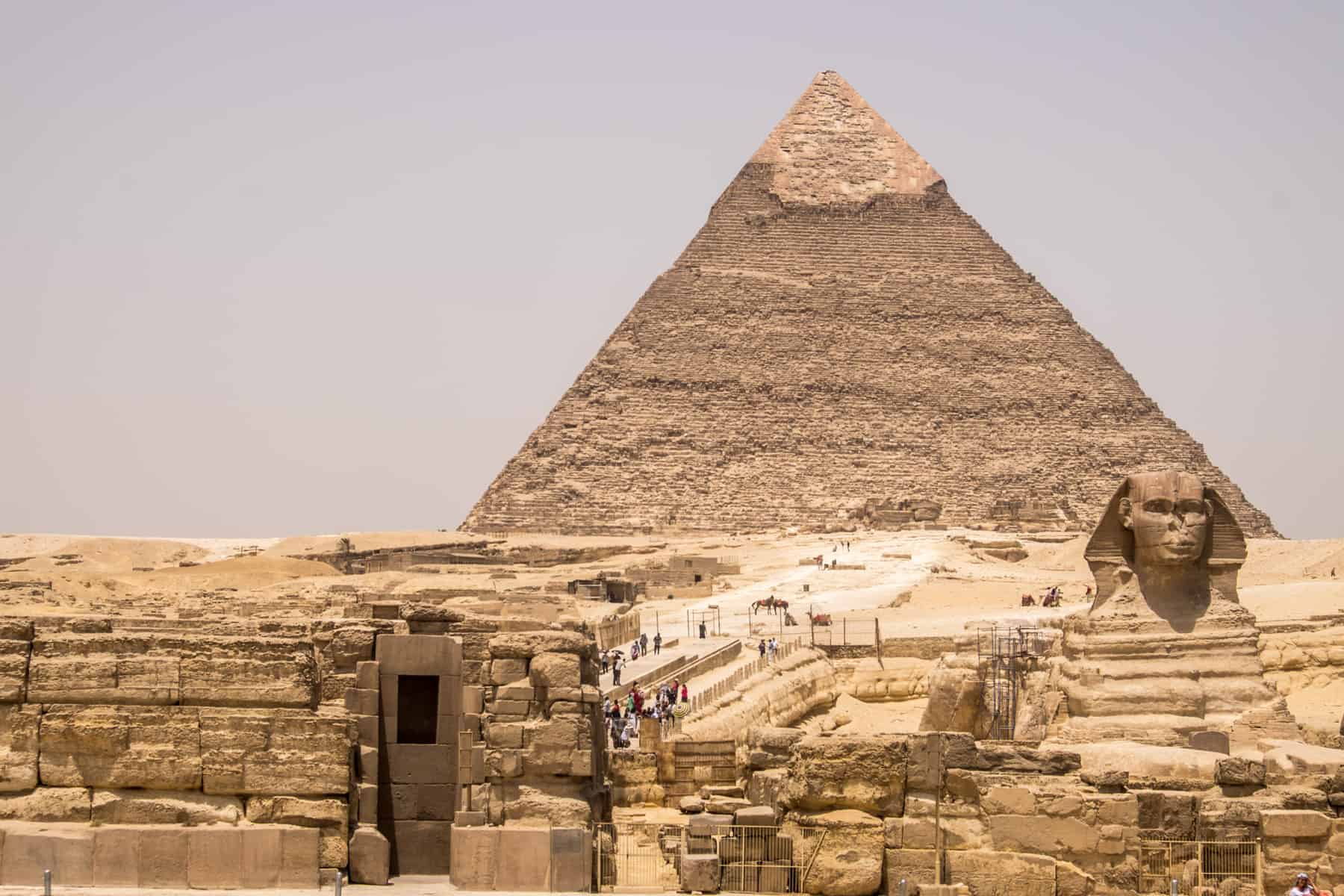
Many sites are exposed to the open air. If you want to explore in a comfortable climate and escape the heat, September to April is considered the best time to visit Egypt.
You might also want to plan your trip to avoid the summer in Egypt. The hottest months, marked by the scorching, humid summer, are from May to October. More so in the South, such as in Aswan and Luxor, but it can be stifling in Cairo, too.
Egypt Summer Travel
Visiting Egypt at the end of June, when it was swelteringly hot, might have been a crazy decision on my part. However, it did have its advantages. Namely, fewer crowds and the necessity to get to sites ultra-early to escape the heat, but ultimately be the first in, leaving time for further exploration in the area or time to rest by the pool.
Public Holidays in Egypt
I was also travelling during Ramadan, the most important holiday in Egypt. The month-long celebration where Muslims fast from sunrise to sunset. The exact dates of Ramadan change with each lunar cycle and typically fall between April and June.
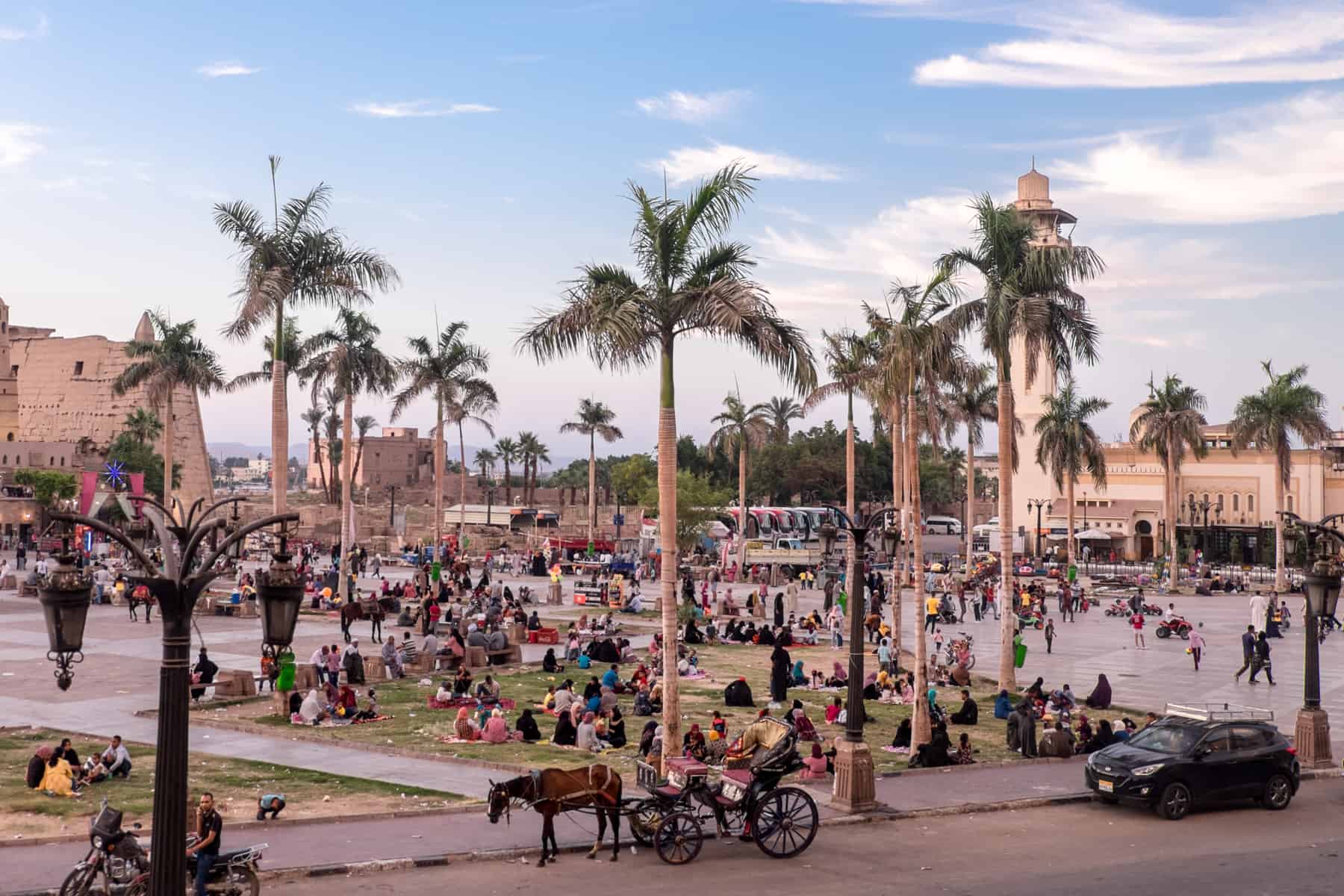
Food outlets remain closed until the evening feast time. During such times, pack snacks for the road so you have some sustenance until dinner, as you rarely find a place that stays open. Also, avoid eating, drinking, or smoking in public out of respect for those who can’t during that time. In the evening, people come together to feast. The atmosphere on the streets is electric and a show of community. Even in our hotels, the buffets brought people together, including friends and family of the hospitality workers.
Eid al-Fitr is another holiday celebration that marks the end of Ramadan. Not long after comes the Islamic New Year, known as Eid al-Adha.
Coptic (Orthodox Christian) holidays to note are the Coptic Christmas on 7th January and Coptic Easter, which typically falls a week after Catholic Easter.
Getting Your Egypt Visa and Entry Requirements
Egypt Visa on Arrival
A host of nationalities, including all Western European and Arab countries, the USA, Australia, and New Zealand, can obtain a one-month single-entry visa on arrival at Cairo International Airport or at the Egyptian land border. All countries entering Egypt require a valid passport (with a minimum of six months’ validity).
Have your trip details ready. I also had copies of my itinerary and the hotel details for my first night, just in case border control asked for extra information.
If you want to purchase a visa on arrival, you must pay in cash. The visa fee is 25 USD (or equivalent) ONLY in US Dollars (USD), Euros (EUR), or the British Pound. Egyptian pounds and credit cards are not accepted payment methods.
Look for windows (marked “banks”) selling these visas. These can be found in the area where you line up to have your passport stamped. You need to get a visa before entering the passport line. The visa is a sticker that you must affix to your passport pages before handing it to the authorities for stamping.
Egypt E-Visa
I choose to get an Egypt E-Visa – a recently introduced electronic travel authorisation system for the following eligible nationalities wishing to travel to Egypt for tourism:
Albania, Australia, Austria, Belgium, Bulgaria, Canada, Croatia, Cyprus, Czech Republic, Denmark, Estonia, Finland, France, Germany, Greece, Hungary, Iceland, Ireland, Italy, Japan, Latvia, Lithuania, Luxembourg, Macedonia, Malta, Moldova, Monaco, Montenegro, Netherlands, North Korea, Norway, Poland, Portugal, Romania, Russia, Serbia, Slovakia, Slovenia, South Korea, Spain, Sweden, Switzerland, United Kingdom, United States, Ukraine, The Vatican
The e-Visa for Egypt is either a single- or multiple-entry visa, valid for three months, and allows the visitor to stay in Egypt for up to 30 days for tourism.
You can apply online without visiting the embassy. It is a simple process that saves time and hassle upon arrival and gives you peace of mind before your trip, knowing your visa for entry is already secured.
Egypt Online Visa FAQs, fees, requirements, and eligibility to apply can be found here.
Getting Around Egypt
While there are train links, navigating ticketing systems and booking can be tricky, and the nationwide high-speed service is due to be completed by spring 2026.
However, several bus networks operate between the major cities connecting Cairo, Alexandria, Aswan, and Luxor. You can check routes and timings and book tickets via the 12Go platform.
Taking a Tour to Egypt to Get Around
On a small-group adventure tour, I could see some of the most colossal, famous, and magnificent (and still being uncovered). I took this trip in partnership with G Adventures, choosing a highlights of Egypt itinerary.
This trip included Cairo, Giza and the Great Pyramids, Alexandria, Aswan, the Philae Temple, Abu Simbel, Kom Ombo Temple, Luxor and the Valley of the Kings, along with additional excursions to Saqqara and Memphis.
A Responsible Tour of Egypt
Egypt tours are plentiful, but choosing one that opts for certification and responsibility is important.
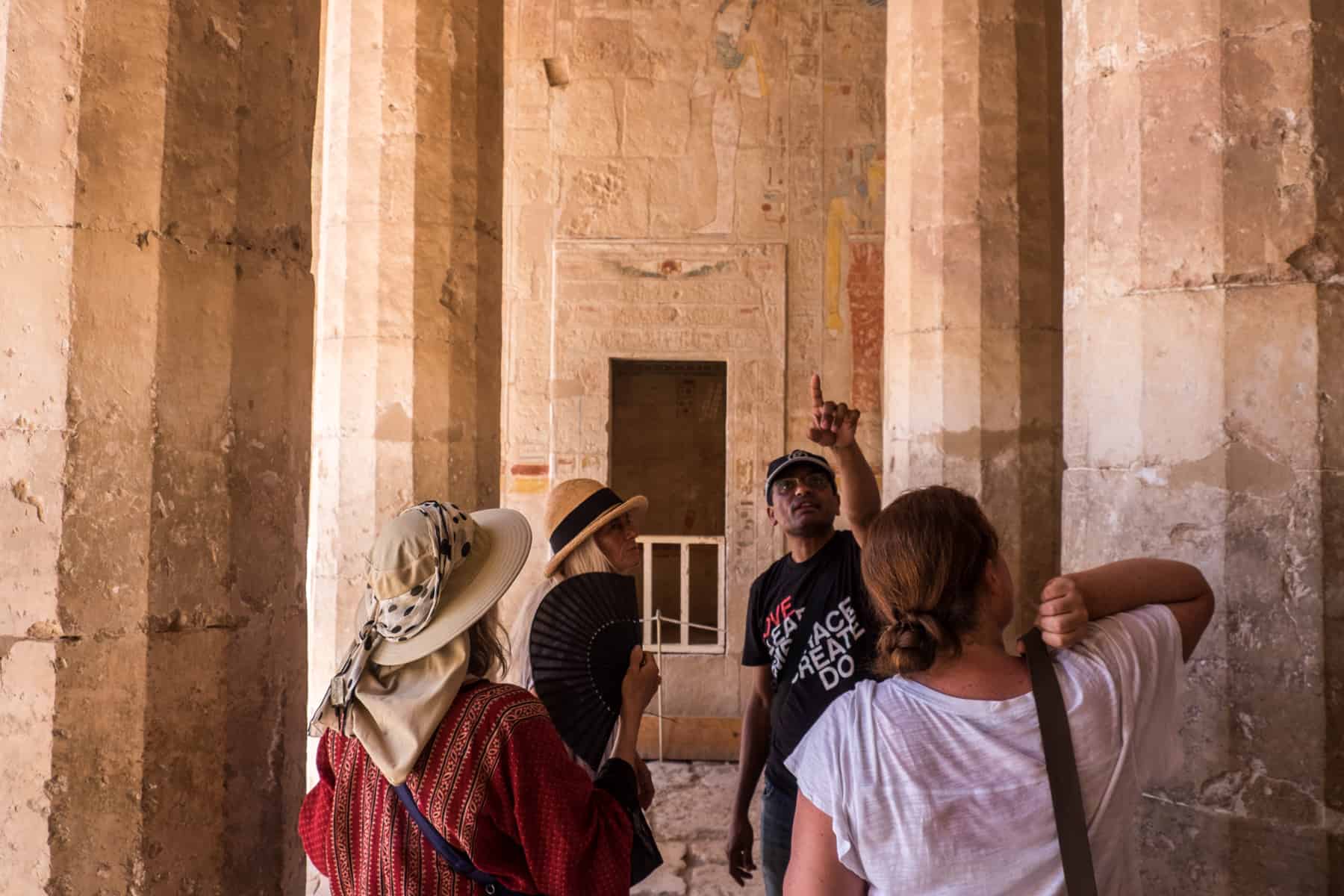
I travelled to some of the most revered wonders of the ancient world here with a local and a certified Egyptologist – the trip leader has an education in Archaeology, knows every conceivable detail about the history and volunteers his time in helping to uncover ancient sites today.
Not to mention travelling for social good, where we supported local families during a visit to a Nubian village in Aswan, which included a home-cooked dinner.
Many people grapple with arranging everything in each city and travelling to Egypt independently, which is doable but much more hassle, or choosing the comfort of a small group where the main components of travel are organised.
For many people on my trip, the group tour option also relieved safety concerns.
Deciding on the Best Egypt Tour
My Wonders of Egypt tour covered the sites listed above, including the Nile Cruise and the off-the-beaten-path Abu Simbel excursion. There are seven tours altogether to choose from, all including some of the famed sites in Egypt, including:
- Egypt on a budget, for those wanting the ease of organisation with minimal cost by using public transport and floating down the Nile on a felucca.
- Shorter trips, such as Best of Egypt, cover Cairo, Luxor, and Aswan, including a Nile cruise on a traditional felucca and the Luxor-to-Cairo flight.
- A chance to visit the Red Sea area on the Highlights of Egypt trip includes time in the coastal city of Hurghada, an overnight train to Aswan, and a felucca sail between Aswan and Luxor.
Guided tours in Egypt don’t necessarily have to be stifling. During my trip, I had plenty of time to rest, explore each town and city, and after the main guided visits to the ancient sites, I was left with time to explore on my own.
For a wider selection of organised group trips, check out this curated list of Egypt tours from TourRadar.
Day Trips in Egypt for Independent Travel
For those travelling independently but still wanting ease in planning and getting between destinations, consider these day trips and multi-day excursions that cover Egypt’s sightseeing highlights.
Cairo
Enjoy a full-day tour of Old Cairo and its Islamic and Coptic sites; take the Pyramids and Sphinx Tour with a River Nile Felucca Ride; or explore the Pyramids on a quad bike. Solo female travellers can take a women-led tour of Cairo that covers Giza, the Egyptian Museum, and the Khan El Khalili Bazaar.
Take a full-day tour that combines Giza with Memphis and Sakkara, head out on a coastal adventure to the Red Sea, or enjoy an archaeological day trip to Alexandria.
Luxor
Choose from full or half-day East and West Bank tours and see the temple valley on a Luxor sunrise hot air balloon ride.
Aswan
Start your time in Aswan with a day trip to Abu Simbel before embarking on a 2-day Nile River cruise from Aswan to Luxor, which includes a hot air balloon ride.
Where to Go in Egypt
From temples and tomb hopping while crisscrossing four major cities, you will uncover many ancient sites that you may have to pick and choose from according to your time. The main reason why you travel to Egypt, after all.
READ MORE: The Best Places to Visit in Egypt
Cairo – The Last Remaining Ancient Wonder of the World
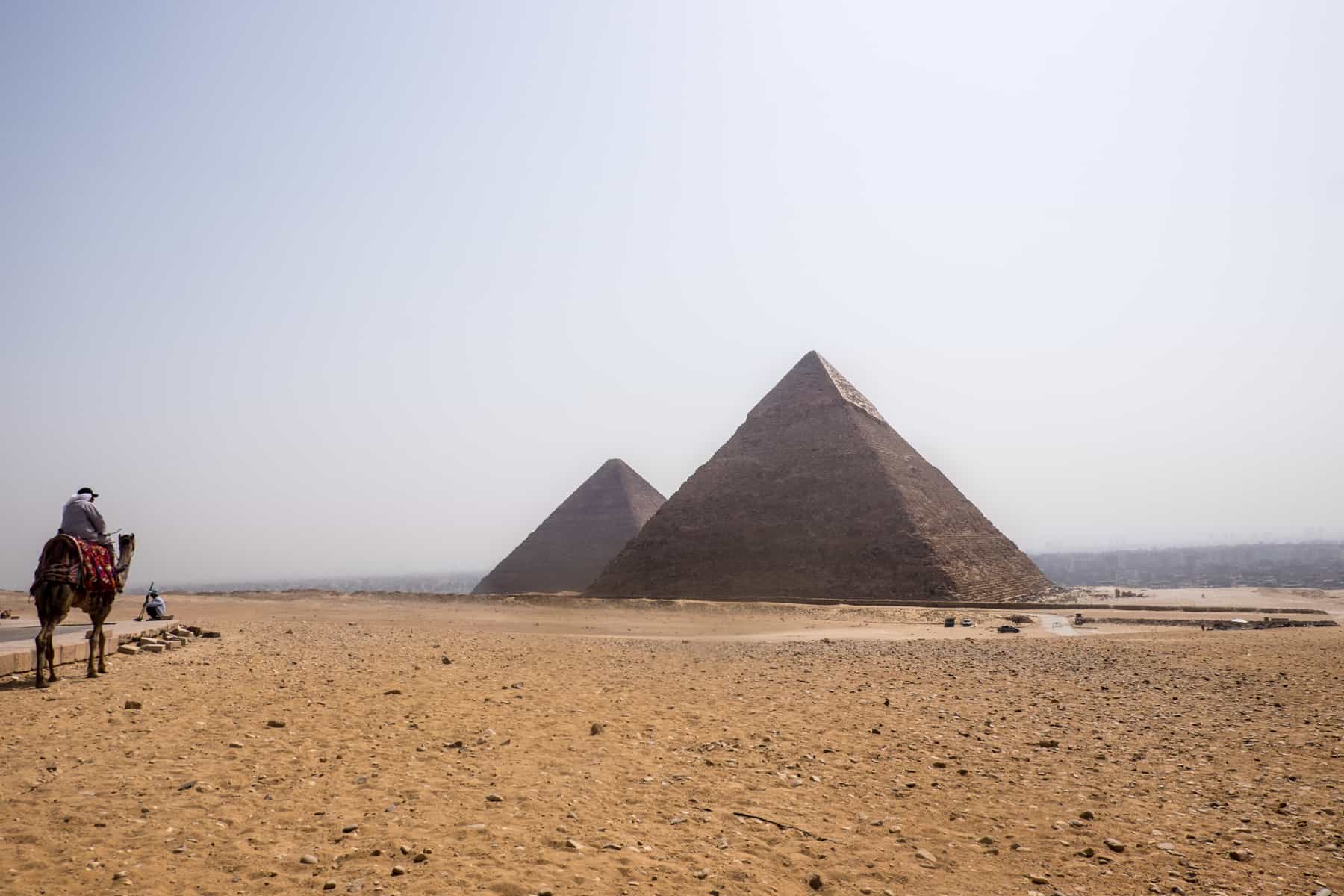
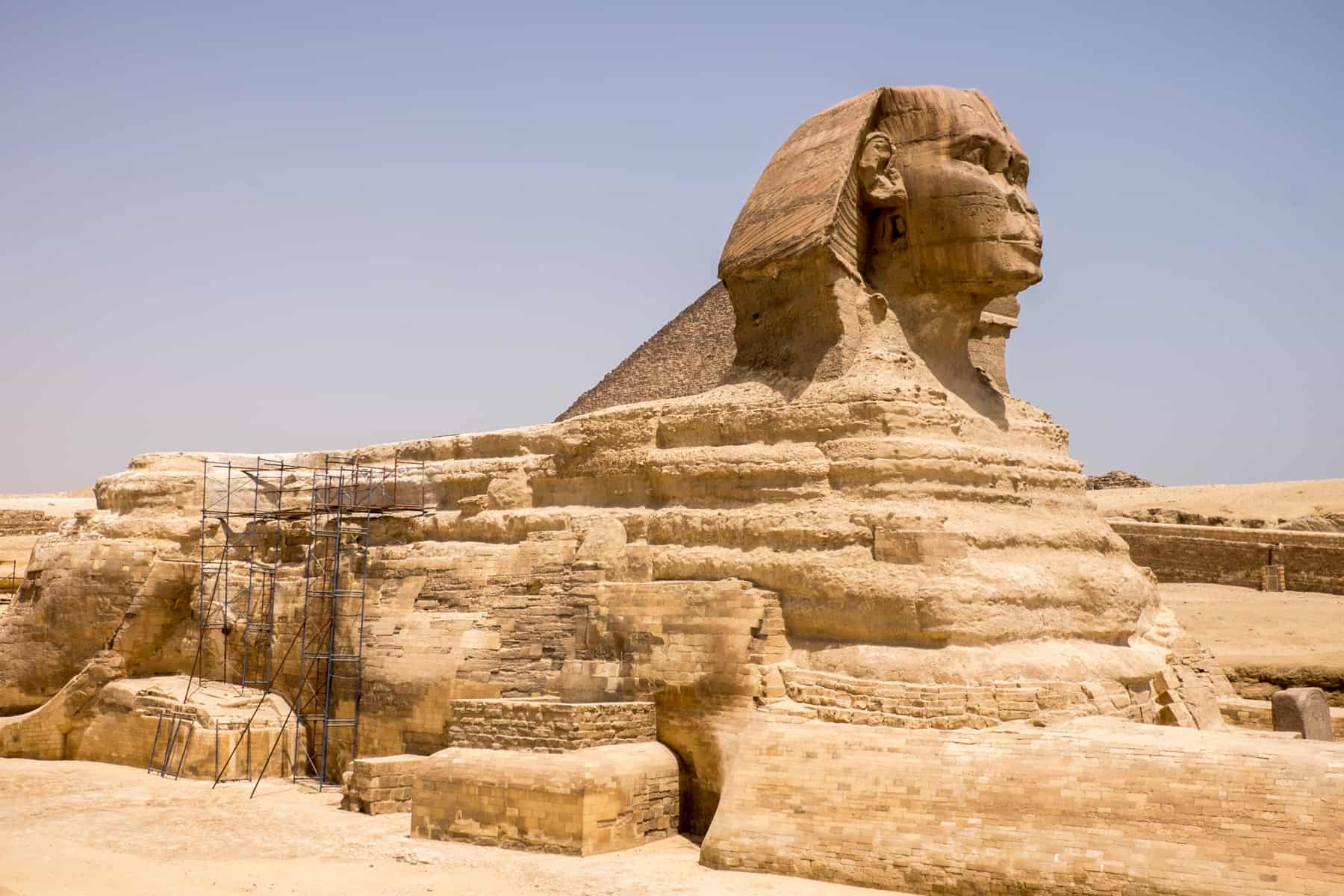
Visit Egypt’s most iconic site – the Great Pyramids of Giza and the Sphinx in the remote desert area of Giza west of the Nile River – before visiting the Egyptian Museum. With 10,000 artefacts documenting every period of Egyptian history, the showcased treasures include the tomb of Tutankhamun and the Egyptian Mummy Room.
In the city, visit the Khan El Khalili Bazaar for local goods such as gold, silver, copper, and perfumes and tour Islamic and Coptic Cairo, where sites like the Hanging Church and Sultan Hassan Mosque show a city where different faiths stand side by side.
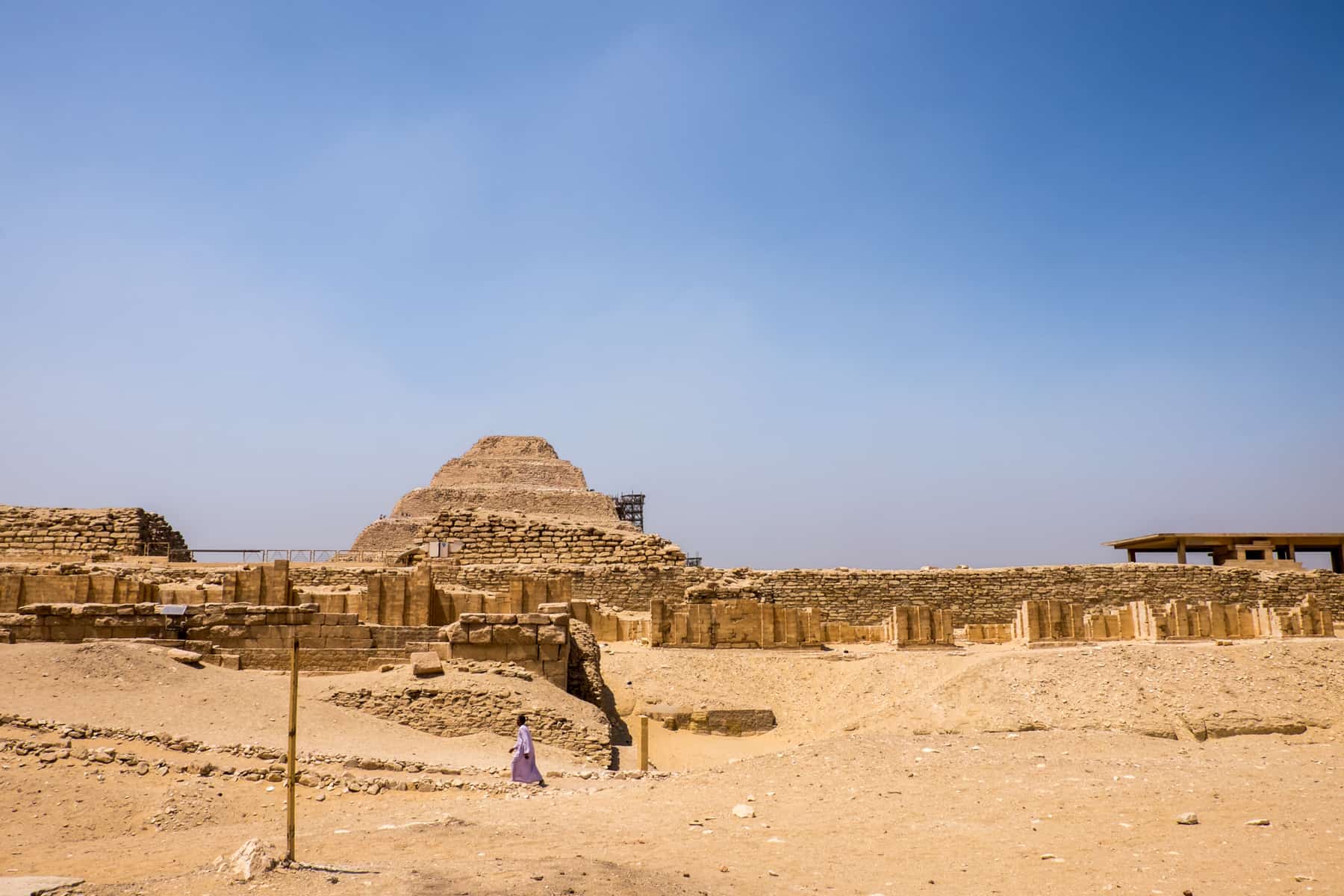
2.5 hours drive south of Giza is Memphis – the ancient capital of Egypt, where you can view the massive statue of Rameses II. Nearby Saqqara – the site of Egypt’s first Pyramid – is an important archaeological site with noble family tombs, in the early stages of extensive excavation, with major finds recorded in April 2020.
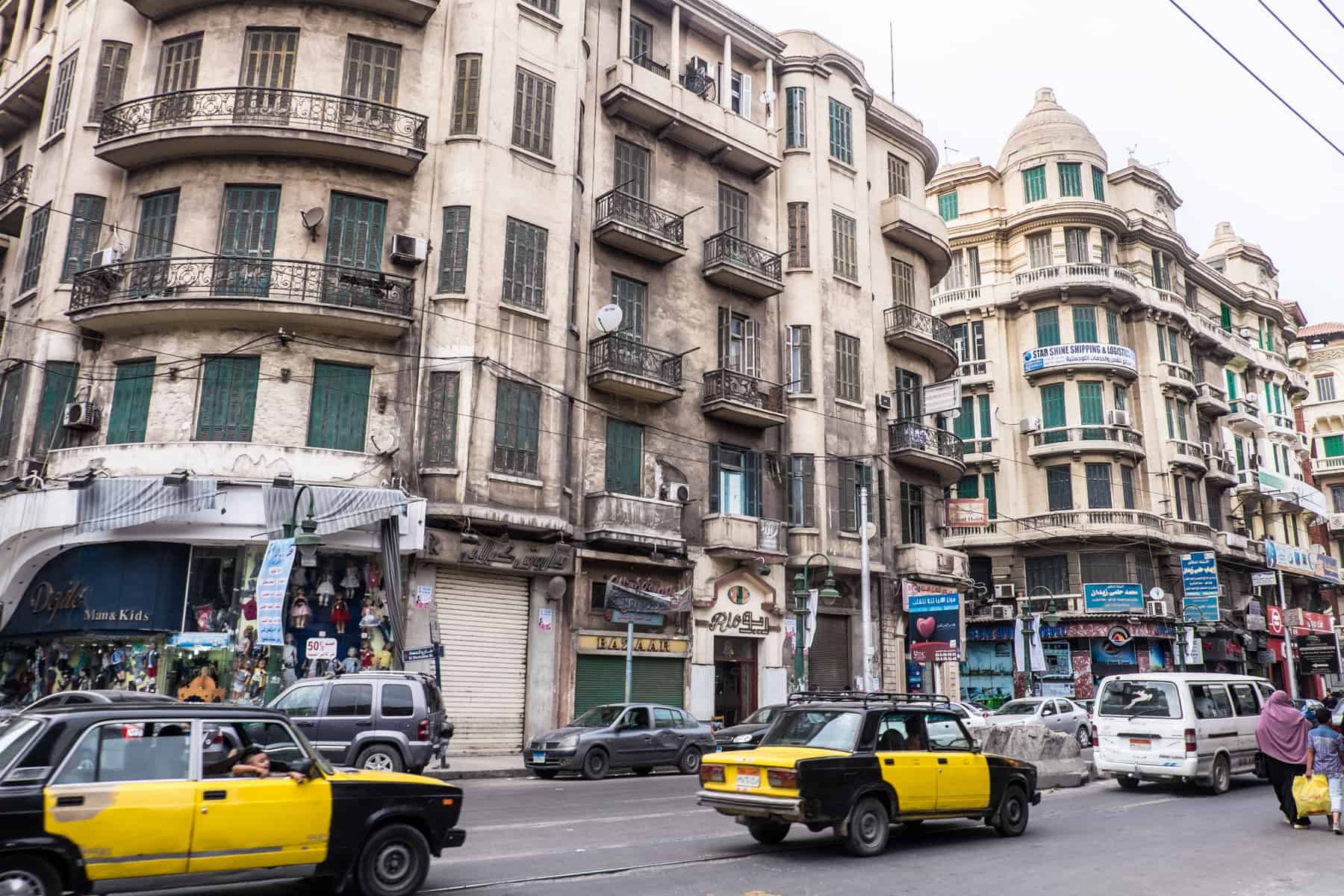
Old Town Alexandria – European Character and Mystery
Travellers often overlook the northern city of Alexandria on the Mediterranean coast.
The main sites include Pompey’s Pillar – a Roman 20-meter-tall victory column from a 297 AD temple complex, and the Catacomb of Kom ash-Shuqqafa – a 2nd-century resting place for a wealthy family who were still practising the ancient religion of Egypt.
The Library of Alexandria was one of the ancient world’s greatest and most famous libraries, destroyed by a fire in the 1st Century BC. Today, a new library stands just meters from the estimated location of the ancient one, with the same ethos: a centrepiece of knowledge available to all.
Aswan – Nubian Egypt
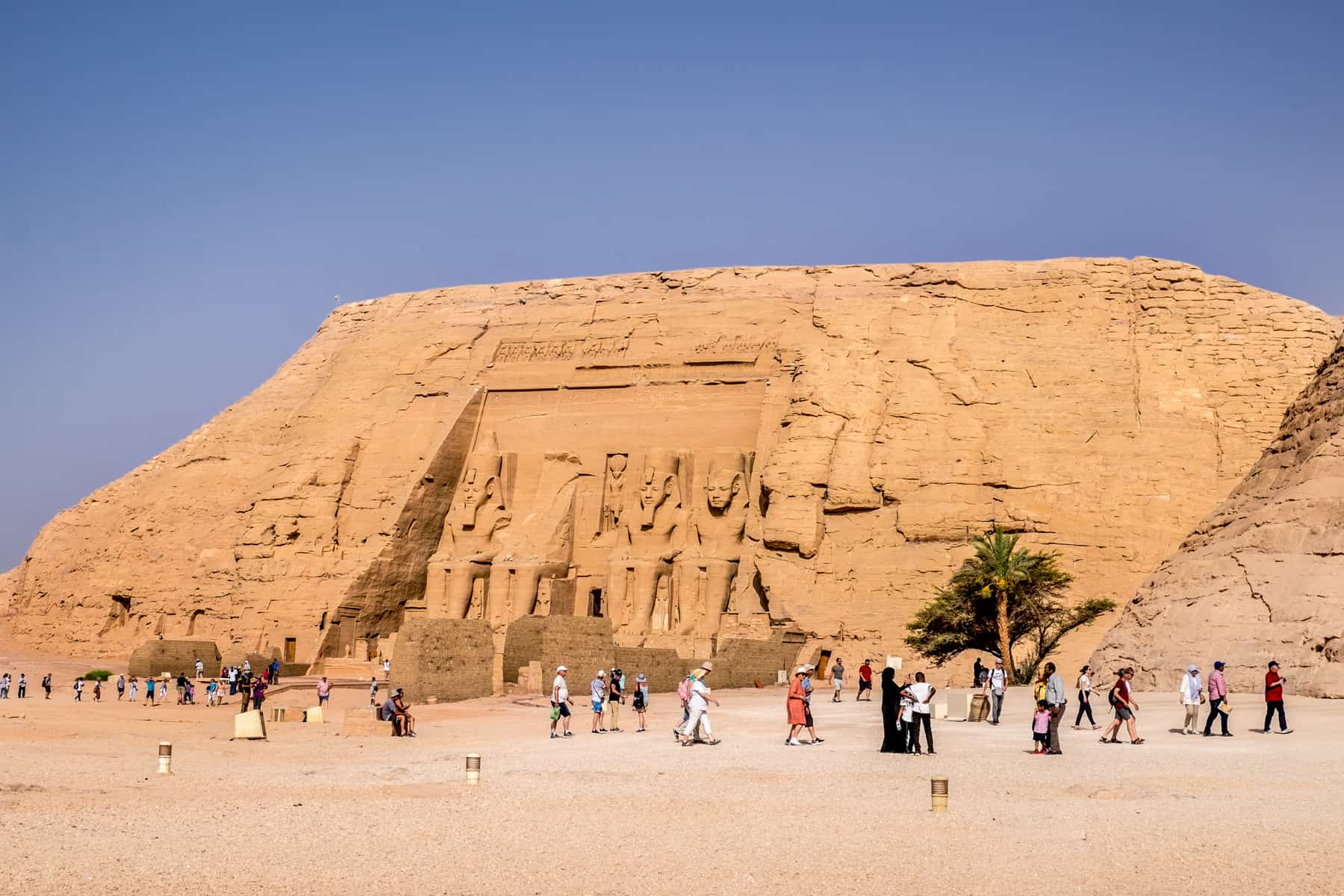
A three-hour drive south of Aswan is Abu Simbel – considered one of Egypt’s most beautiful temples. The two rock temples carved out of mountainside were built by the Egyptian Pharaoh Ramesses Il between 1274-1244 BC – one dedicated to himself in godlike form, and one for his wife, Queen Nefertari.
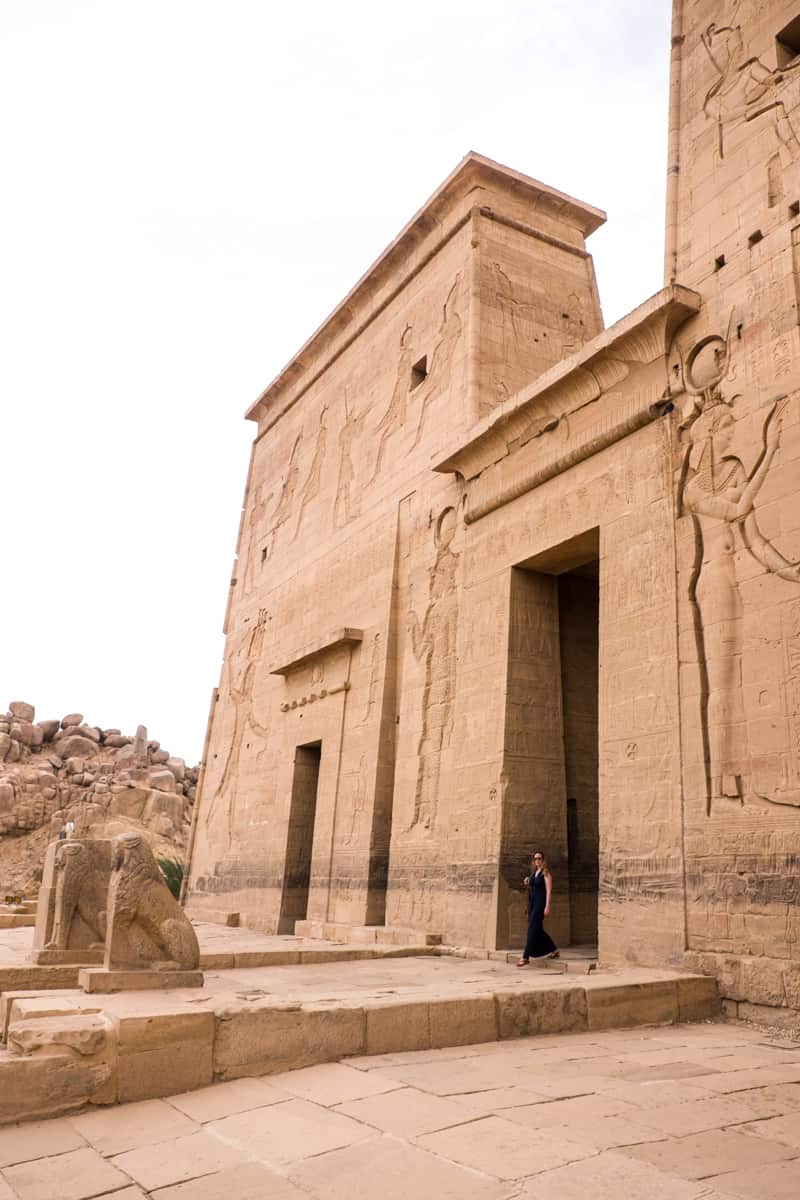
Island-bound Philae Temple is a monument where Greek-Roman history, in columns that line the exterior entranceways, sits alongside Ancient Egyptian history, with the last use of Egyptian hieroglyphs adorning the inner walls.
In Aswan, head to the ancient quarry to see the Unfinished Obelisk – the tallest Egyptian obelisk ever erected until a considerable crack appeared during the carving process. Finish the day with the sounds of vendors hawking their wares at the Sharia el Souk market, where you can shop locally for textiles and spices, including the famed Aswan black pepper.
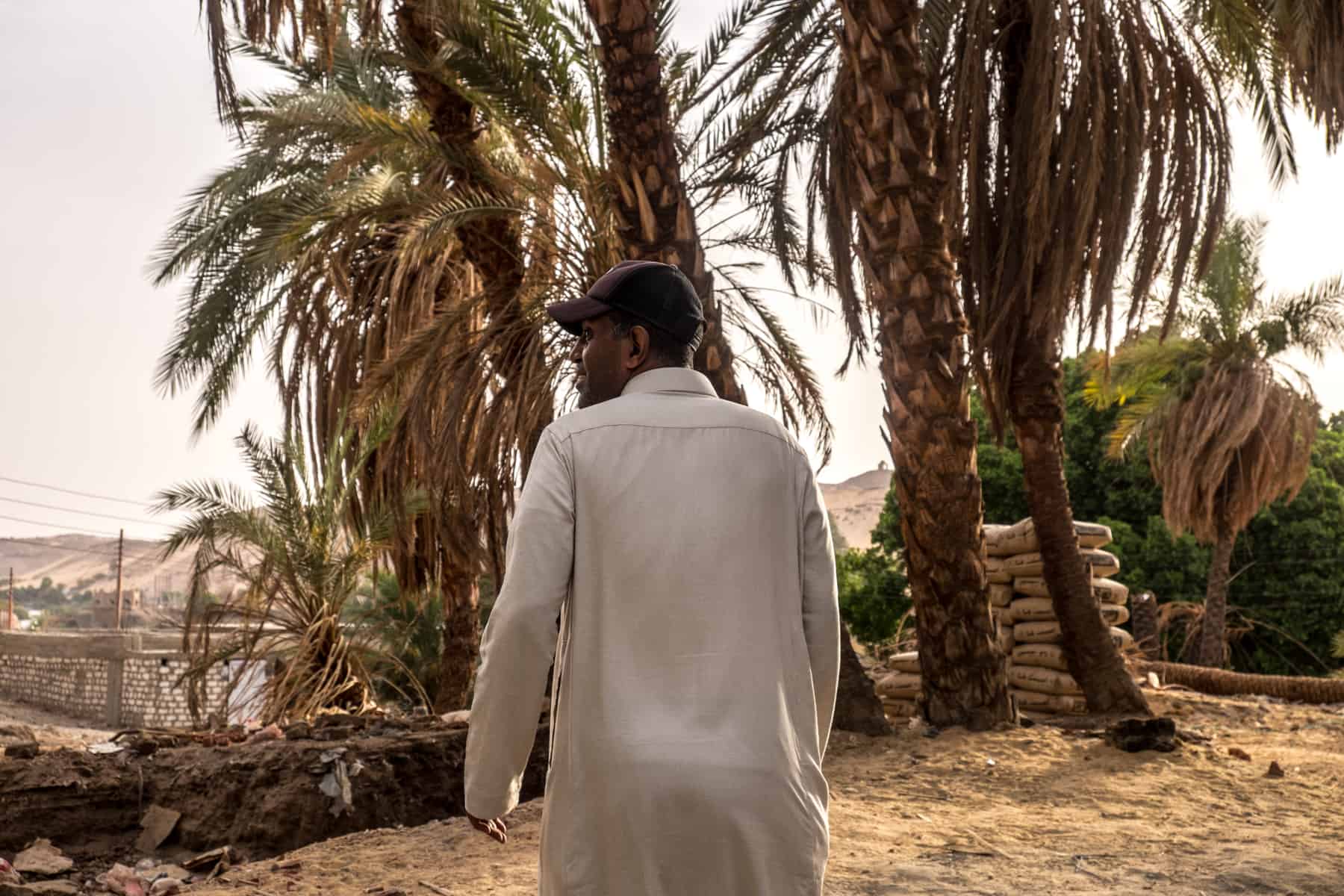
Then board a felucca manned by a local from one of the Nile islands before visiting a Nubian village home for a walking tour and a delicious traditional dinner. The Nubian culture is among the oldest in Egypt and one of the earliest civilisations in ancient Africa. The host family can use this ‘local living moment’ on our trip as a regular source of income, where your money stays in local hands.
Take a Nile Cruise Between Aswan and Luxor
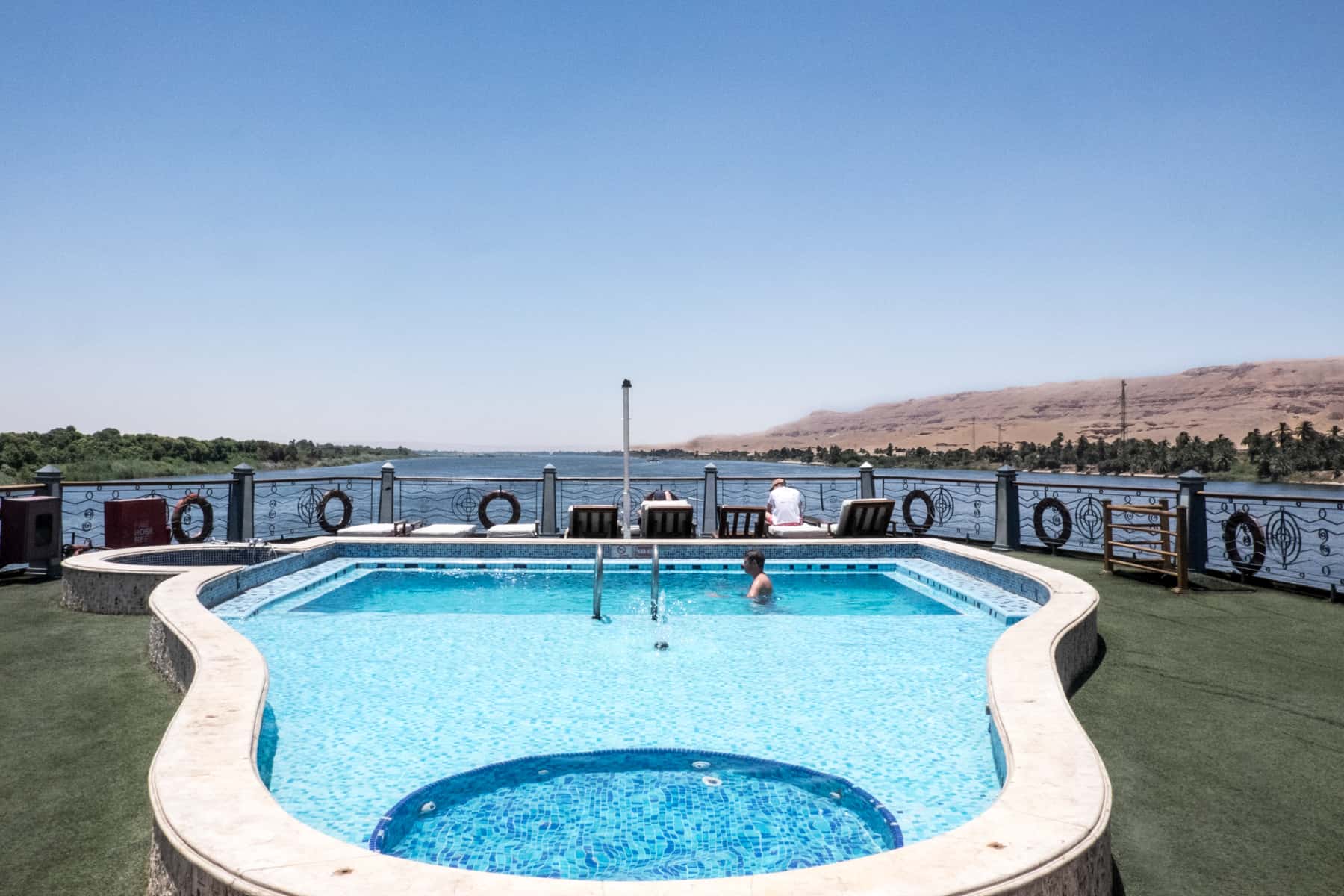
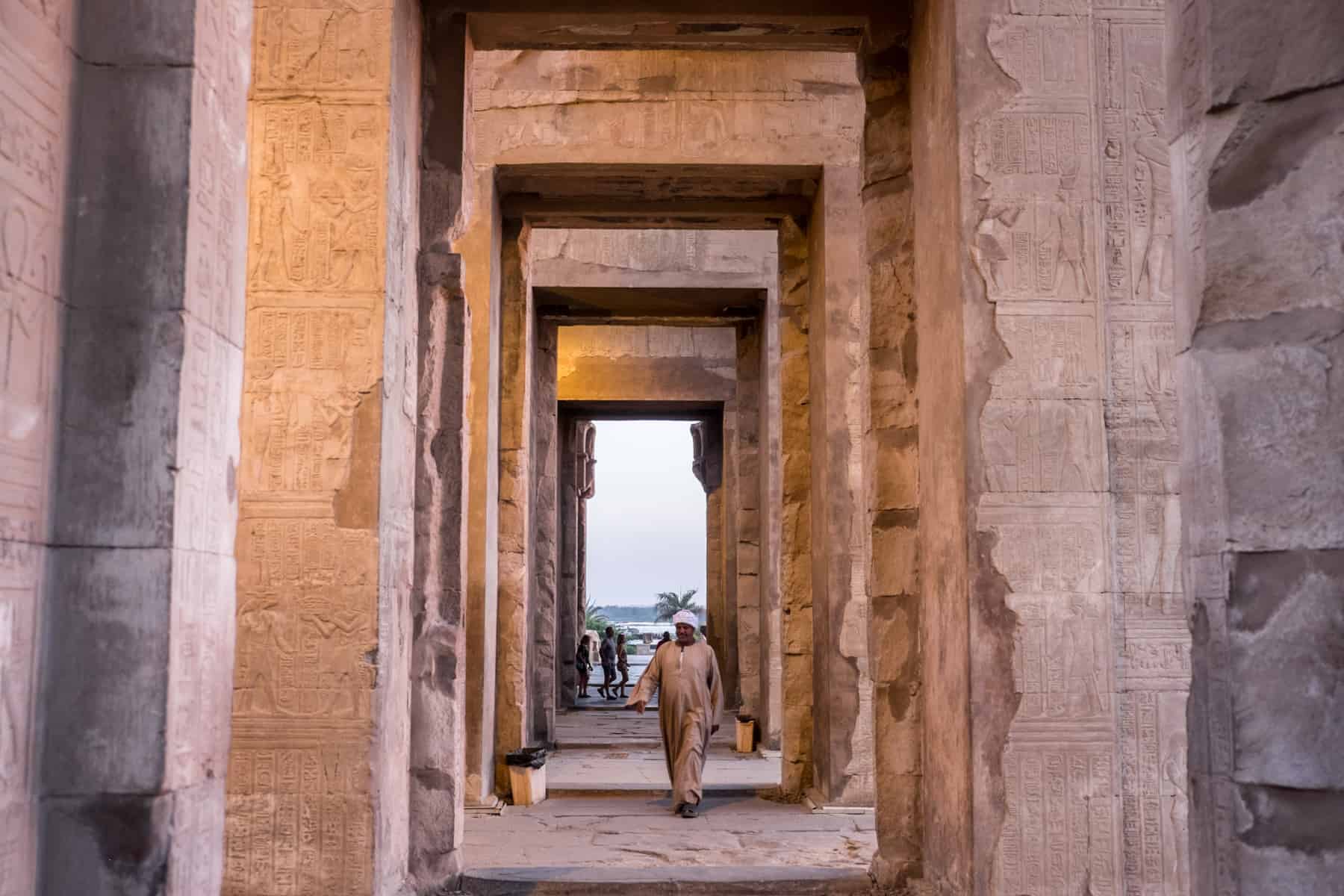
Travel upriver on a two-day, three-night adventure, passing desert oasis scenery and stopping for a visit to Kom Ombo Temple for sunset.
Kom Ombo was built during the Graeco-Roman period (332 BC-AD 395) and was dedicated to the crocodile god Sobek and the falcon god Horus. Mummified crocs found during the excavation are also on display.
Luxor – Land of the Greatest Pharaohs
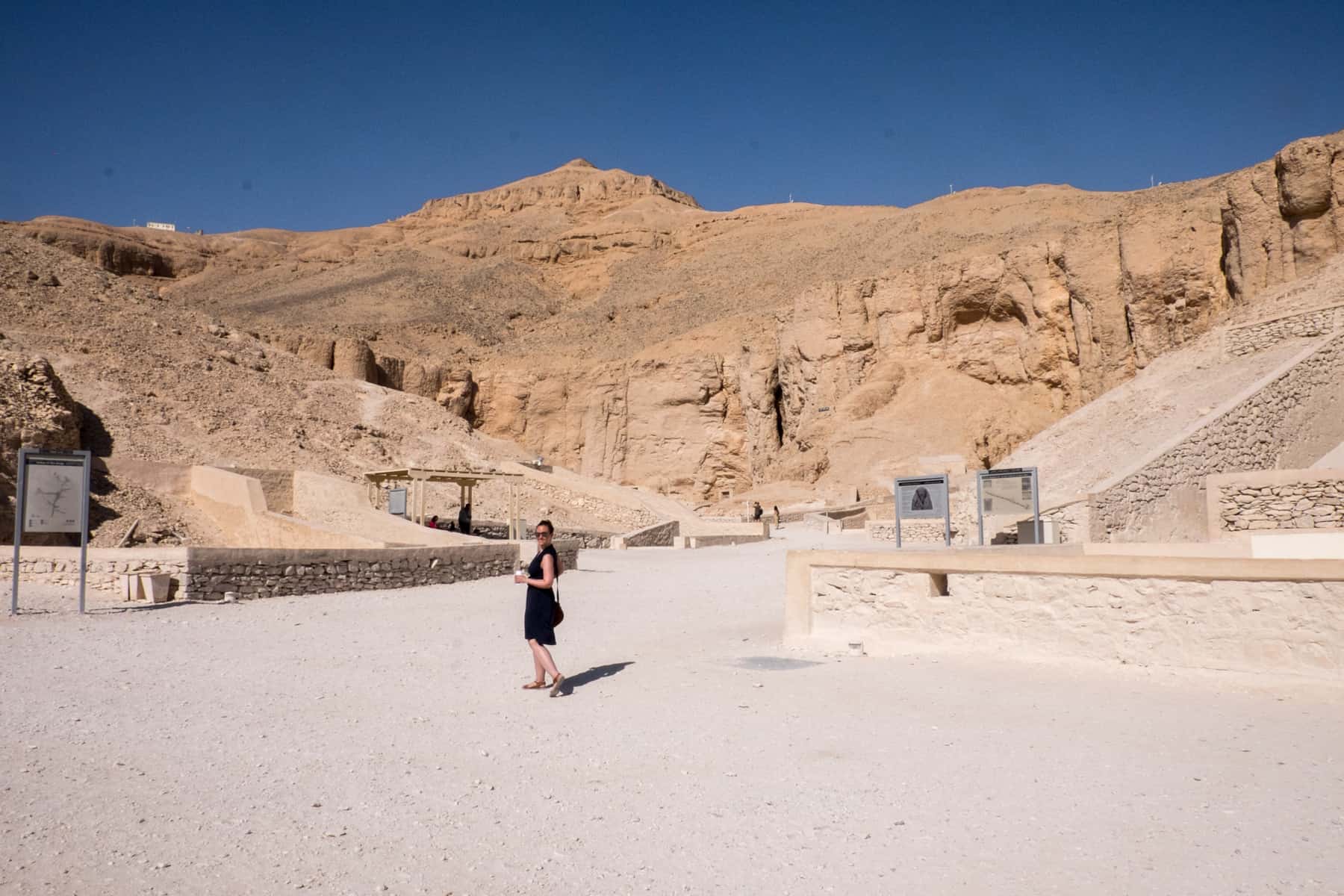
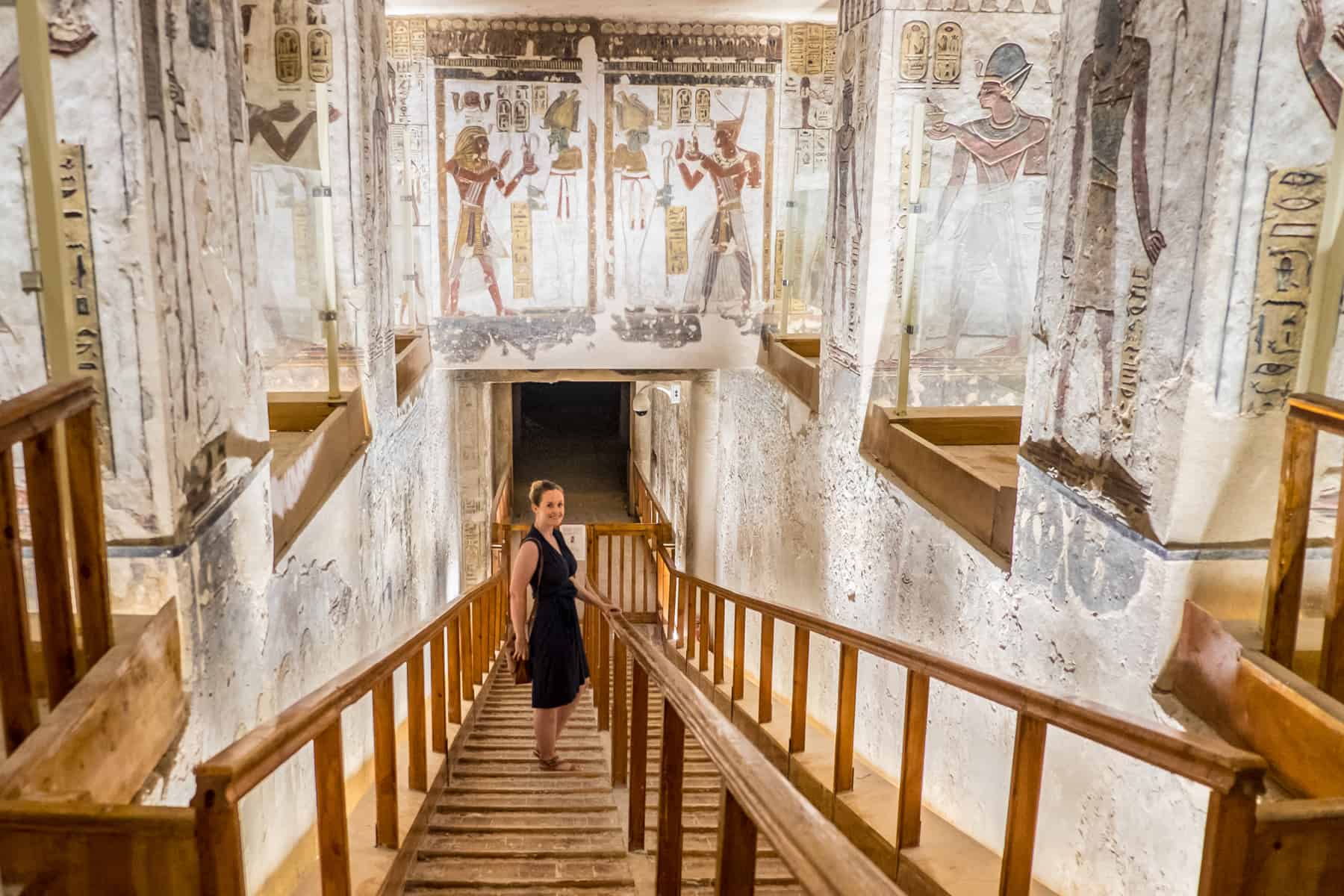
No trip to Egypt is complete without visiting the vast archaeological site of the Valley of the Kings on the ancient site of Thebes in Luxor’s West Bank. This fascinating network of tombs and tunnels is an ancient burial ground and the final resting place for Egypt’s New Kingdom rulers.
The ticket for the Valley of the Kings grants you entrance to three tombs out of the 63 on-site, with the most impressive being the tomb of Ramses IV and Tutankhamen’s tomb, which is worth the extra ticket cost, and to complete the story after viewing his treasures at the Egyptian Museum.
The tiered complex built into limestone rocks of the Temple of Hatshepsut symbolises the power of female rulers to the throne of Egypt. Queen Hatshepsut disguised herself as a man, which is why you will still see carvings of the typical Pharaoh figure.
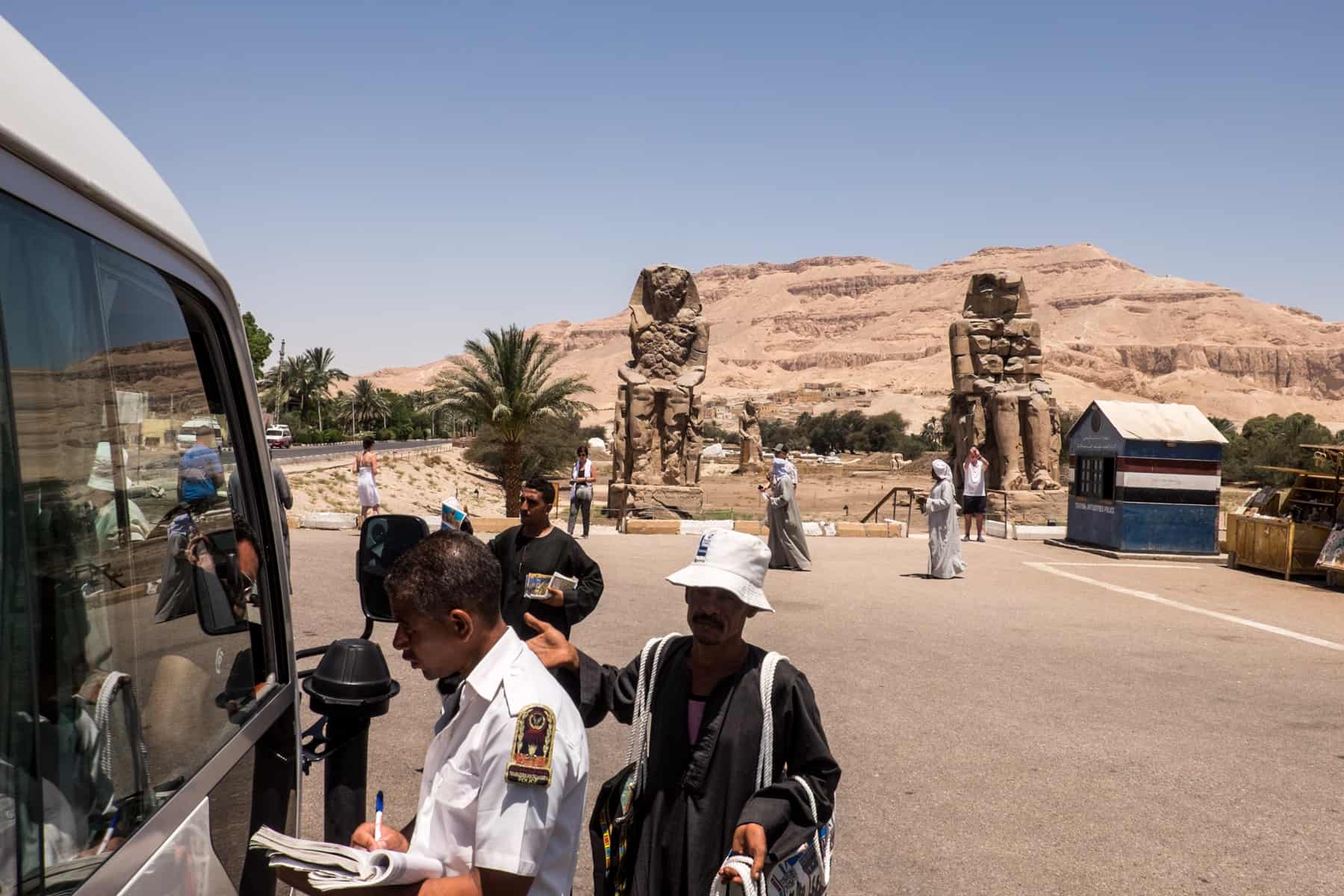
Close by are the two towering statues of Amenophis II at the Colossi of Memnon site – centrepieces from the front of a grand temple that no longer stands.
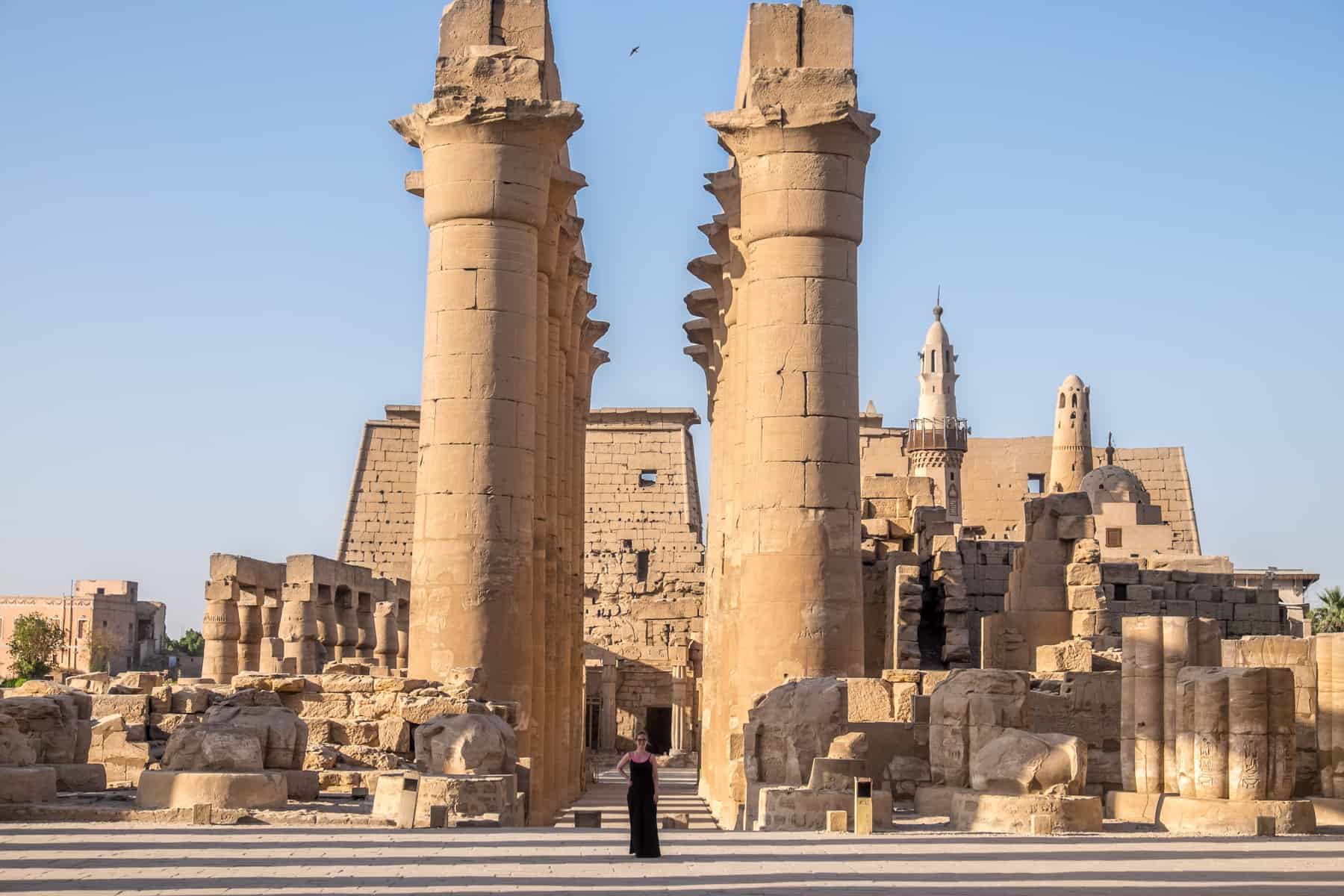
In Luxor, visit Karnak Temple, which was once the centre of all religious life in Egypt and was built and expanded over generations. Linked by a recently uncovered two-mile Sphinx Alley, complete your sightseeing with a visit to the Luxor Temple. Ancient Egyptian, Coptic Christianity, and Islamic architecture intertwine throughout the temple, showing its evolution in worship over the thousands of years since its construction in 1390 BC.
Is Egypt Safe?
It can’t be said Egypt is 100% safe at any time, but it is generally considered safe for visitors travelling through the established routes and major sites. The UK and US governments advise against travel to northern Sinai (excluding Red Sea resorts like Sharm el-Sheikh and Hurghada), parts of the Western Desert, the Hala’ib Triangle, and the border to Gaza. Most travellers stick to well-established tourist routes without issue.
However, security is taken seriously across the country, with the Egyptian Tourism and Antiquities Police monitoring ancient sites, landmarks and hotels, operating roadside checkpoints and vehicle checks, and overseeing pre-approved itineraries for guided travel. The only major hindrances and annoyances come from the risk of petty crime such as pickpocketing, common scams such as overcharging and fake guides and vendor harassment in souks and around major attractions. When it comes to solo female travel, women should be more vigilant of harassment.
READ MORE: Is it Safe to Travel to Egypt?
What to Wear in Egypt
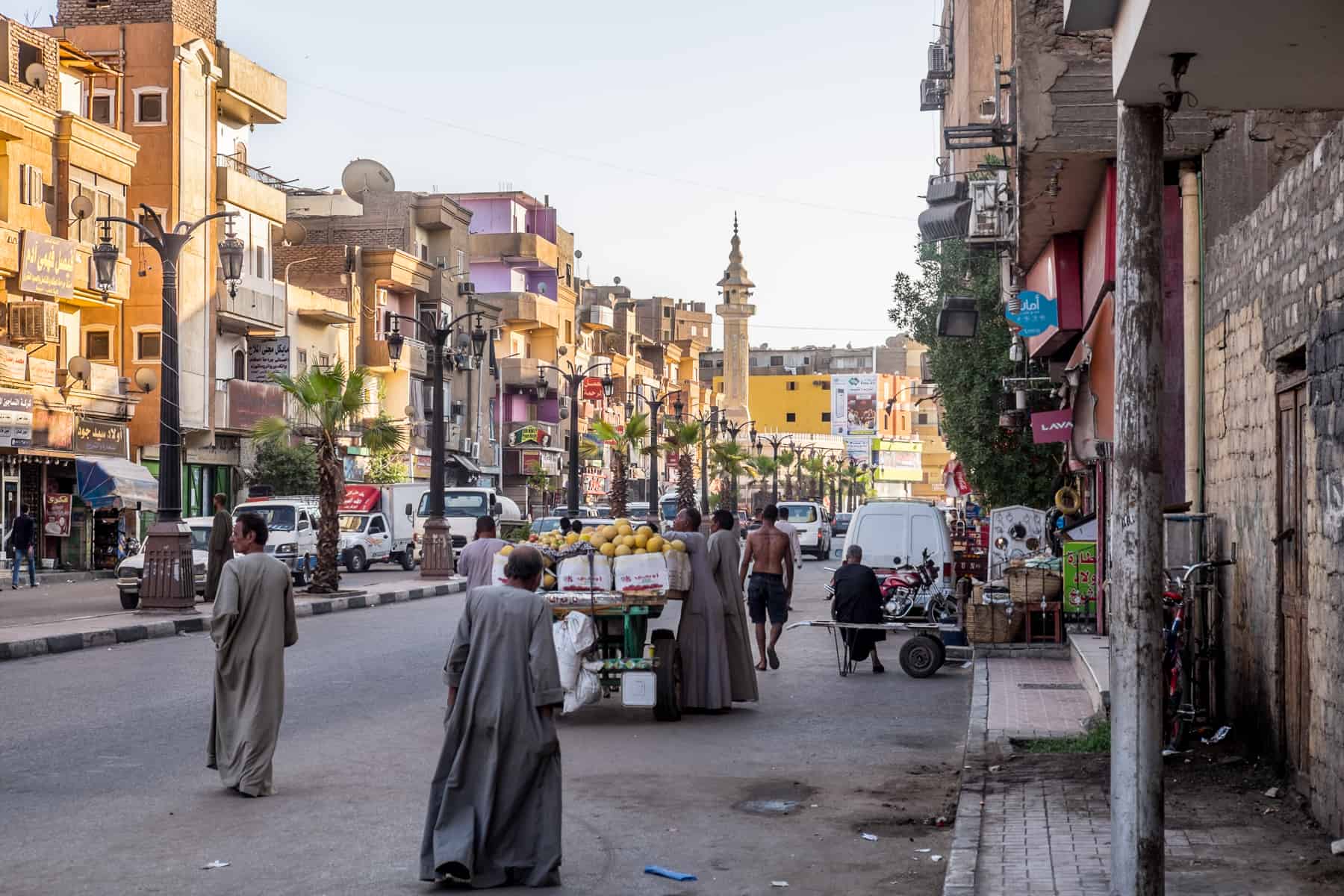
Trying to figure out what to wear in Egypt while packing for the trip was stressful, knowing I would be navigating different cultural scenarios, enduring extreme heat, and choosing items I knew would be ruined by sweat-drenched, dusty conditions.
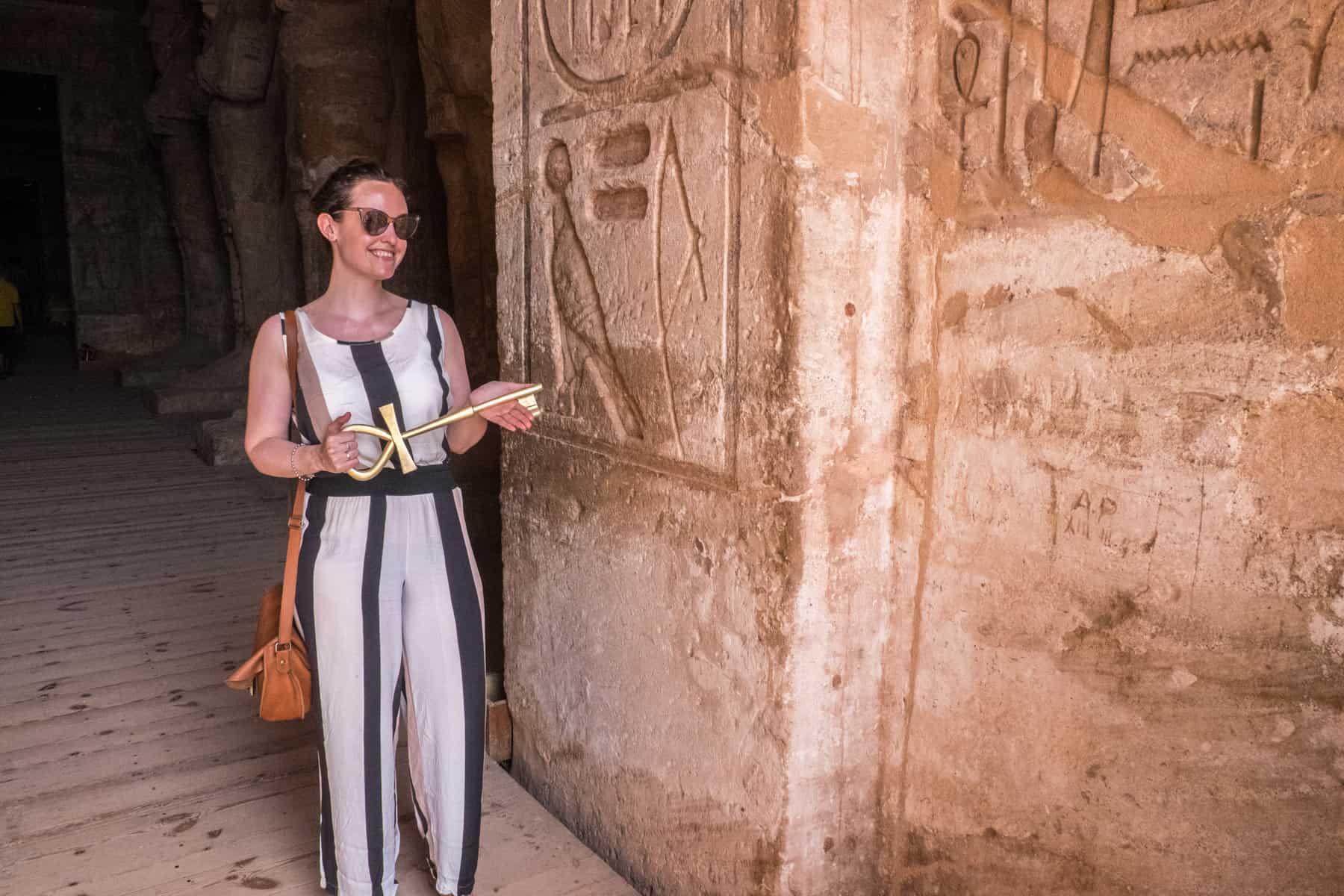
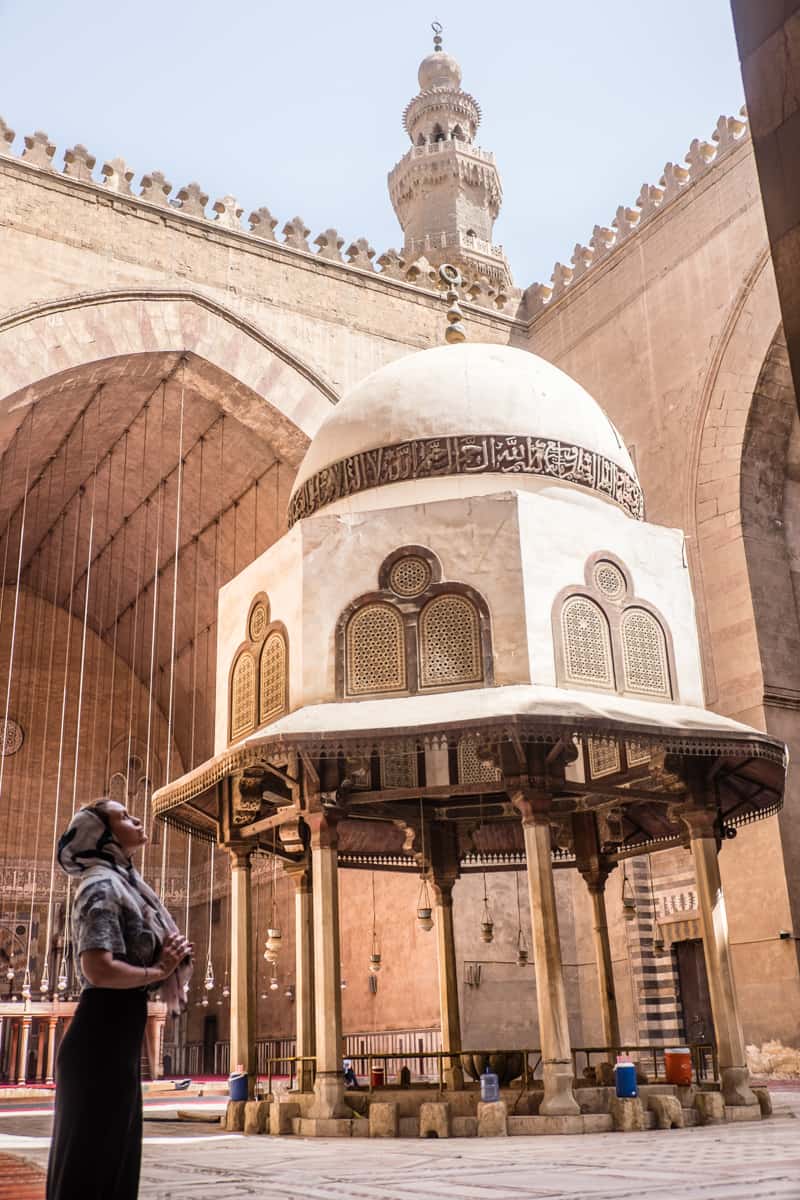
While there are no specific dress codes at temples and tombs, it is respectful to dress modestly. So even though shorts, singlets, and dresses to the knee at the tomb and temple sites are not frowned upon, generally, you should wear loose-fitting clothes that cover knees and shoulders, especially at markets and public areas. For mosques and other religious sites, you must be covered up and wear a shawl or headscarf.
Also, take plenty of clothes, as you will quickly get dusty, dirty and very sweaty.
Conservative Dress
- I packed two maxi dresses and two jumpsuits that could be worn with loose-fitting t-shirts and light blouses to cover my shoulders.
- Long, loose pants and long, over-the-knee skirts are also useful.
- I used a scarf or shawl for mosques and other religious sites.
- A hat for extended site visits if you are ultra-sensitive to heat.
Other Dress
- Evening temperatures can drop quickly, so bring a light fleece, jacket, or cardigan to layer up.
- Swimwear and a travel towel – for the afternoons, you will spend by the pool and basking in the sun on the Nile Cruise.
- Waterproof jacket – Rain is not frequent, but it is not uncommon, especially the further north you are, where it is cooler.
Footwear
- I took one pair of open-toe sandals and one light pair of walkers (Vivo Barefoot).
- Hiking shoes are not needed, just comfortable walking shoes for when you will be wandering the sites for up to three hours. It also pays to have shoes with a good grip, given the steep slopes in tombs, Pyramid entrances, and sandy and rocky landscapes.
What to Pack for Egypt
Explorer Essentials
- Camera, with an extra battery (quickly exhausted in the heat) and additional memory cards, because you will not stop snapping away at the ancient marvel in front of your eyes. The price of the photography ticket is worth it for the memories.
- A small day pack or shoulder bag to carry only the essentials in the heat when you are at the famed sites.
- Sunscreen – and a lot of it. You will have constant exposure to the sun.
- Insect repellent and bite cream – especially since sandflies can be at full force.
- Pack a pair of earplugs, bag locks, an international outlet adaptor, a head torch, a microfiber towel, a water bottle, and a first aid kit. These are essential extras for a comfortable trip where you move around a lot and take multiple modes of transportation.
- Toiletries and medication – while there are local stores and pharmacies around, you might not find everything you need, or the hotel is a little far from the very centre of the city. Bring all your essentials with you.
- Downloads. Take a book or arrange all your favourite Netflix downloads for those long journeys. The Internet in Egypt is unreliable, so prepare everything before you leave.
Money, Tipping, and Haggling
Money Exchange in Egypt
The Egyptian Pound (EGP) is the currency used in Egypt; it is often abbreviated as LE in stores and restaurants. You can check the live currency conversion here.
There are ATMs in all major cities in Egypt, as well as large hotels which accept Visa and MasterCard. We had people of various nationalities in the group, and all cards worked fine (although charges may vary for each person depending on your bank).
There was a currency exchange at my hotel in Cairo, and money exchanges are readily available. Euros, British Pounds, and US Dollars (new and in good condition) are all easy to exchange for Egyptian Pounds.
I travelled with both a visa and a MasterCard credit card as a backup, but chose to take around 600 Euros in cash for the ten days to exchange in small amounts as I went along. Extra excursions had to be paid for in cash, which was especially useful to have on hand. However, carrying wads of money is riskier, and I always travel with a portable safe.
Also, have cash handy for ticket costs and the extra money needed for photography permission at sites – this extra 50 EGP ticket is worth the additional cost to capture those memories.
Tipping in Egypt – The Concept of Baksheesh
Baksheesh – which can function as either a tip or a bribe – is common in Egypt. The category it falls under is determined by the situation, and its interchangeability and existence are part of everyday life in Egypt and a cultural custom.
Baksheesh as Tipping
Generally, when it comes to goods and services, tipping is common.
Tipping your drivers, guides, and service workers
Give 15-30 EGP ($1-2) per person as a tip to service staff in industries such as hotels and restaurants; you may round up the bill to a lump sum or add 10% of the total as the tip.
Our trip leader collected a lump sum from us at the beginning of our trip and organised tipping throughout, which saved us all from having to find a dollar (around 15 EGP) here and there.
Want to use the toilet at one of the main sites?
You will need to tip the toilet attendant about 5 EGP. Often we would go in pairs if we only as 10 EGP notes.
Are you leaving your shoes outside the Mosque as required?
You will need to tip the man who is the guardian of the shoes. Again, around 5 EGP is sufficient.
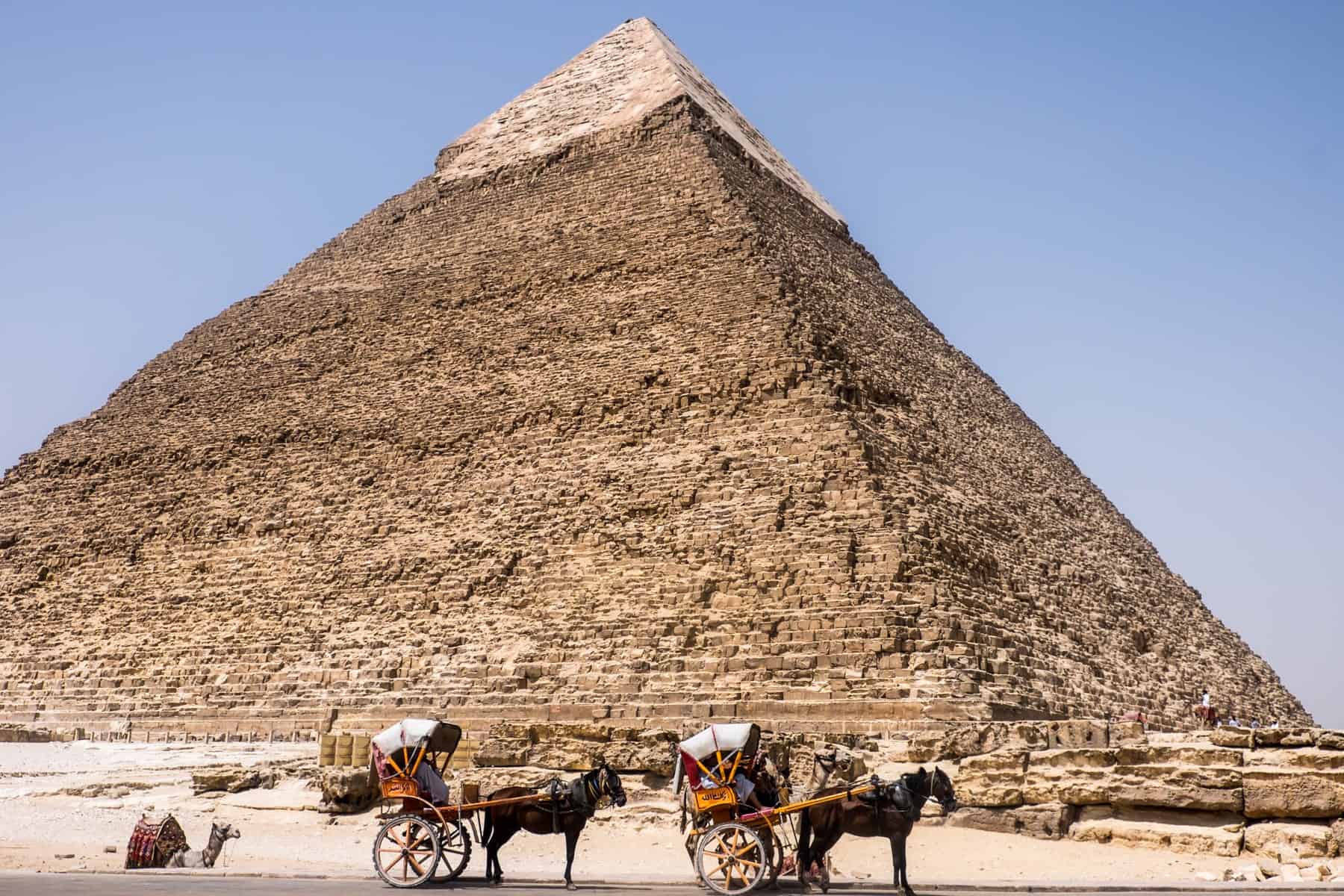
Want a picture of a camel at the Pyramids? Or one of the well-dressed guards at the temples?
It is always polite and ethical to ask someone if you can take a photo of them – but in this case, expect to pay for it or “give a little baksheesh” as the saying goes.
More often than not, the camel ride vendors and guards are naturally in the background and not in your direct line of vision for your photo subject. Therefore, you somehow get lucky with your shot, but don’t think you can outsmart these guys if you are cheeky – they will come and ask for their baksheesh.
Baksheesh as a Bribe
The guards and vendors at sites are also masters at getting in your picture before demanding baksheesh.
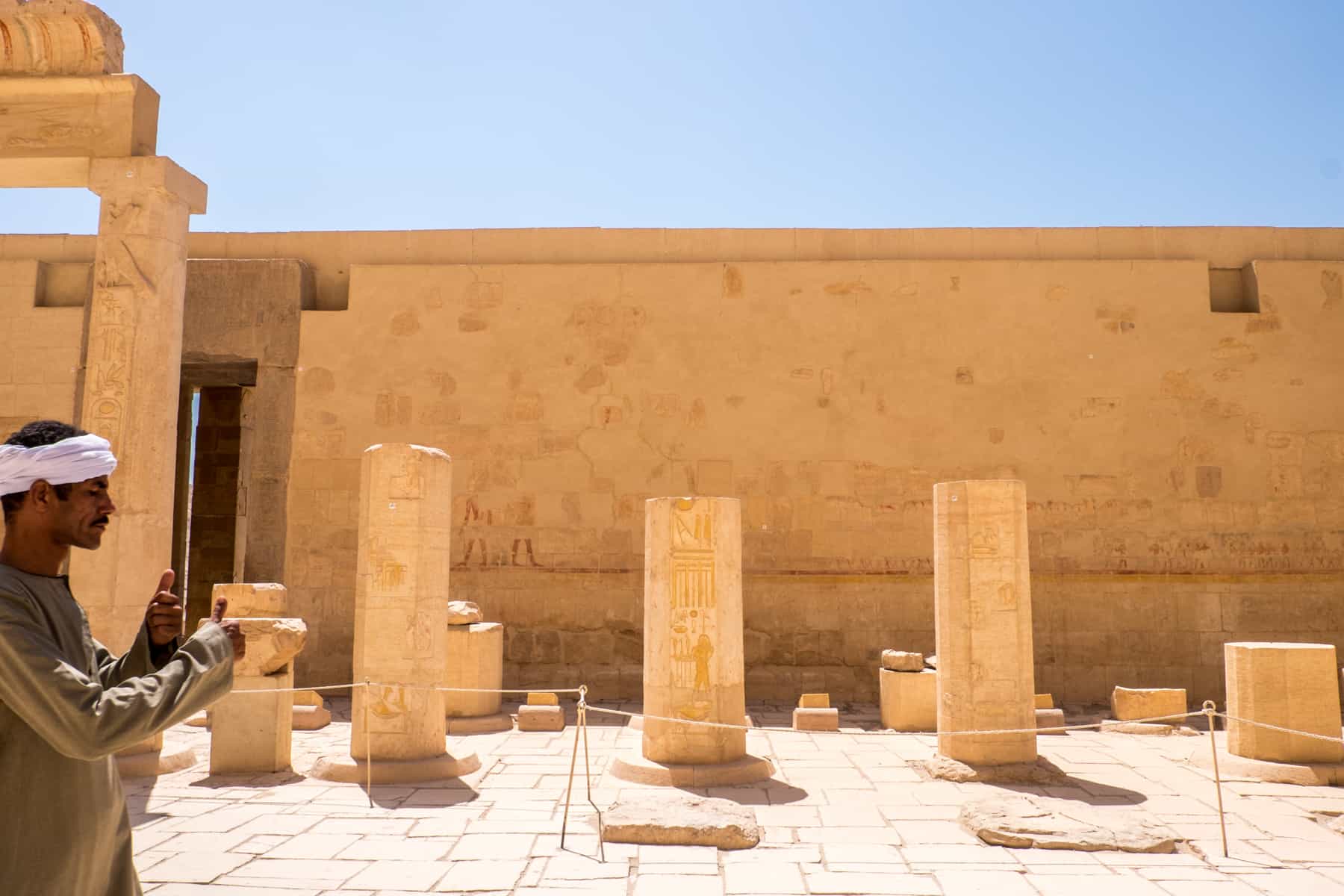
This situation can be fairly aggravating when you are trying to take a picture of a wall carving or a pillar, and the guards always jump in your shot. Be assertive and tell them your photo does not require them to be in it. I found this behaviour particularly rampant at the Temple of Hatshepsut.
Resist the offer for exclusive access to temples and sites
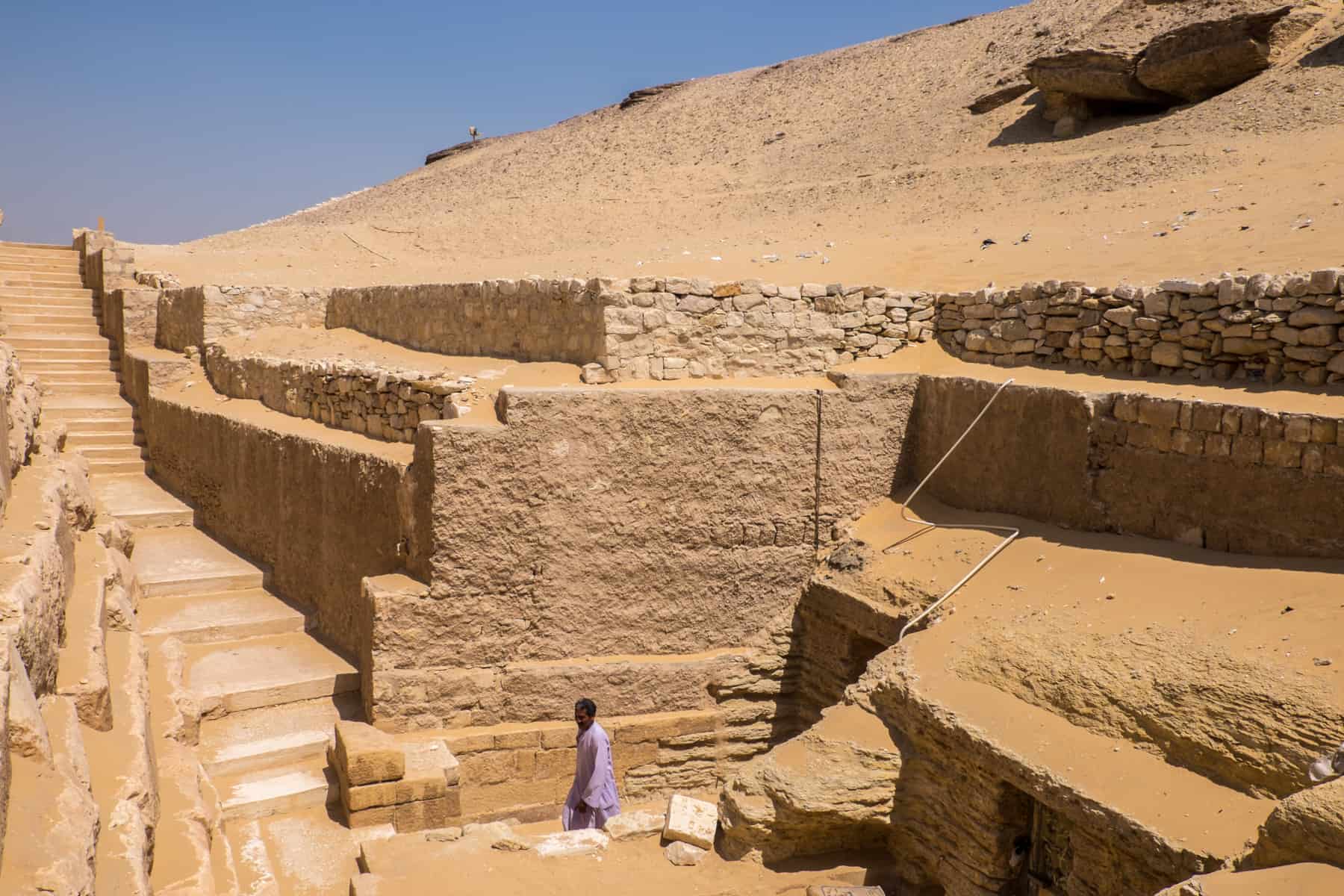
At some temple sites, a guard might offer you access to an extra room or area of the construction situated behind a roped-off area. Want to see it? Expect to be asked to hand over a little baksheesh for the pleasure of your extra sightseeing.
Haggling in Egypt
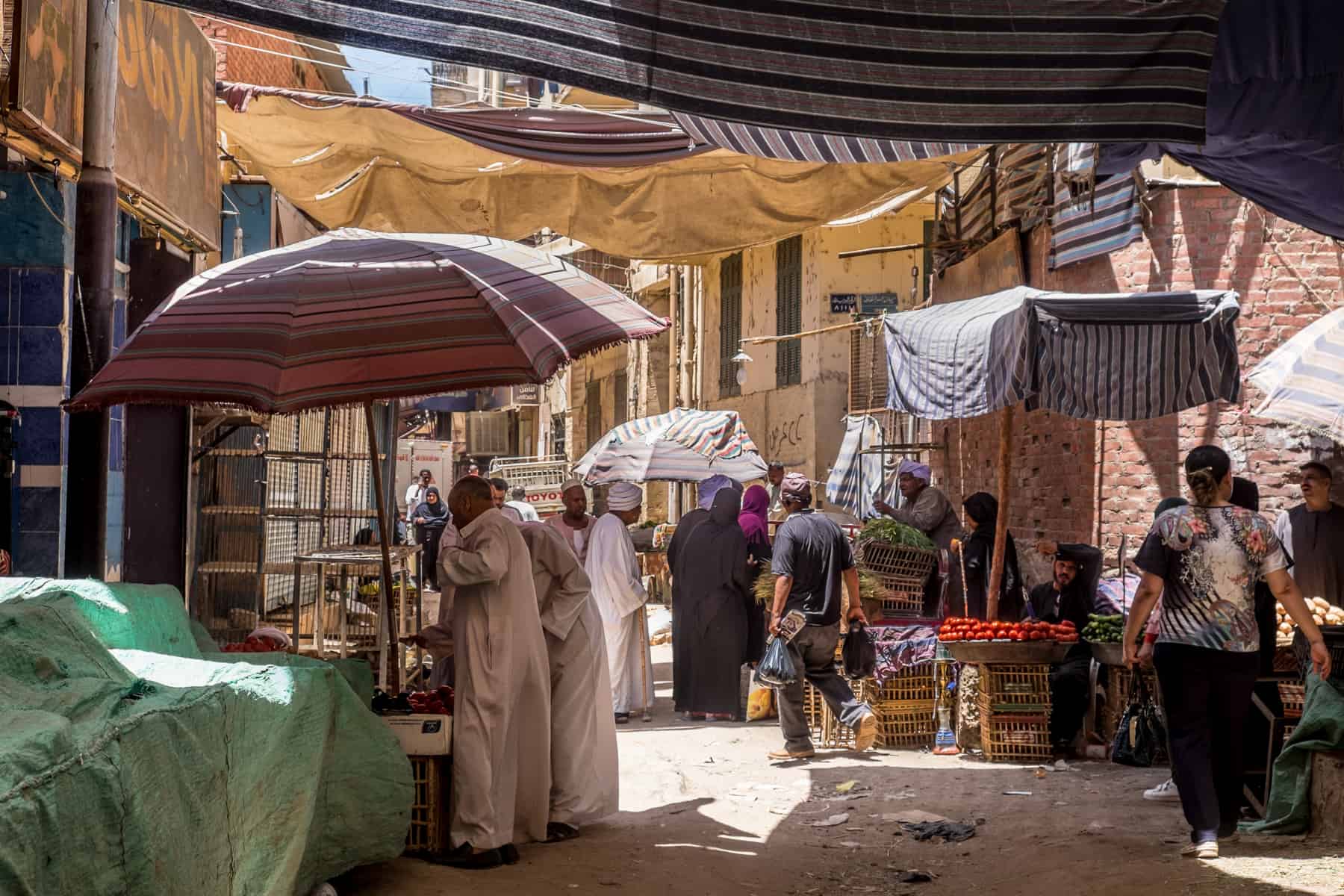
Never hand over the money in an Egyptian souk or market at the first price given. Haggling is expected here and part of the culture, so don’t be afraid to negotiate on everything from spices to large souvenirs.
The easiest way to begin the haggling process is to half the original price offered and know what you want to pay, so you can go back and forth and get as close to that as possible. Enjoy the process, even if it can be quite the effort, and know that it’s OK to walk away and end the bartering if you are not happy with the final offer.
Egypt Travel and Tourism – It Needs You
Egypt’s list of mega-sights and the ongoing delicate tourism situation can make travel here overwhelming. Yet that doesn’t mean it’s inaccessible, just a little more for the adventurous-minded.
Travelling for purpose, to uncover the rich history of Egypt and its fabled culture, makes a trip here rewarding beyond just the ancient sightseeing. It also needs visitors to rebuild its delicate economy, built upon a tourism economy regularly targeted to weaken the system.
A trip, with its known frustrations to navigate, is good preparation, perhaps? Given the fact Egypt is uncovering more of its archaeological repository and recovering from tourism setbacks, Egypt is certainly not a one-time visit destination.



Leave a Reply