
Disclaimer: This post contains affiliate links to handpicked partners, including tours, gear and booking sites. If you click through or buy something via one of them, I may receive a small commission. This is at no extra cost to you and allows this site to keep running.
Visit a Mongolian ger and experience the nomadic culture and traditions that Mongolia is most known for, with the guidance of a local family.
With over half of Mongolia’s population living in Gers, it has become a symbol of Mongolia, anchored in community and associated with a rural lifestyle unfamiliar to us.
Yet, to visit a Ger is to truly understand the unique culture that surrounds it.
A symbol of home and the kindship of family, people are born and raised in a ger, get married in one, and stay close to their one-ger family or small community for their entire lives.
It is the single most unifying part of the Mongolian family and life and one of the most insightful local moments on my 20-day Mongolia travel adventure.
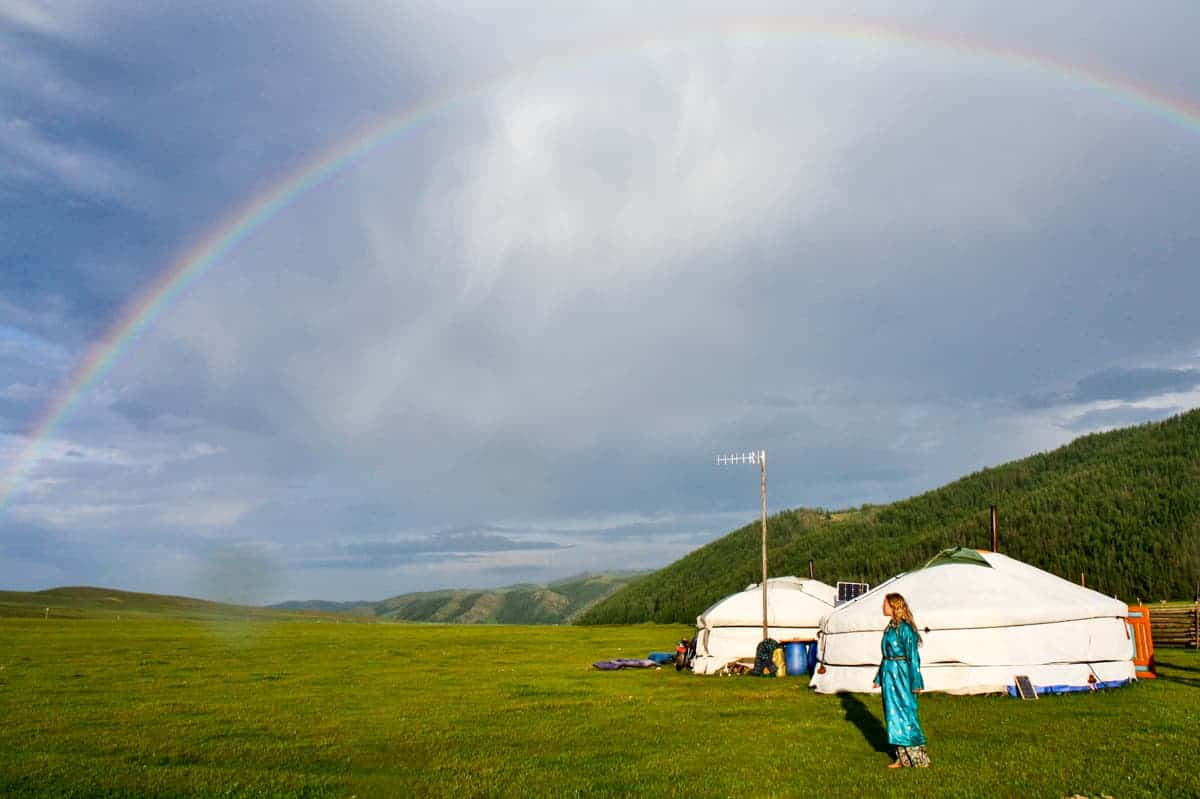
Visiting A Mongolian Ger: A Glimpse Into The Nomadic Culture of Mongolia
What is a Mongolian Ger? Or is it a Yurt?
Firstly, names can get confusing, as you’ll more often than not see these round, tent-like structures referred to as a Mongolian Yurt or a Yurt House. However, Ger is the name the Mongolian people give to this living space, and it is how it should be properly referred to when here.
Mongolian Gers weigh around 250 kg, including the wooden walls and one layer of textile felt. It is a structure with no windows and only one door. In winter, two or three layers of felt will be added, along with a plastic layer to protect against rain.
Gers are designed to be easily assembled in one to three hours and quickly broken down, then loaded onto one carriage for easy transportation, because these nomadic families move approximately four times a year according to the seasons.
While more and more of Mongolia’s population moves to the capital, Ulaanbaatar, for economic reasons and access to better healthcare and other facilities, 90% of the rural community continues to live this way. However, there is also considerable debate about the impact of Gers on pollution levels, as well as how the culture of Ger living is being affected by climate change overall.
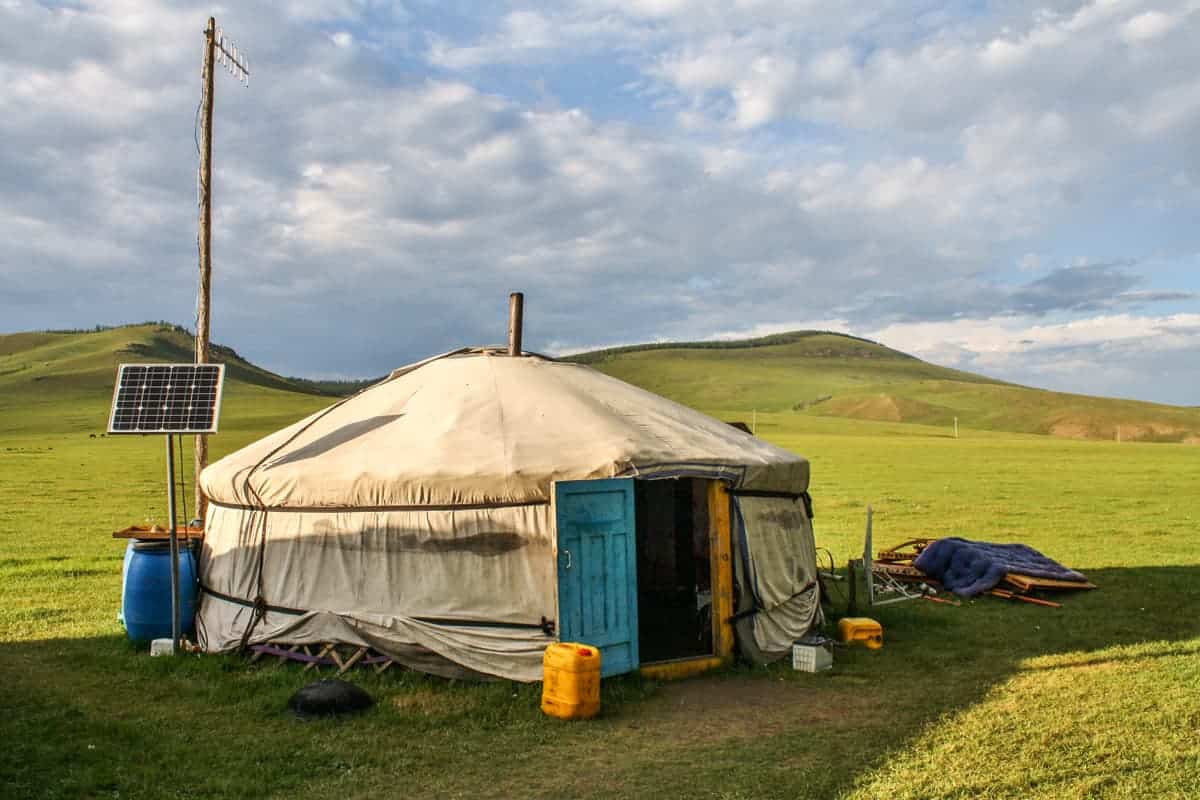
A typical Mongolian ger is built with layers, including wood and textile felt
Visiting a Ger in Mongolia
Every once in a while, you will pass a Ger or two in the distance and wonder about how a family or small community can survive out in the wilderness, hours away from the quick-fix amenities, shops and company that we all take for granted.
READ MORE: How to Travel to Mongolia – Overlanding the Least Densely Populated Country in the World
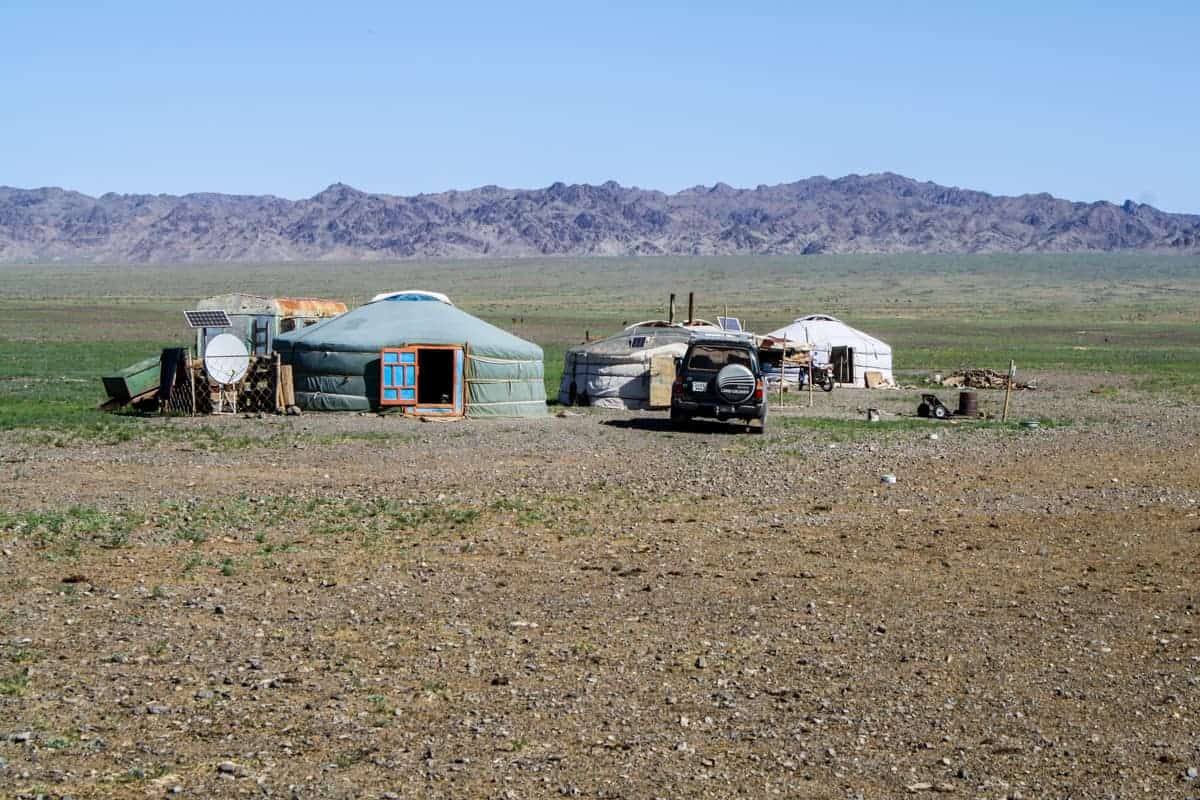
Passing an isolated Mongolian ger community on our travels through rural Mongolia
During my time in the Orkhon Valley, I had the opportunity to visit a local family who lived half an hour from our regular ger camp, one of many set up for multiple visitors.
This ger visit was in no way a tourist trap or staged set-up with the family taking money from passing visitors regularly. Instead, it was a chance opportunity set up by our Mongolian guide who asked the family if our group could visit to learn more about Mongolian life.
There were times on the trip, driving hours through the hinterland, when the lack of civilisation affected our mindset. Therefore, we were interested to see how a family survives like this daily.
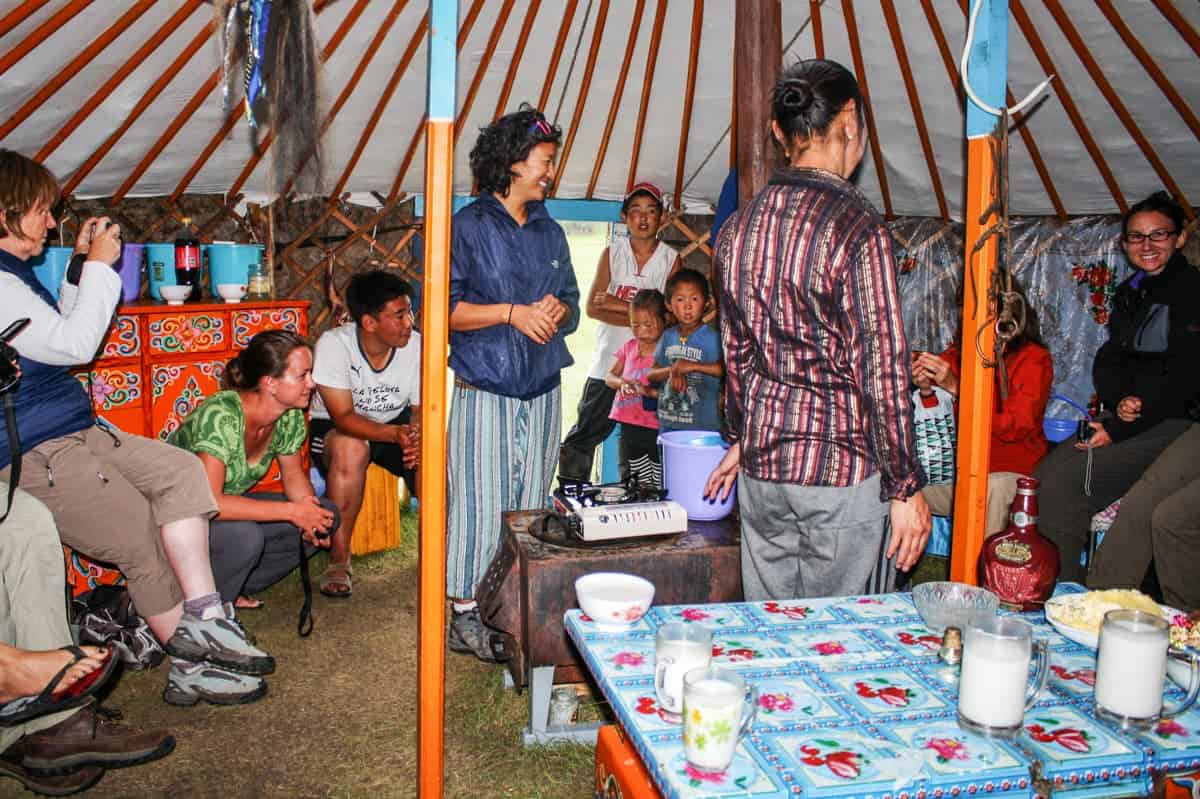
Our group meets a local nomadic family in their Ger home
How does a Nomadic Mongolian Community Work?
Given that the nomadic family moves regularly, one of our first questions was whether they own any land. Every Mongolian citizen is allowed to occupy a certain amount of land. Each nomadic family belongs to a village and, upon moving, registers an area of land with that village.
The location of the ger is typically determined by generation rather than by an official plot of land. But registration is fundamental, and the family will either live next to relatives or near them (including family members who have relocated to the nearest town or city).
Another family, not from your own village, can come and set up nearby if they are registered in the same village. This means that the notion of private property doesn’t exist in the countryside, only in towns and cities.
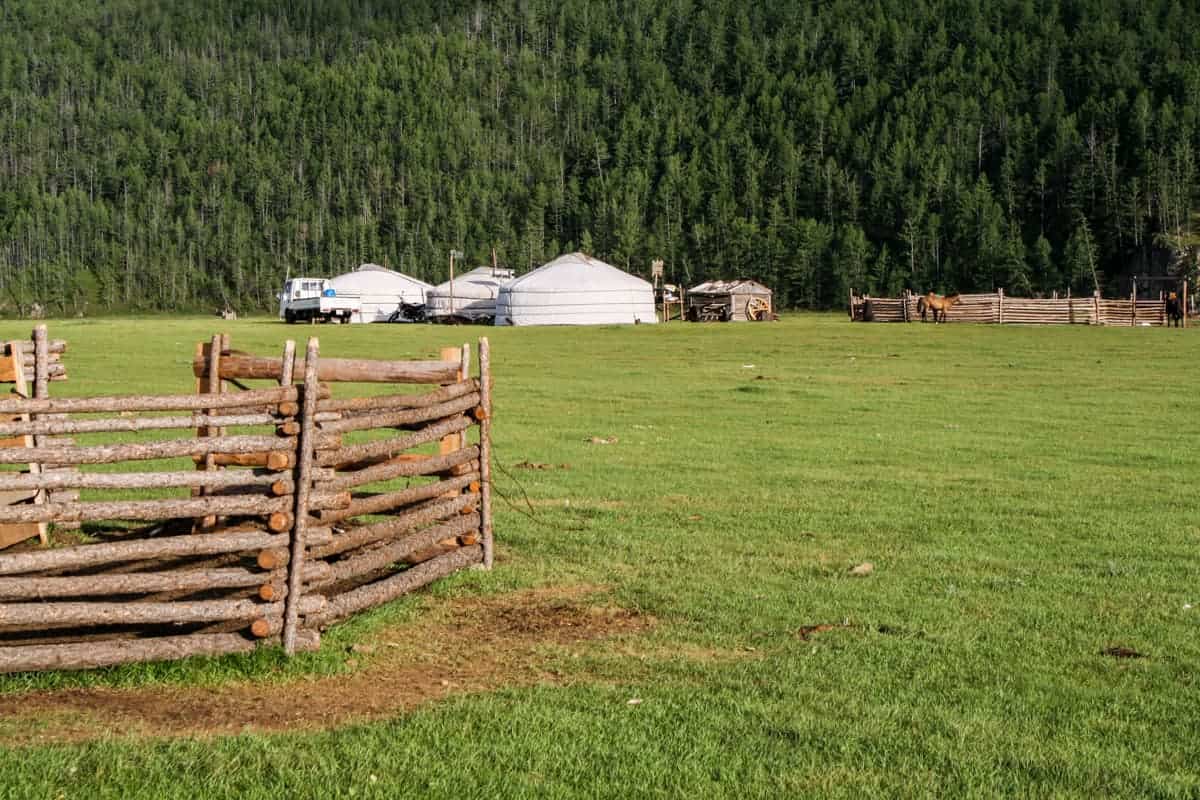
A Mongolian yurt (ger) and farm setup that would constitute a typical village.
Inside a Mongolian Ger – Rules, Customs and Traditions to Follow
We were careful not to step on or touch anything when we entered the ger until we were told exactly what to do.
It’s important to follow custom and treat the homestead with the utmost respect. If you ever get the chance to go to a Mongolian ger, here are the general rules to abide by:
Customs on Entering the Ger
Don’t step on the ger threshold when you enter the main door.
The bag hanging just inside the front door is a religious symbol to ward off bad spirits.
Segregated Areas of the Mongolian Ger
Women sit on the left side of the ger (where the kitchen area is), and men sit on the right.
The back of the ger is considered the place of honour, where the most respected guests sit, and it usually contains the family’s most precious items, along with a religious altar.
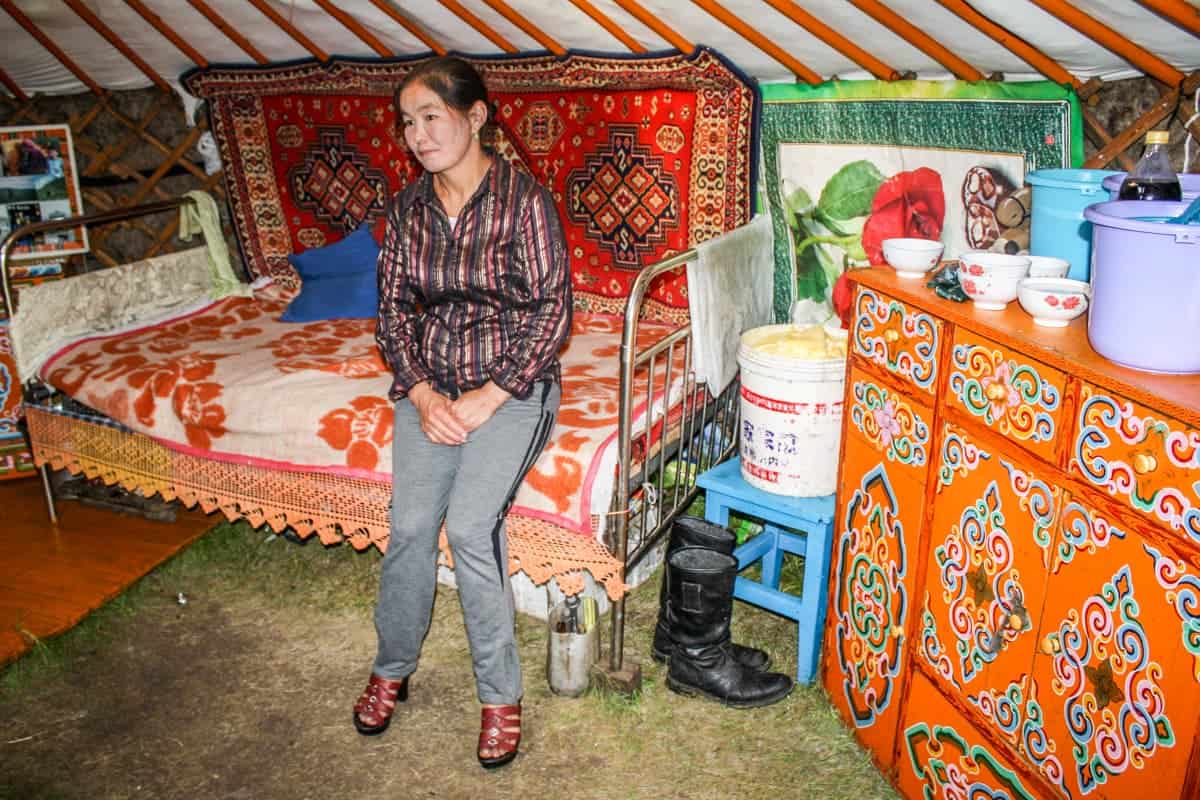
The mother of the family shows how a Ger is segregated in specific areas
Be Mindful of the Central Poles
Don’t pass or walk through the two central poles of the ger. This is based on a superstition that these poles support the ger and should, therefore, be protected.
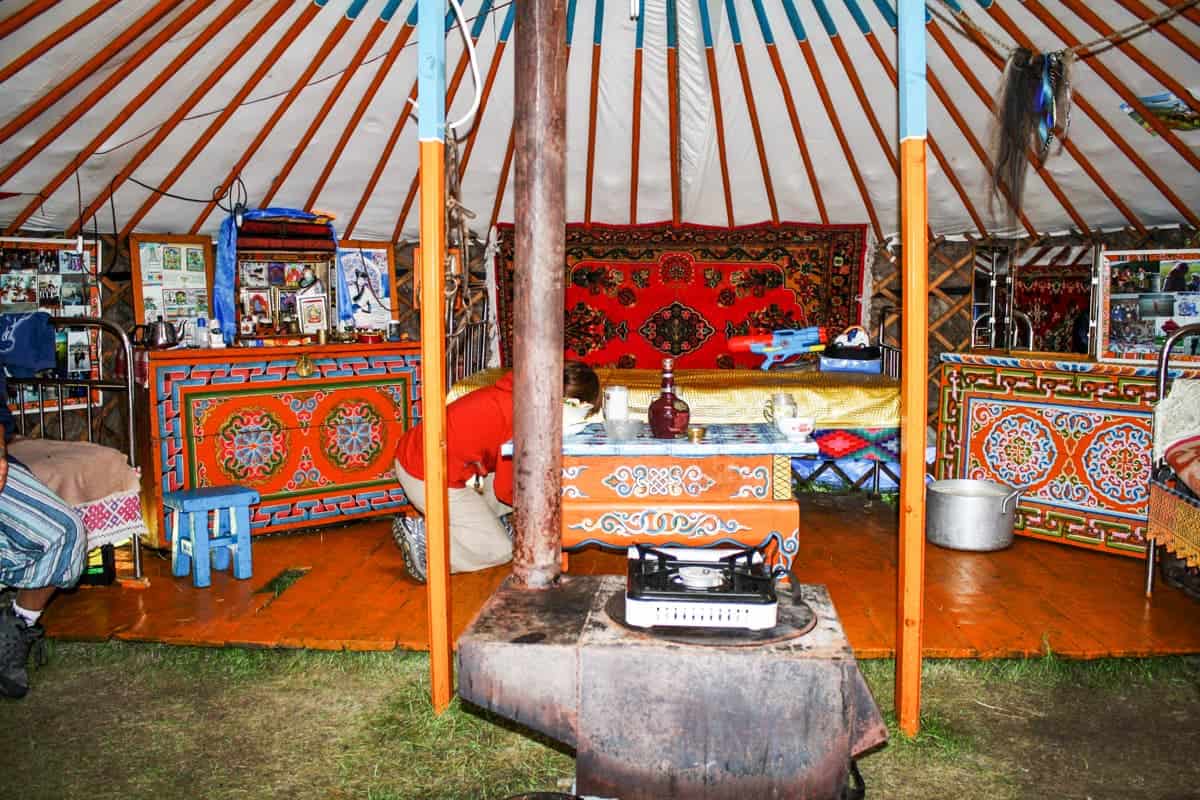
The central poles of a Mongolian Ger must be protected
Don’t Point at Objects or People
Pointing is considered a rude gesture in Mongolia, so use an open palm and a flat hand to guide direction.
Ger Life Rules About Animals
Never ask how many animals a family has; it is seen as impolite. Instead, you can ask how many different types of animals they have.
A little animal hair and wool can be found hanging inside the Ger – this is an indication of what particular produce the family sells, but it can also indicate their favourite or most expensive animal. They like to keep some of it within the family.
If milk or any dairy produce is spilt, then a Mongolian will touch the said dairy product and then touch their head as a means of saying ‘sorry’. Food wastage is seen as a negative thing.
Income and Survival of Nomadic Mongolian People
Dairy Farming and Fermented Mare’s Milk
Intrigued by how a nomadic Mongolian family can make money when so far removed from everything, we were informed that a typical family’s income comes from selling dairy products, along with wool and cashmere from their animals.
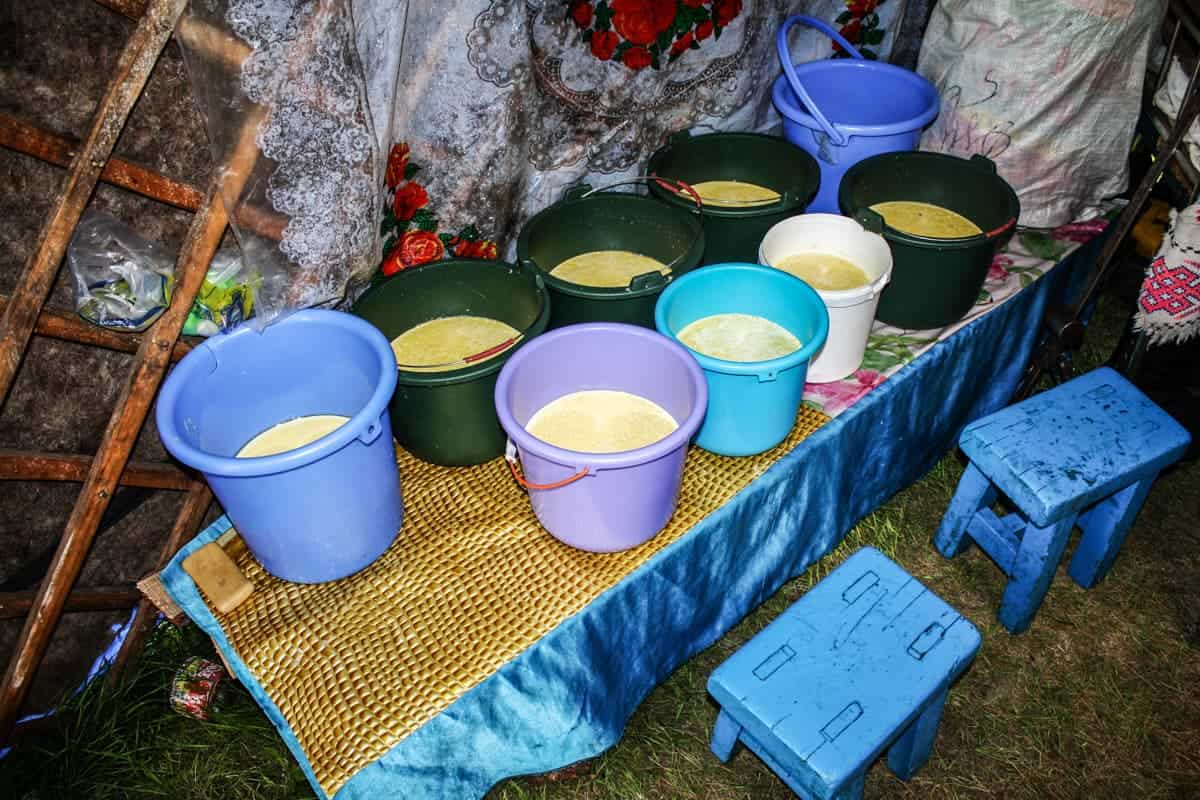
Fermented mare’s milk, curd and butter – the work of a nomadic family in Mongolia
We were invited to try fermented mare’s milk – also known locally as airag. I kept hearing about fermented mare’s milk before I went to Mongolia; the negative description being met with a disgusted facial expression. I found it drinkable – it’s like milk with a slight fizz and has around 2% alcohol. To make this local brew, the mares are milked every two hours, and the milk is churned as many times as possible to ferment it.
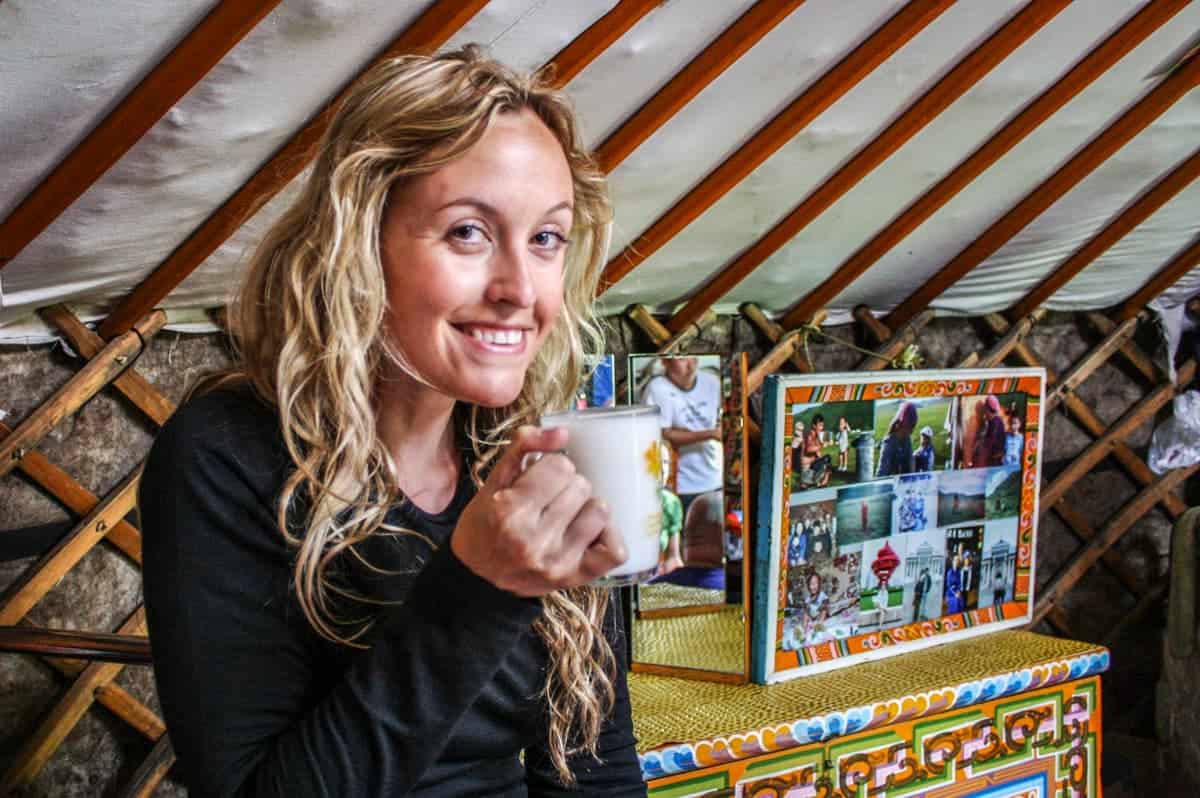
Trying fermented mare’s milk
We also had the opportunity to try the curd (ghee) and butter.
The curd is unique and, for some, quite hard to stomach. It was hard to keep a straight face out of politeness and try to crunch down and swallow something that tasted slightly rank. So much so, that the only thing you had to wash it down with was… fermented mare’s milk!
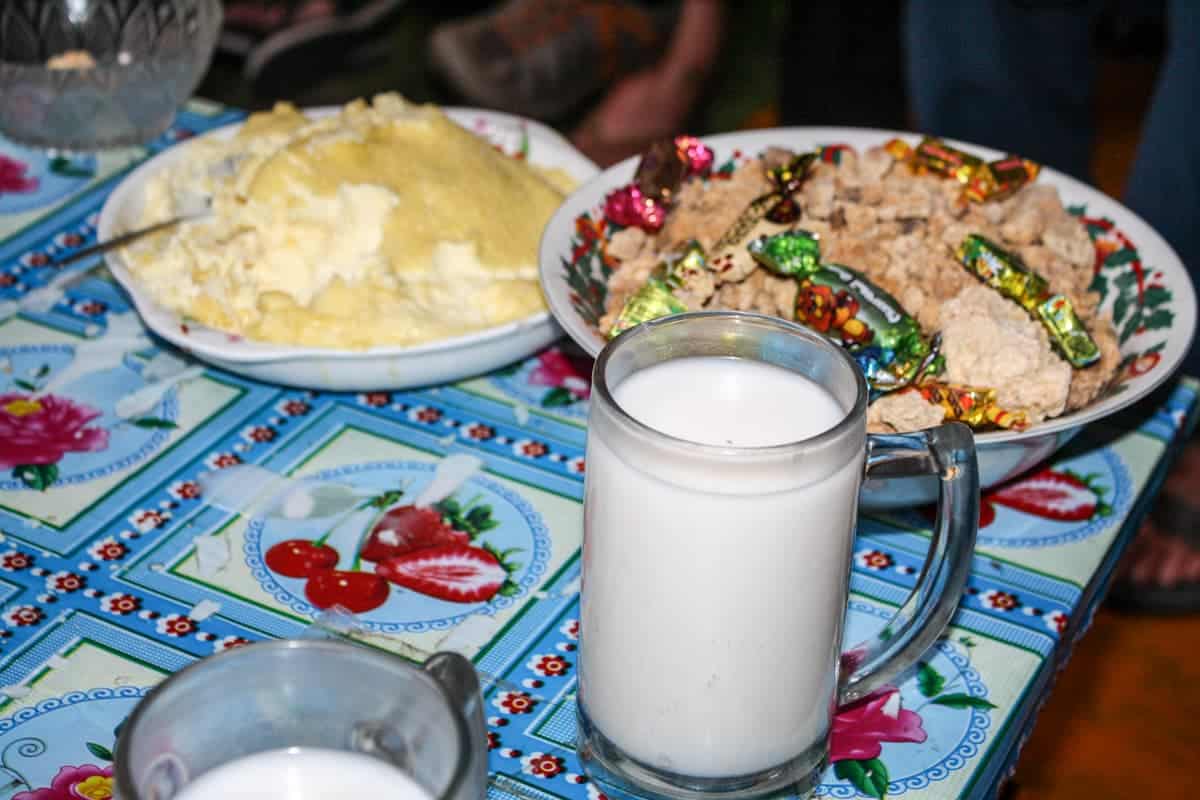
When eating at a Mongolian ger, you may find yourself in a vicious cycle of trying to be polite and getting stuck in a rut. Still, they let us try a bit of the local vodka, which made the palate confusion a little easier.
Nomadic Family Living
The family consumes their dairy products, alongside selling them. In Autumn, meat is prepared and stored for the harsh winter, in quantities that can normally last until Spring.
In the Summer, the family will live on dairy products and vegetables, topping up with supplies from the nearest town if needed.
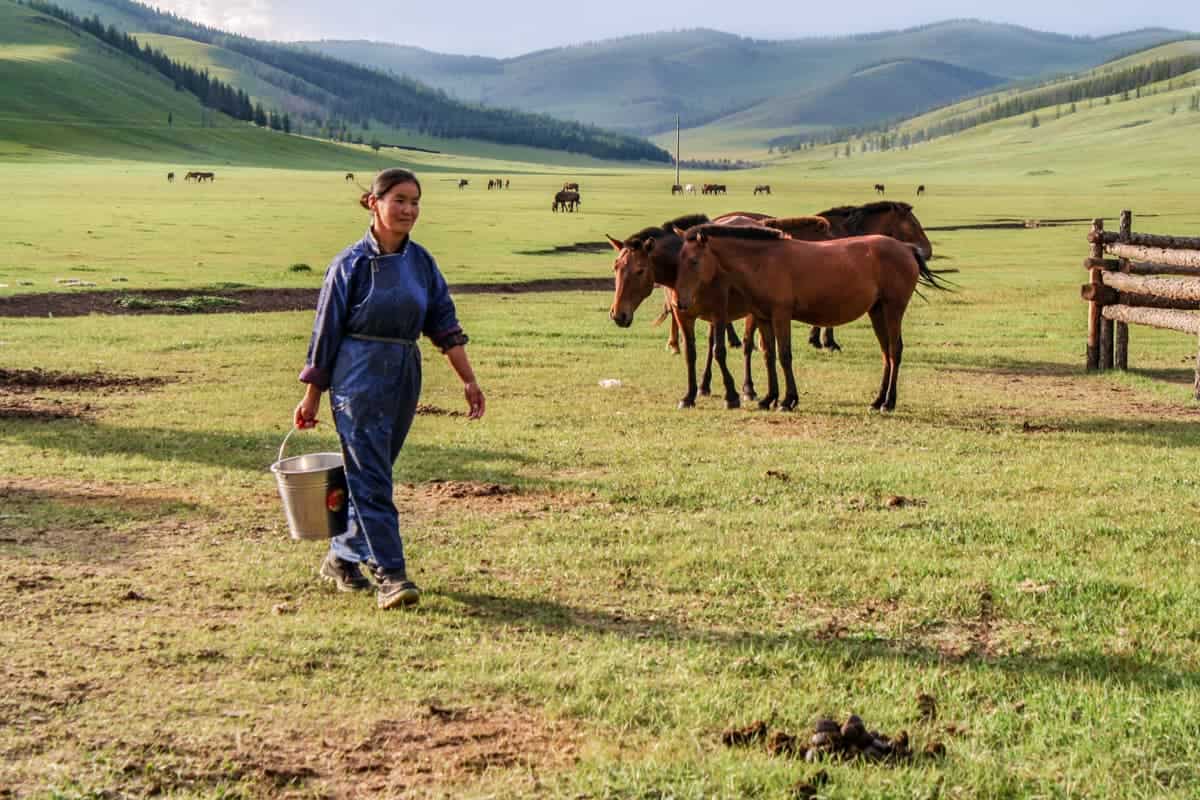
Life goes on while we visit the Ger, as the mother of the household continues with her farming work
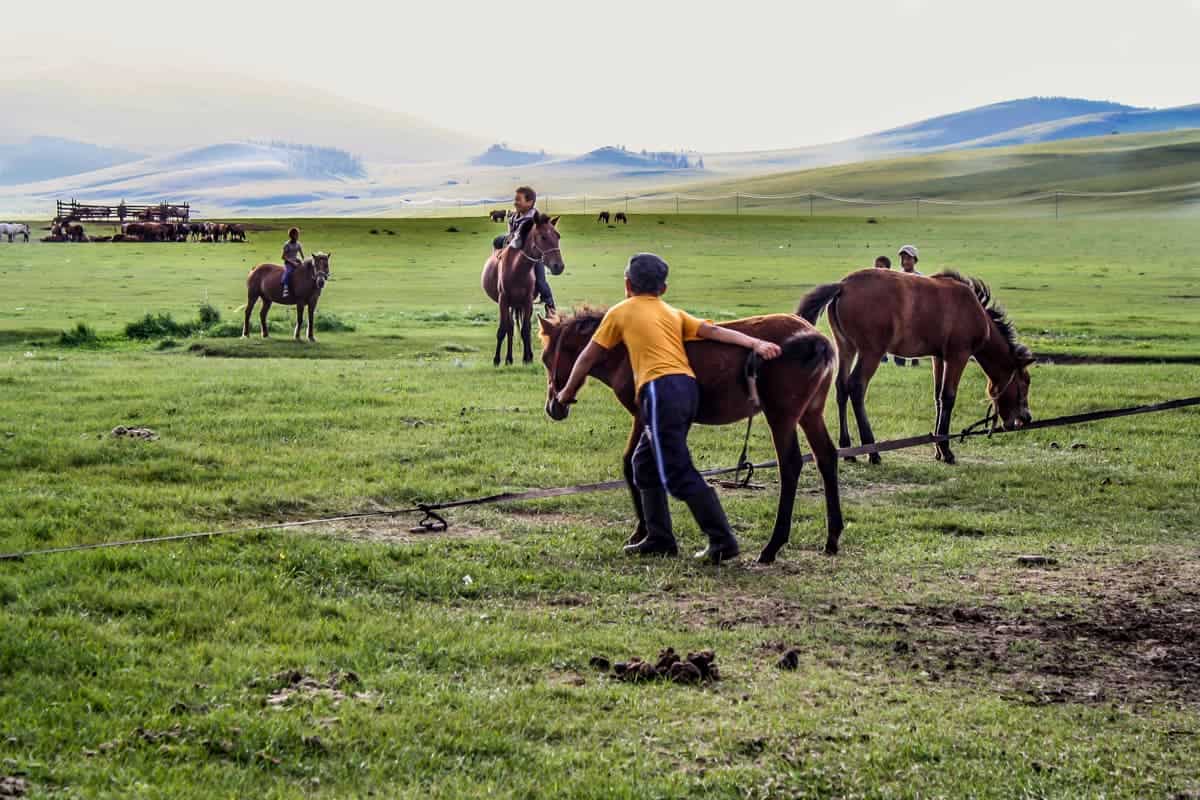
The men of the nomadic family gather the herd in Mongolia
Everyday Life and Access to Facilities
Nomadic Mongolian families have access to all modern facilities. Being isolated isn’t so deserted as you may think, and nor do the nomadic communities deliberately cut themselves off from everything.
Children go to school in the local town, where they either live with relatives in town or, when older, stay in the school dormitories.
There is also a good medical system in place within each village. Each village has a hospital service that caters to around 10 families, with regular check-ups. When it comes to childbirth, the woman will give birth in a hospital in the nearest town or city.
After much talking and translation, we all went outside. The men began to wrestle, the children jumped on their horses to show off their skills, and the ger mother opened up a cupboard full of traditional Mongolian clothing she had handmade and invited us to try them on.
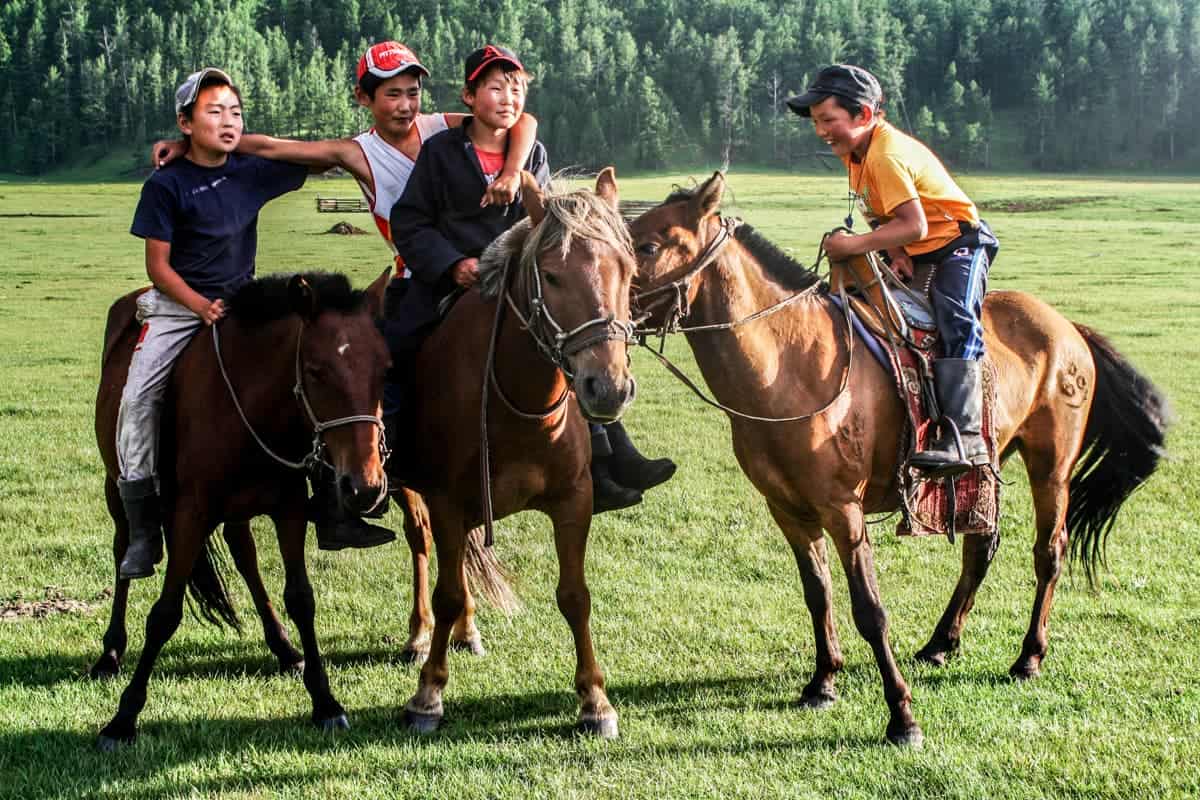
We might not have been able to communicate directly, but we all shared something – the serenity of rural life. One that I could only imagine for a short moment, but which is their only, and much-loved, daily reality.
Sleeping in a Mongolian Ger – Where to Stay
While there are many family-run homestay programmes that your local Mongolian guide could facilitate, there are also small ger camps that offer an overnight ger stay with a little more comfort.
You’ll find them in all major stop points on a typical Mongolian journey, a few kilometres on the outskirts of Ulaanbaatar and the Gobi desert, and it’s not hard to miss the cluster of white mounds within an otherwise stark setting.
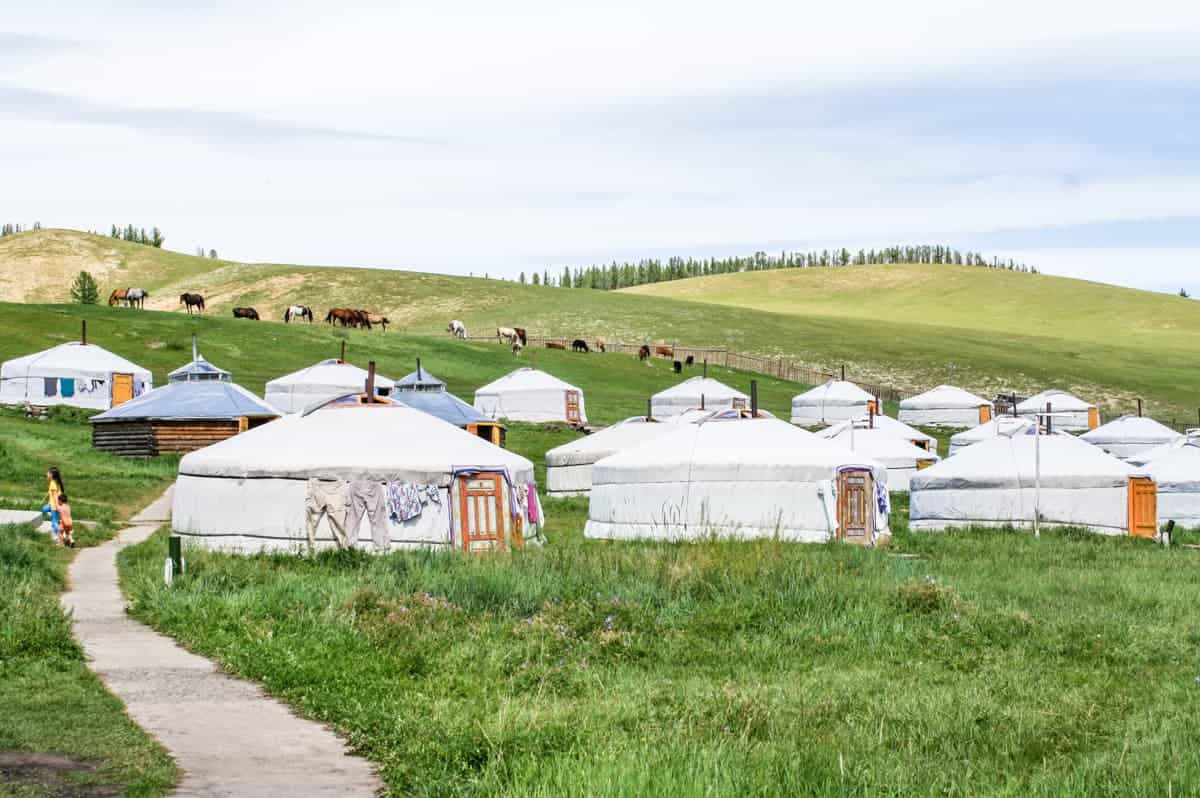
What a typical Mongolian ger camp for tourists looks like
Ger Camps in Mongolia
My Mongolia Eco Ger Camp, 54 km south-east of Ulaanbaatar, is in a rural area called Nalayh that is effectively one of the city’s outer provinces. It’s comfy, with towels and linens provided, and a place where you can adventure by horseback, by bike, on a driving tour, or on foot via the many hiking routes.
Enjoy downtime on-site, in serene nature, and with modern facilities, where you can also enjoy a cooked dinner. This ger camp is also 70km from Chinggis Khaan International Airport, if you are short on time and want to fit in this experience either side of your trip. Magic Rock Tourist Camp, also in Nalayh, also has a similar setup.
The Terelj Star Resort is set within the low valley hills of the Terelj National Park. A beautiful and peaceful setting from which to explore one of Mongolia’s much-loved nature havens, the campsite includes a restaurant and bar, alongside a garden and terrace, if the view from your room isn’t enough. Towels are linen are available for an extra charge here.
For a family-run homestay, also listed as a ‘farm stay’ check out the Mongolian Nomadic Family offering. Less than 5km from the city centre and 5km from the famous Chinggis Khan Statue, this family-run home is great for those who are not travelling far but want to experience the rural life and nomadic traditions.
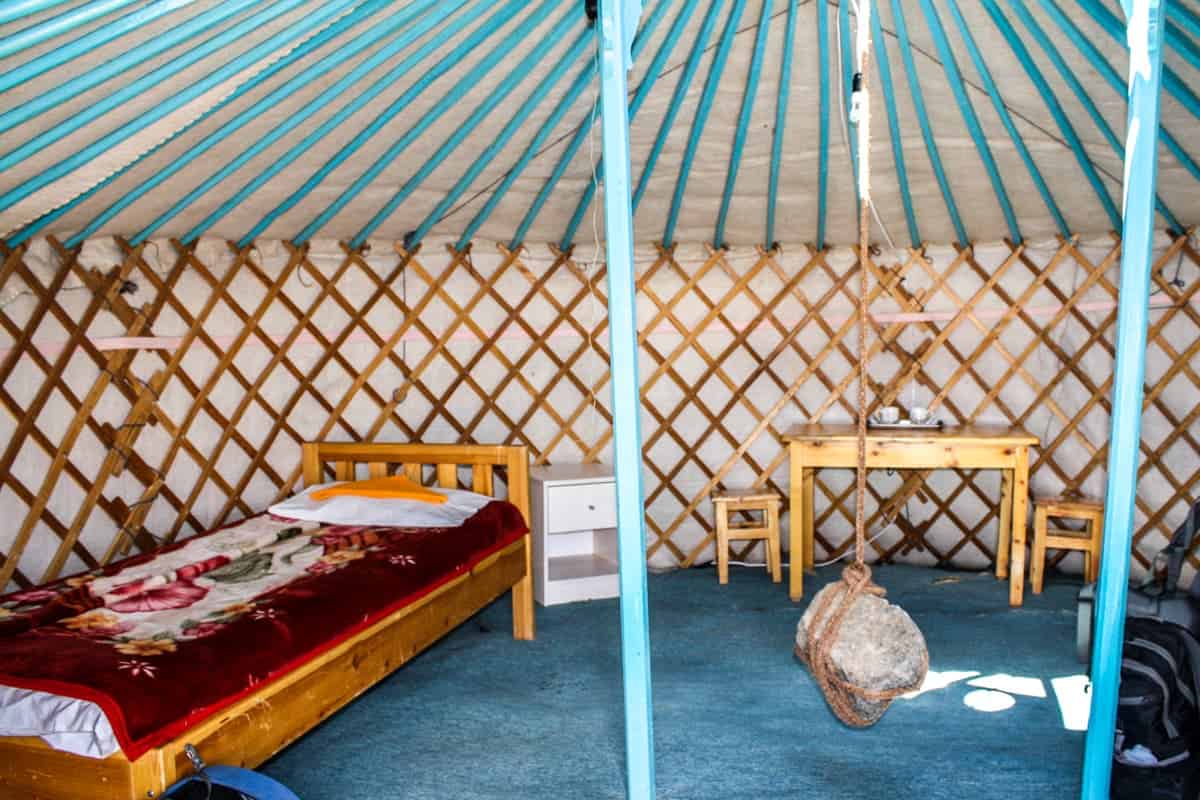
The bedroom area of a Mongolian yurt made for tourists travelling in Mongolia.
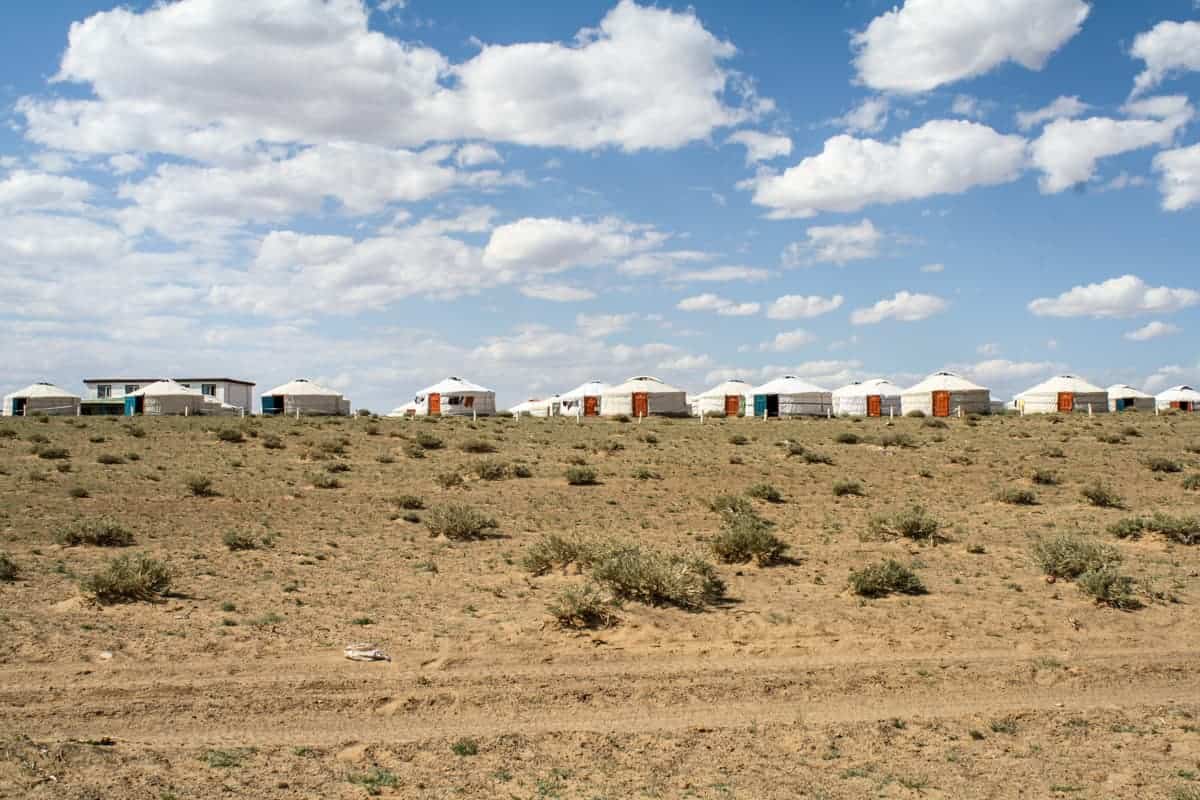
A Ger camp in the Gobi Desert, Mongolia



George says
A very informative post about Mongolia, a place that I always wanted to visit. Great photos, too! Thanks for sharing, Becki.
Wen says
Hi Becki,
This looks awesome! Would you kindly recommend the agency you booked this with as I’m exploring options, Thanks!
Becki says
Dragoman – lots of details about them and my tour itself in my other Mongolia posts 🙂
Rashaad says
It’s awesome you were able to experience a Mongolian ger. Someone actually spent time in a ger – or he actually visited someone in a ger. But anyway, I’m sure he and his partner had an awesome experience in the ger.
P.S. The rainbow looks awesome!
Neil says
That Rainbow shot is brilliant and I for some reason I love the solar panel, just didnt see that one coming.
Interesting reading about the rules and traditions, especially the two central poles.
Becki says
It was awesome timing! I thought the solar panel was their satellite dish.. who knows! haha