
Disclaimer: This post contains affiliate links to handpicked partners, including tours, gear and booking sites. If you click through or buy something via one of them, I may receive a small commission. This is at no extra cost to you and allows this site to keep running.
Meeting locals in Kathmandu not only means giving something back to the Nepalese community but also where you might just learn something.
When it comes to eating and drinking, I’m all about visiting local hangouts and seeing local life in situ. Not only does this mean giving something back to the community, but it also means interacting with the people and sampling traditional food, drink and culture at its absolute best.
Meeting locals in Kathmandu, away from the specific tourist hubs, has been one of my best experiences here so far.
In Kathmandu, local tea and snack houses appear almost everywhere. With doors not that much taller (if not smaller) than my mini 5”4 height and an interior no bigger than 6-8 square metres, they are easy to miss. When stumbled upon, they are a delightful experience where you can tuck yourself away from the main street and core site chaos for a short while.
Stopping for a Masala tea created a chance encounter with Kathmandu locals and a chance to find out more about life in the city.
READ MORE: What To See in Kathmandu – Nepal’s Cultural Trove
Local Life in Kathmandu
You can spend hours walking from main square to iconic site, but my travel buddy and I loved being amidst the spontaneity of local life that emerged from every street corner and hidden alley, and we were not ones to miss what looked like a simple yet well-established family-run business.
Situated on Kilagal street, which connects to the Pyaphal Tole street leading south to Durbar Square, the shop had no sign. All that existed was a little commotion, a few young children playing outside and an elderly lady sat behind the counter watching the world go by. But it was the young boy who caught our attention, whose amazing grasp of English and charm of a salesman resulted in us heading inside.
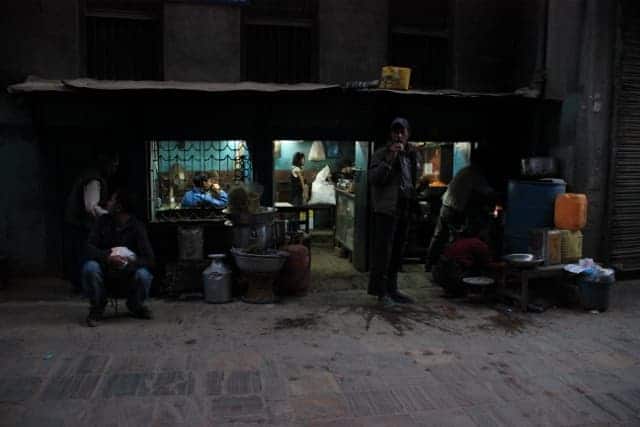
As two Western girls thrown amongst a group of confused-looking locals (I gather not many travellers before us had ventured in), we never once felt uncomfortable. We were just as interested in them as they were in us, communicating only via smiles as we sat quietly sipping our tea.
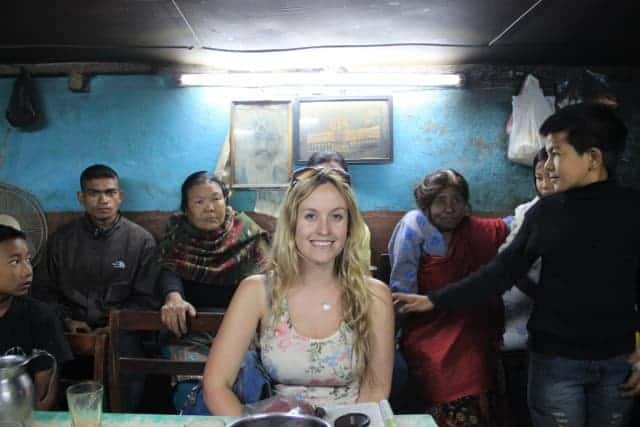
The young lad, Ram, soon became our friend and told us his story. At the age of 14, he was working most days for his grandparents, who owned the shop, joining his siblings and other family members in the venture but using the opportunity to practice his English.
We praised him for speaking it so well and soon learnt that his time there was all a part of a bigger dream: “I don’t want all this. I want to be a mechanic.” He asked many questions about our lives – us having led such different childhoods – and we learnt from one another about generational expectations and sharing encouragments to continue learning something new.
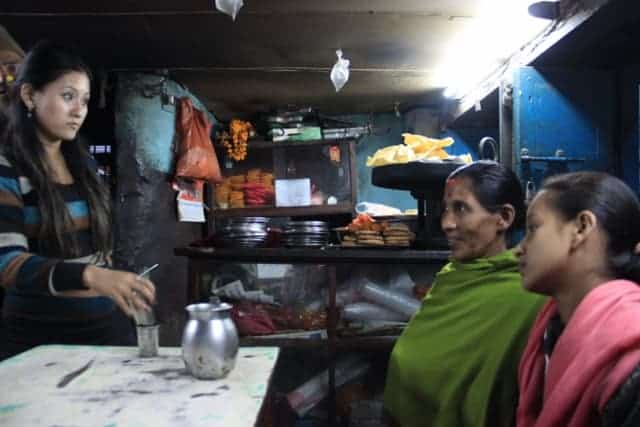
The charm offensive worked. After paying 25 rupees (20 pence) for two teas and a snack, his grandma looked in disbelief and said, “Too much”. But you can’t fault the kid for trying – we all would. We went back the next day.
Kathmandu hums with entrepreneurial spirit, and supporting locally owned businesses like family-run restaurants, neighbourhood shops, and independent artisans is one of the most direct ways visitors can ensure their money stays in the local community economy. An overcharge by a few cents is not worth a second thought. I pop into every local tea house I see, drawn by the familiar long pour and the nostalgic flavours of the spicey milky Chiya.