
Disclaimer: This post contains affiliate links to handpicked partners, including tours, gear and booking sites. If you click through or buy something via one of them, I may receive a small commission. This is at no extra cost to you and allows this site to keep running.
Visiting Peru for the first time and wondering what places to visit outside of the famed Cusco trekking gateway? This destination list from my three-week trip takes you on an introductory journey through the country’s changing landscapes and historical hubs.
Typically, on the first trip to Peru, travellers will visit the ‘southern loop’ between Lima and Cusco. But whether you start in the sprawling capital city of Lima, which mixes ancient ruins with urban neighbourhoods, or the Sacred Valley with its Machu Picchu gateway of Cusco, there are colossal sand dunes and reed island lakes, ancient landmarks, mountain valley cities, and mighty canyons in between. Those with more time also venture north for the famed Laguna 69 trekking route or do so on a second visit.
Getting Around Peru
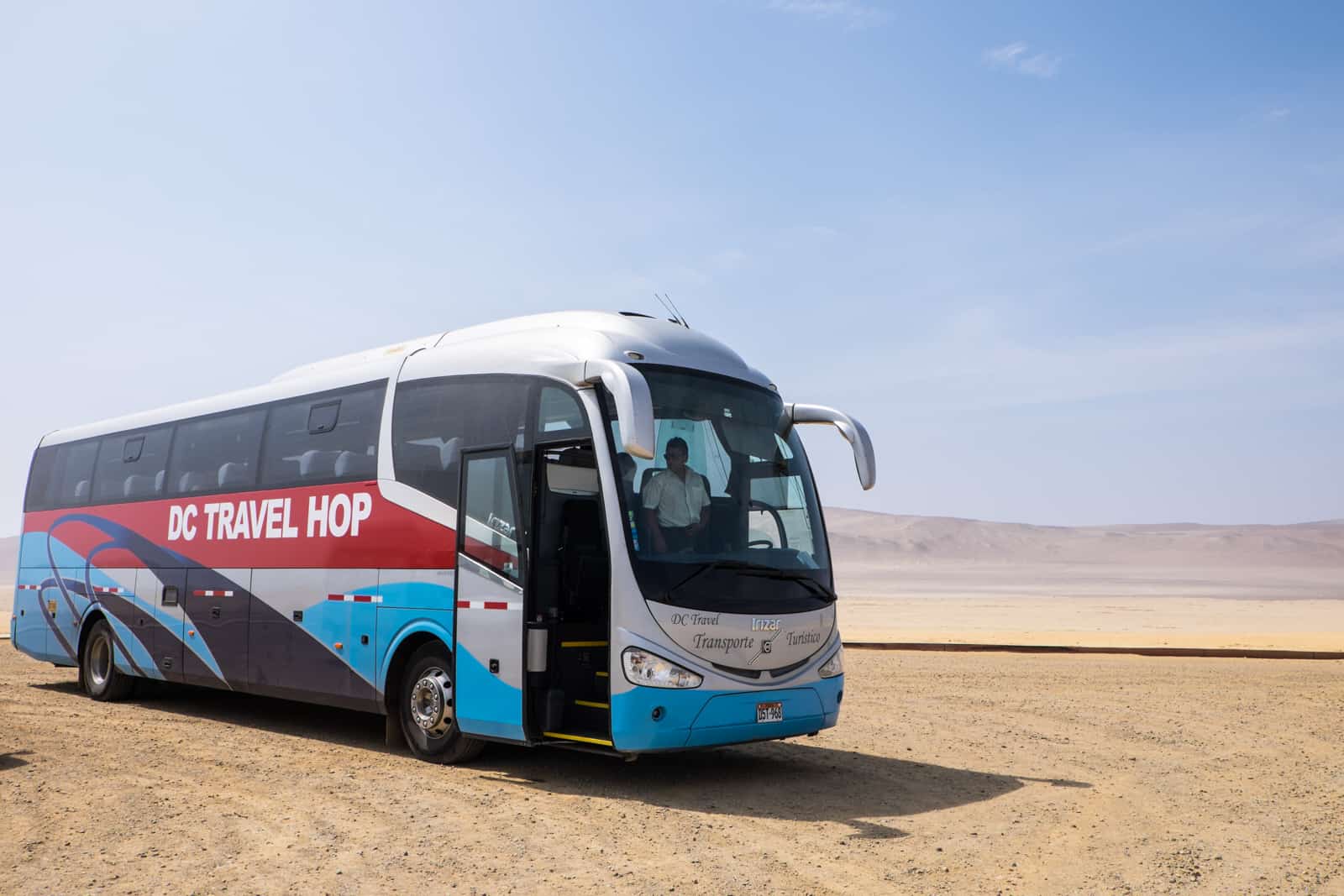
Forgo the costs of private drivers and avoid the stress of the dodgy bus rides you hear stories about. Hands down, the Peru Hop bus made destination hopping in Peru easy and efficient. Grab yourself a multi-stop Flexi ticket in either direction between Lima and Cusco, stop at route towns and cities when you like and for however long you like, and take advantage of the extra site stops along the way.
READ MORE: Getting Around by Peru Hop Bus
Alternatively, you may want to join other like-minded travellers in a small group and have everything organised. From one-week highlights to trips that include Machu Picchu and the Peruvian Amazon Rainforest, you can search for your ideal trip length and budget amongst this curated list of Peru trips, and book adventures from large operators like G Adventures and Intrepid to local operators and independent companies.
Ready to curate your route of the best places to visit in Peru? This trip list has you covered.
Start in the Capital City, Lima
Your Peru trip will most likely start in the capital, Lima, because of the regular flight routes. This journey maps out the ‘southern loop’ must-see places via an overland bus towards Cusco.
READ MORE: Travel to Peru – All You Need to Know Guide
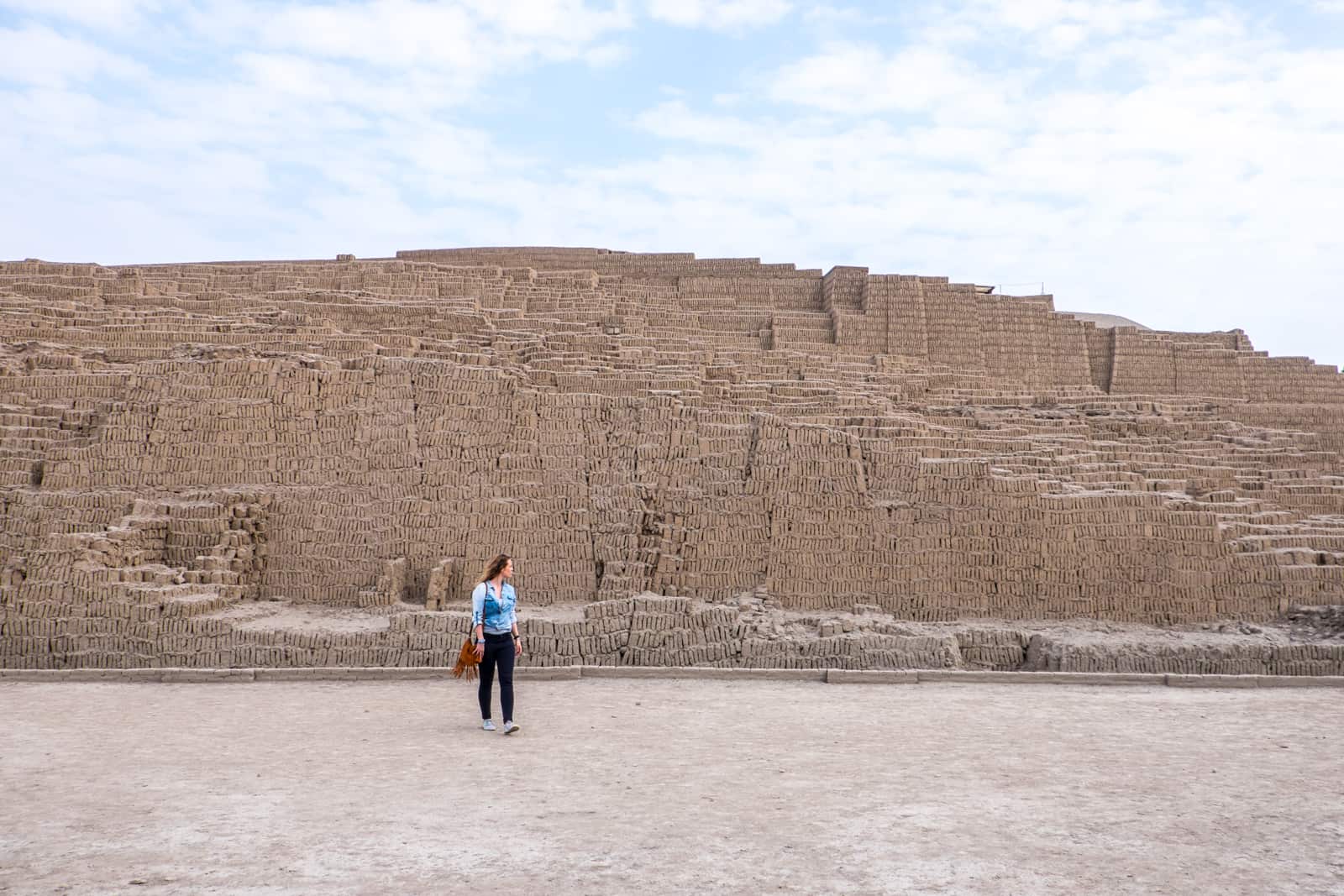
Lima is a sprawling coastline metropolis, with much of its outer residential areas completely off-limits. Most visitors stay in the safer tourist neighbourhood of Miraflores, where you can mix modern city hangouts with Inca ruins and beaches. Others stay in the bohemian area of Barranco, known for its alternative scene, street art, craft stalls, and hippie-vibe hangouts.
Downtown Lima is accessible from both and is usually visited during a day trip. It’s largely sketchy beyond the small cluster of squares and streets around Plaza de Armas, where you’ll find grand buildings, from cathedrals to palaces, and colourful streets peppered with ornate wooden balconies as you wander between local cafes, restaurants and stores.
Where to Stay in Lima
- Casa Andina Premium – Beautiful boutique-style hotel on a quiet street just a few blocks from Parque Kennedy.
- Pariwana Hostel – One of the hostels you hear about on the grapevine. Close to the beach and complete with a terrace and bar, a table tennis table and a continental breakfast.
- Alpes Lima Kennedy Hostel – I stayed in both their dorm room property (home to the rooftop bar) and their second property two blocks away that has private rooms and a quieter environment.
- Ancestral Hostel Barranco – For those wanting to hang out in a classically beautiful property in the arty, hip neighbourhood of Barranco.
Paracas National Reserve
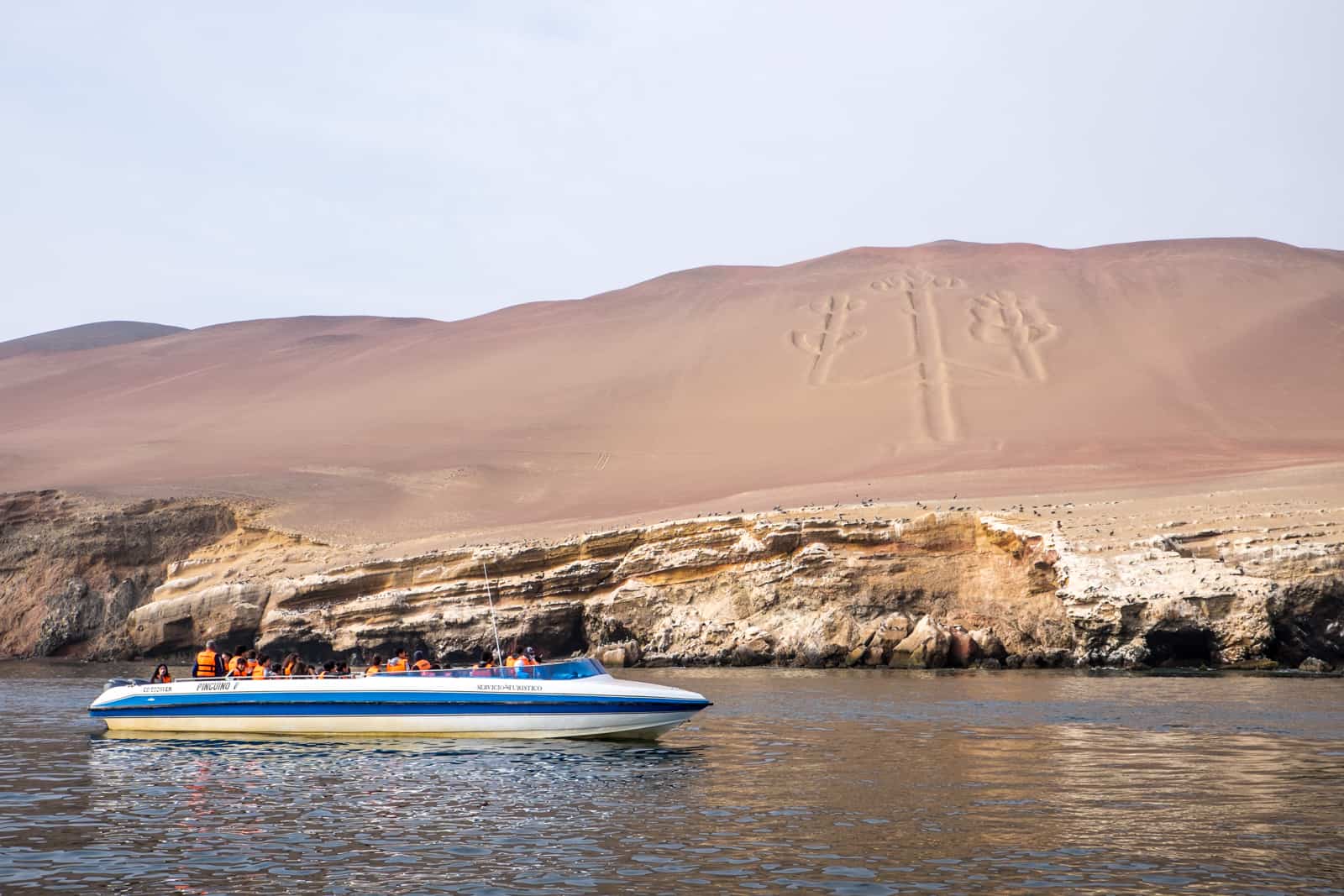
Coastal Paracas may not have much going on apart from its super chill vibes, but people come here to head out on a speedboat to visit the protected Ballestas Islands. Dubbed the “Poor Man´s Galapagos”, this is a chance to spend two hours spotting wildlife, including pelicans, penguins, birds and sleepy sea lions in the Paracas National Reserve.
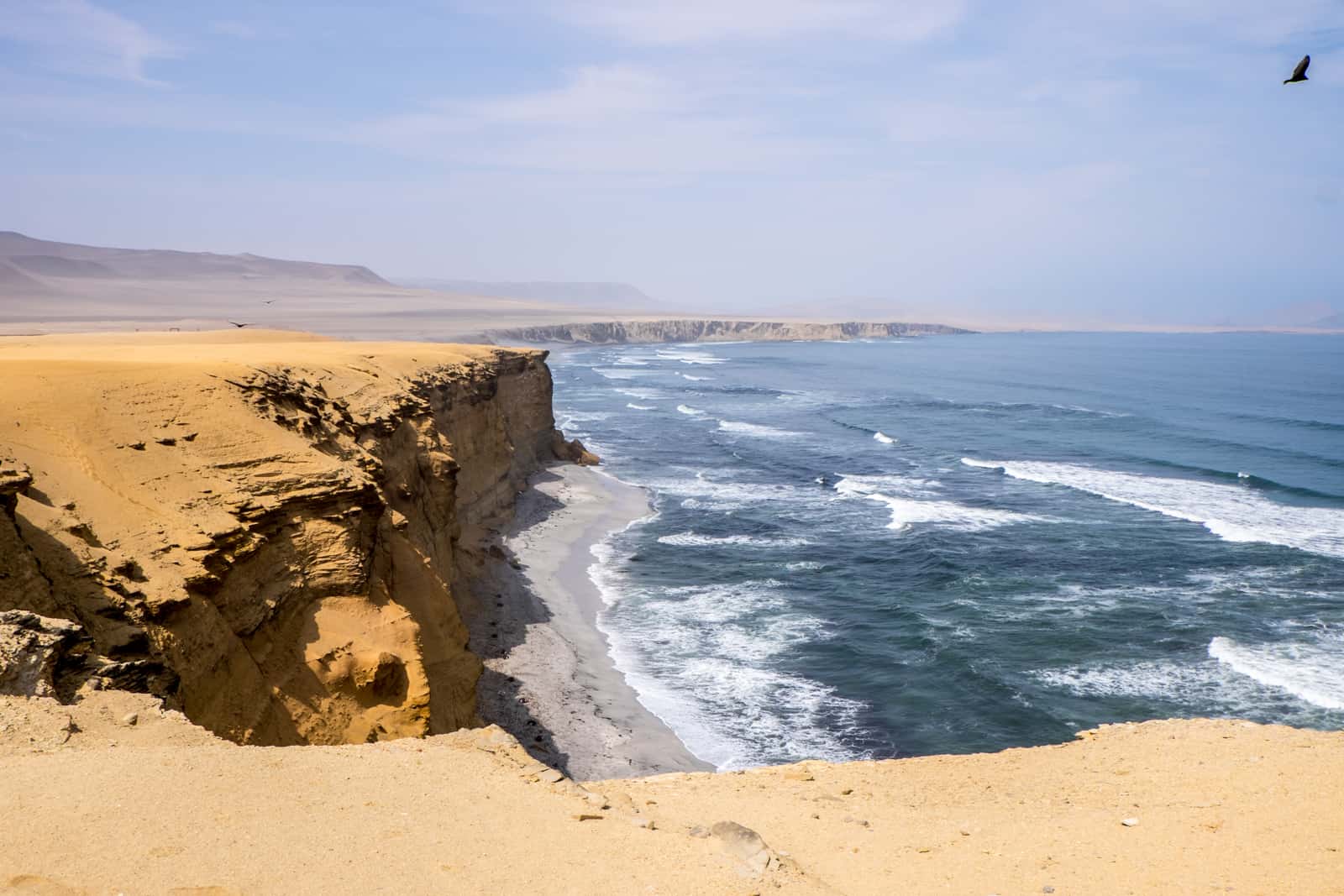
The contrasting sweeping desert plains of Paracas National Park, marked by cliff drops and jagged rock formations, are also another highlight. However, there are plenty of nature-focused things to do if you decide to stay for a few lazy days.
Where to Stay in Paracas
- Paracas Backpackers House – A chilled, family-run hostel just a five-minute walk to the coastline.
- Viajero Paracas Hostel – More of a party hostel, with its own pool and lively bar.
- Hotel Paracas Luxury Collection Resort – For those looking for a five-star stay, with a private dock for yacht tours, complimentary bicycles, a spa, and four on-site restaurants.
Huacachina Sand Dune Oasis
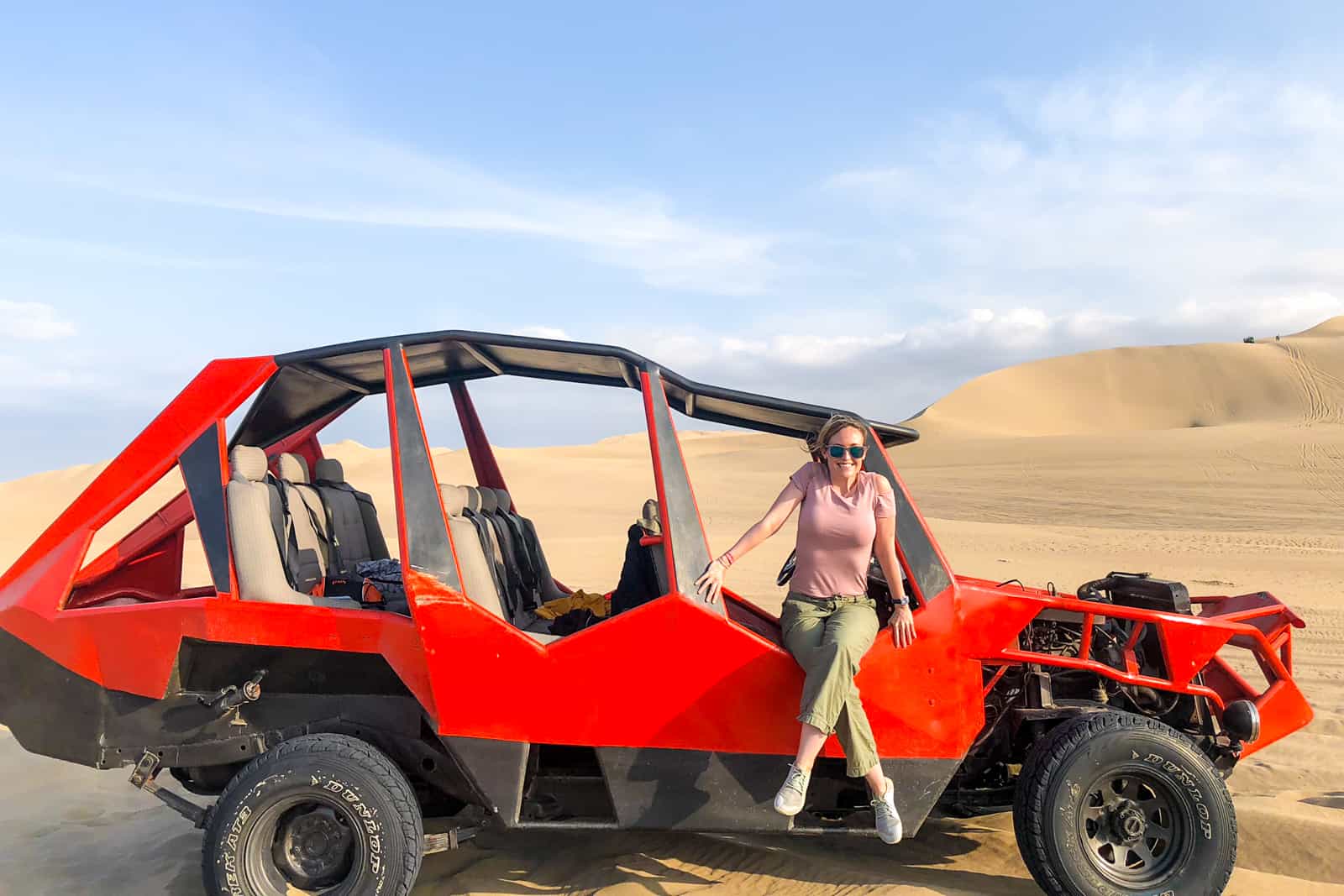
Huacachina is all about the mighty sand dunes. As soon as you arrive in this desert oasis town, you’ll realise it’s surrounded by a ring of golden mounds.
The best way I experienced them was by strapping myself into a sand buggy and enjoying a fast and bumpy nature coaster ride to some of the highest points and stomach-churning plunges. Alternatively, you can learn to sandboard down, which is another thrill. Travellers also come here to indulge at the nearby Pisco vineyards.
Where to Stay in Huacachina / Ica
- Banana’s Adventure Hostel – New, funky, modern touches and great atmosphere. The place I wish I had stayed after finding it.
- Wild Rover Huacachina – The biggest and liveliest pool and party hostel in this tiny oasis.
- Ecocamp Huacachina – Glamping tents facing the mighty sand dunes, complete with pool and garden.
The Famous Nazca Lines
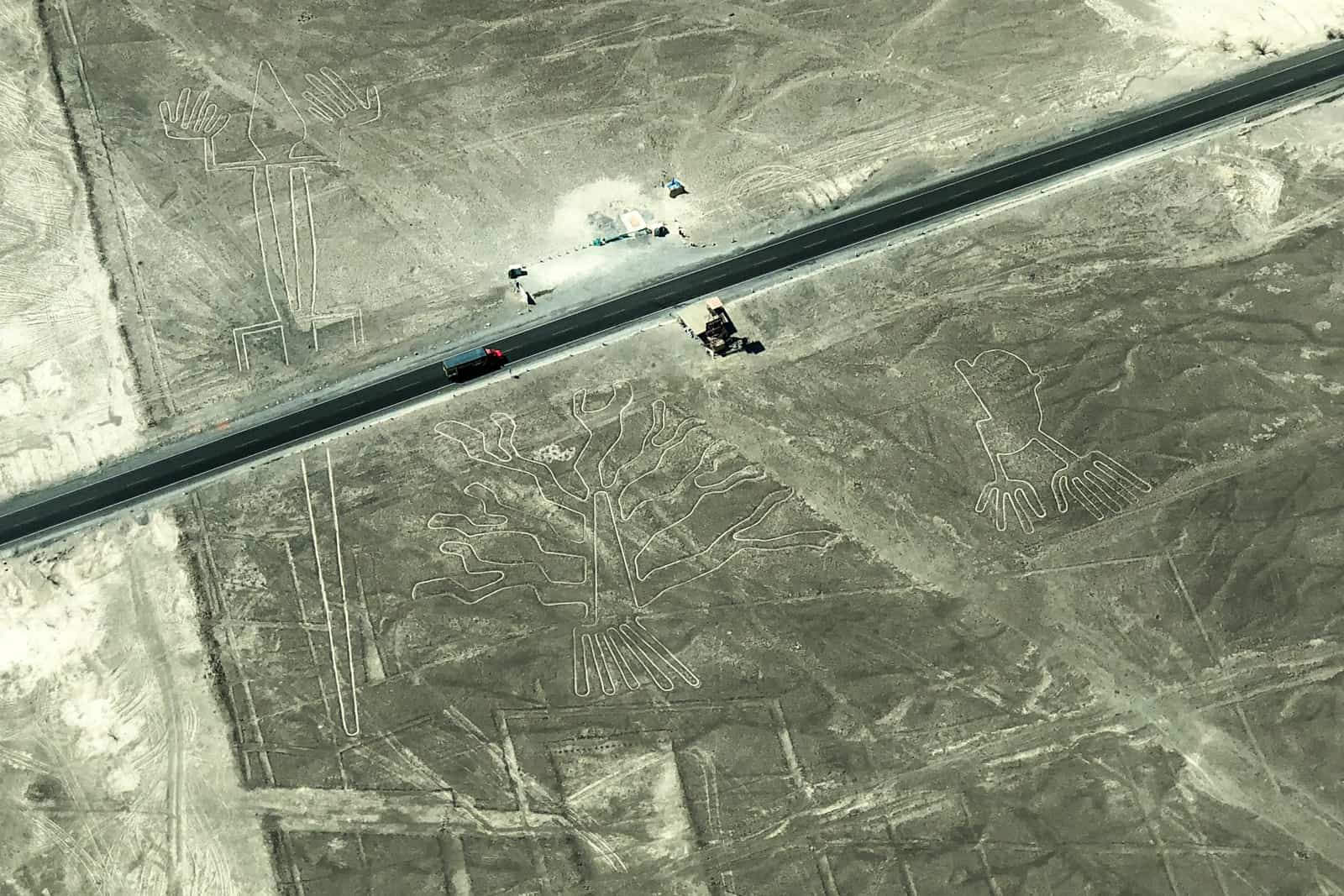
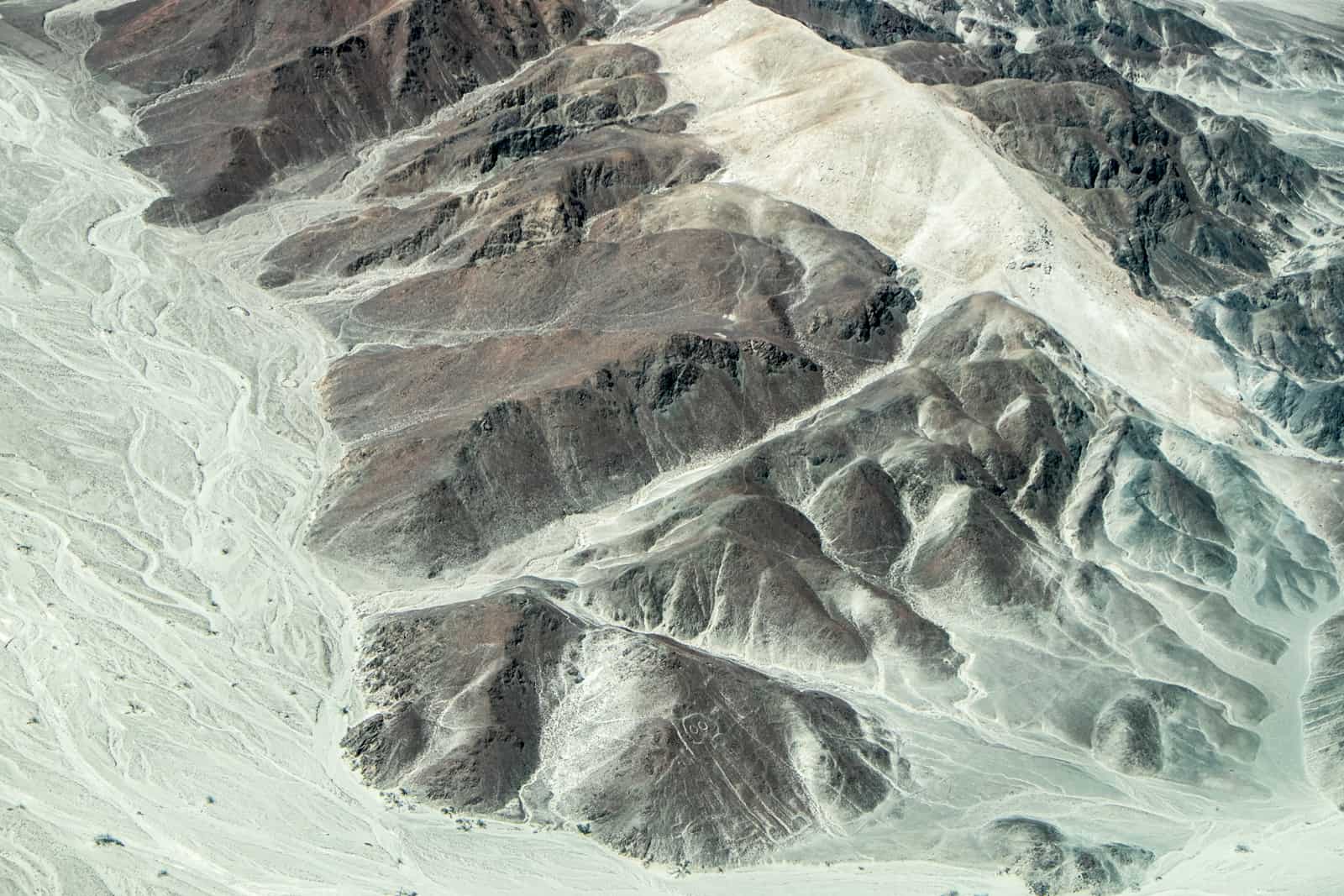
The 2,000-year-old geometric Nazca Lines are a world-famous site, yet we still do not know exactly why these markings in the desert were created. This UNESCO World Heritage site remains a mystery, and you can’t pass through without taking a look for yourself.
Three of the Nazca Lines can be viewed for free from a tower that is perched along the Trans American Highway. Still, the best way to see all the mysterious shapes and symbols is via a dizzying plane flight as you curve around the desert basin trying to spot the spider, condor, monkey, whale and astronaut. Be prepared if you are sensitive to motion – it easily makes passengers sick.
Where to Stay in Nazca / Nasca
Not many people stay overnight in Nazca. Instead, they pass through on the way to Arequipa. For those wanting to chill here and break up the journey, the following places were recommended.
- Nazca Travel One Hostel – Central, family-run establishment close to the town’s main square.
- Hotel Alegria – Considered one of the best hotels in this area, and the bonus is that it has a pool.
Arequipa and Colca Canyon
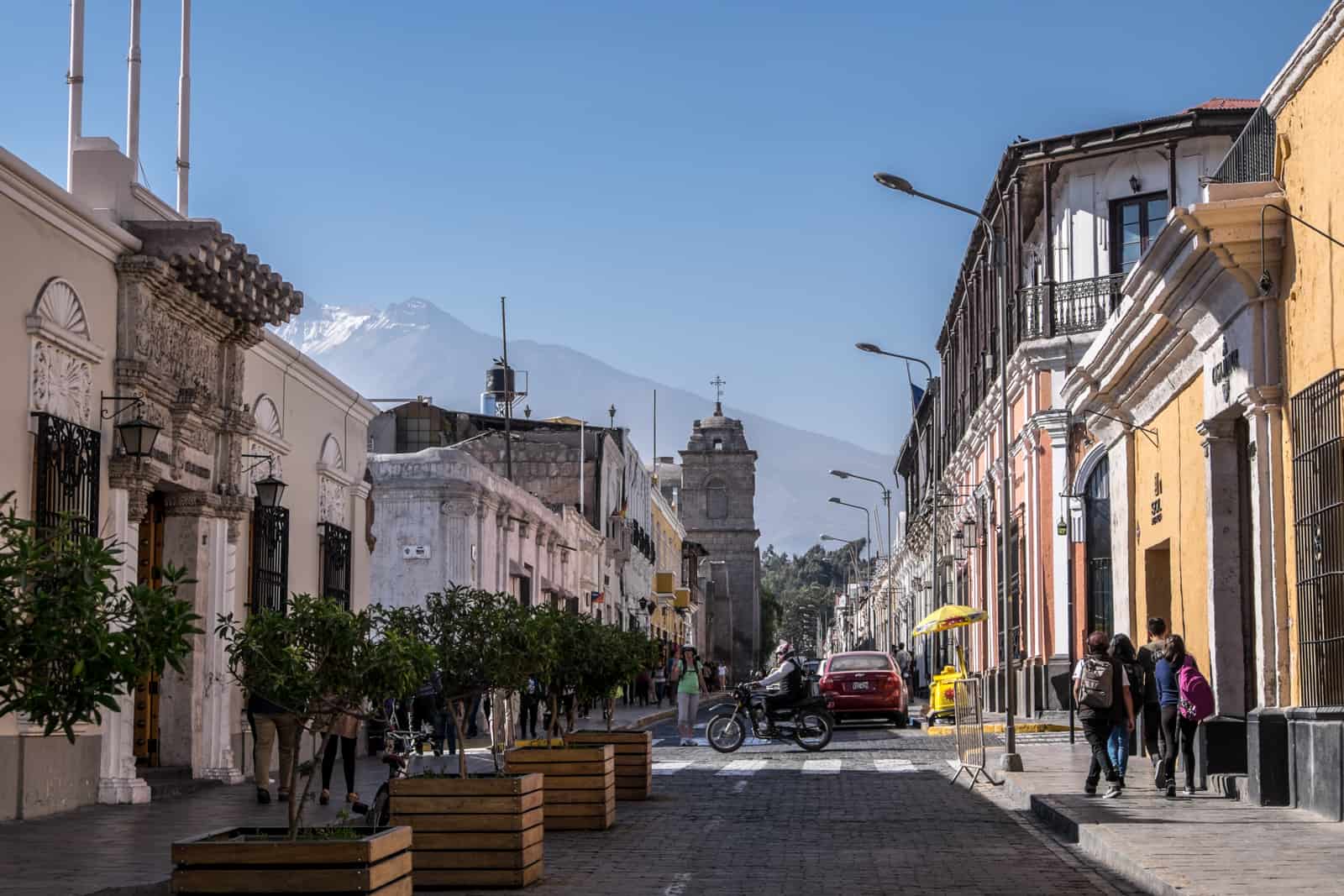
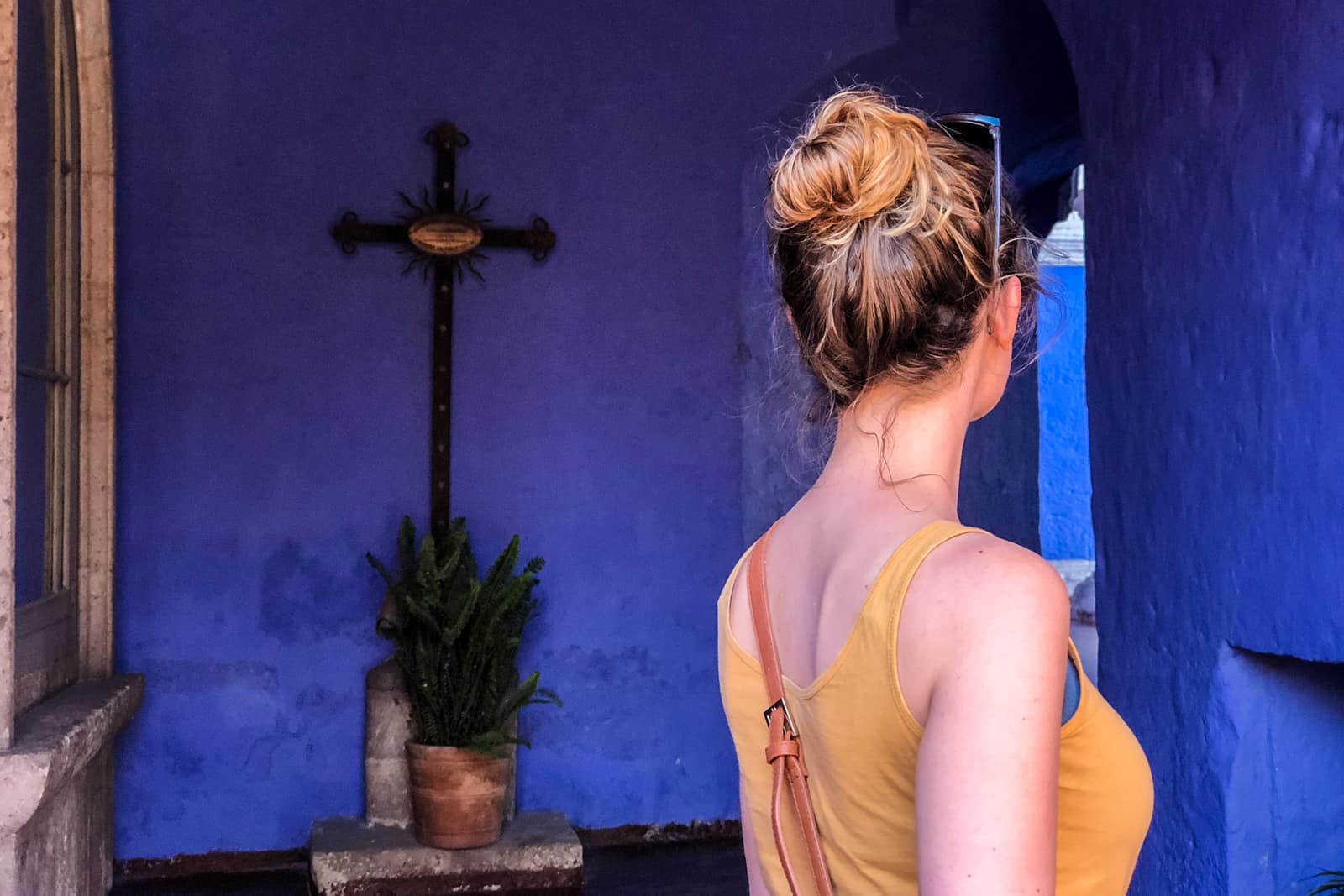
Mountain-backed, colonial architecture-decked Arequipa is a beautiful city to spend some days in. From its candy-coloured streets, you’ll find a panorama of peaks, including the dominant Misti volcano. Take the daily free walking tour for a historical introduction to some local neighbourhoods and hidden viewpoints. A full day alone can be granted to the Santa Catalina Convent (Monasterio D Santa Catalina), dubbed “a city within a city.”
Where to Stay in Arequipa
- Casa de Avila – I adored this cosy, quiet 3-star hotel and treated myself to four nights here (at only $40 a night) to get some proper rest pre- and post-Colca Canyon trek. It’s less than a 10-minute walk to the very centre and the Plaza de Armas. You can also take a Peruvian cooking class here.
- Flying Dog – The quieter, chilled-out hostel with lounge areas and easy access to the centre of the city.
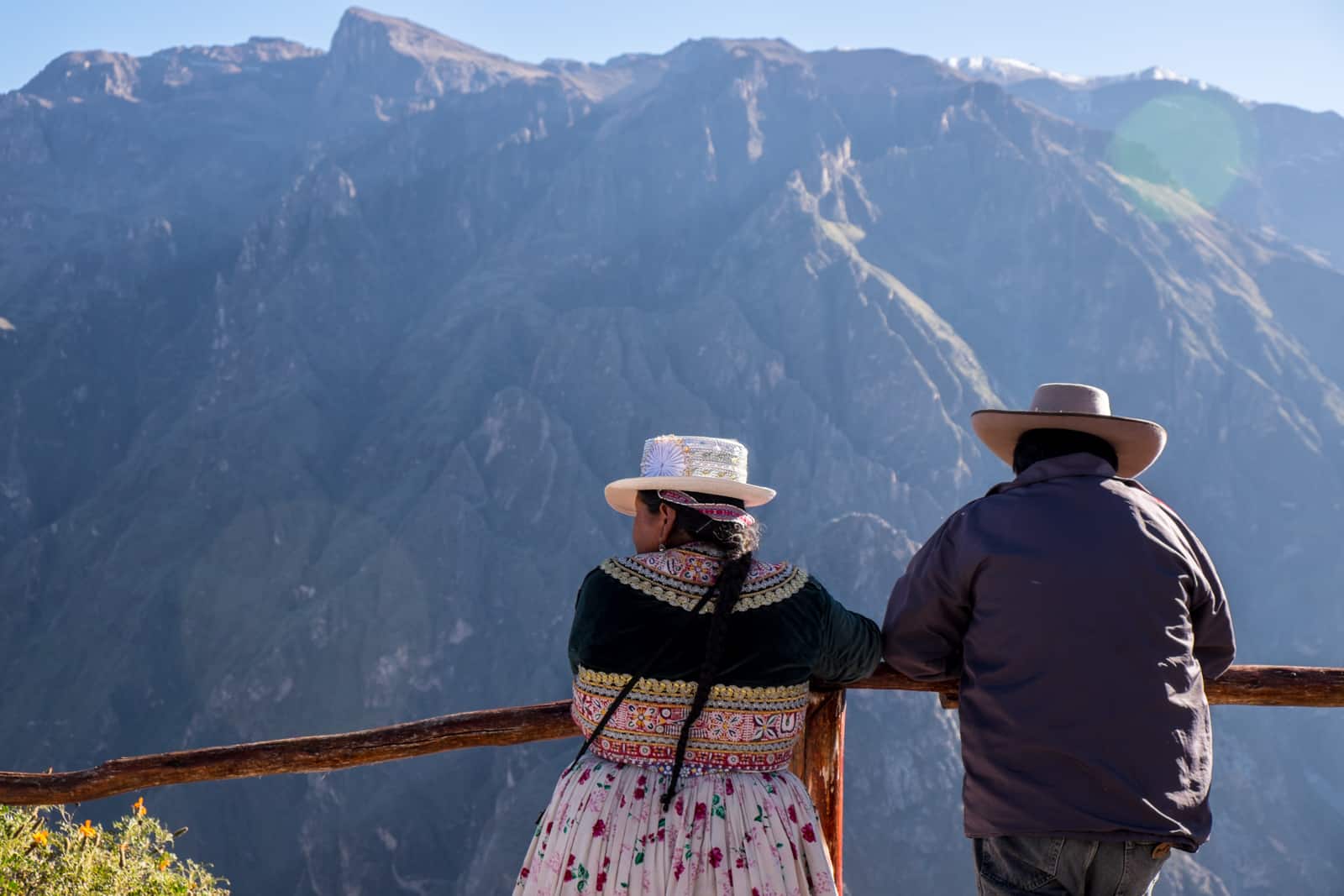
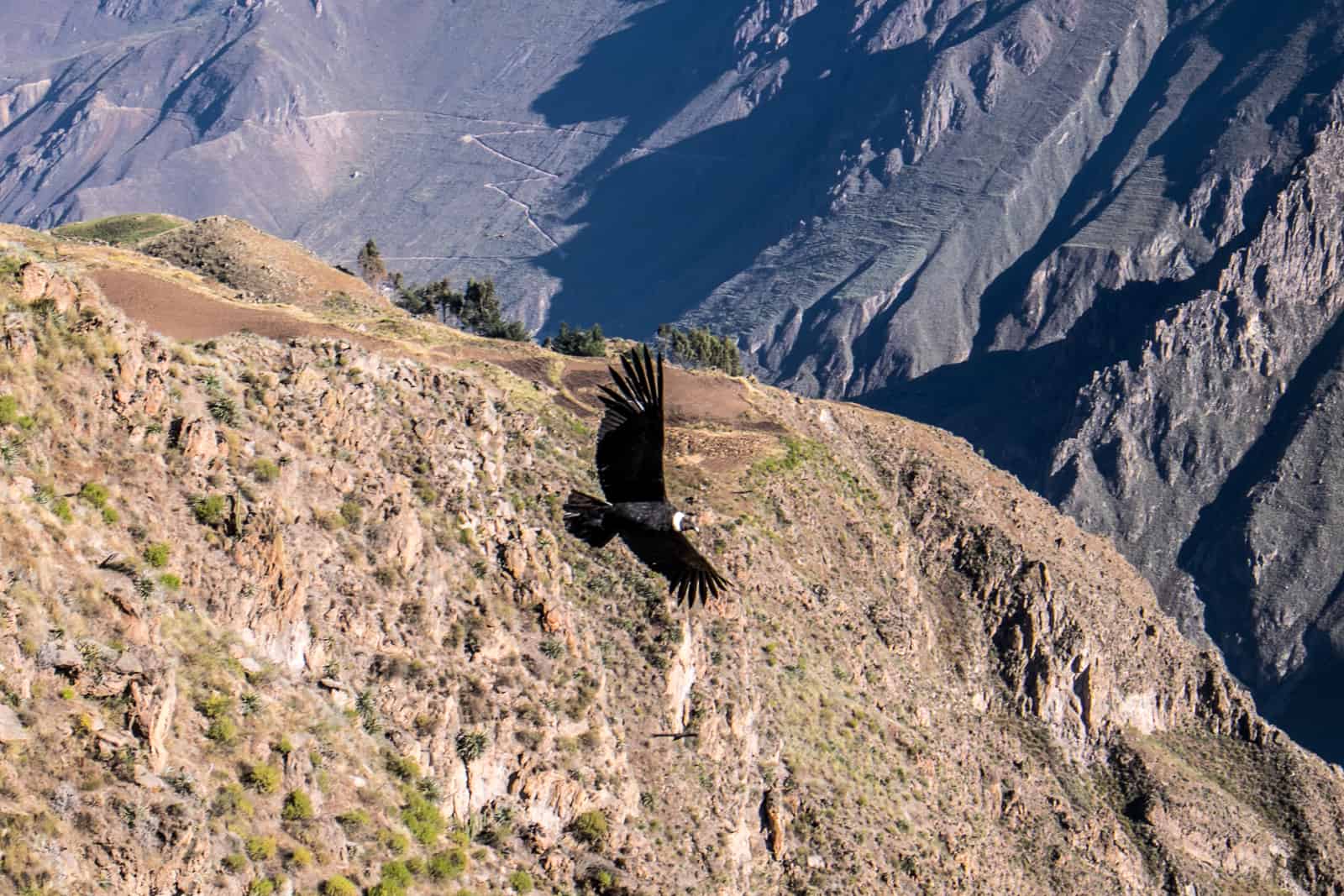
Four hours from Arequipa lies Colca Canyon, the second-deepest canyon in the world, said to be twice as deep as the Grand Canyon. It attracts day-trippers and hardened trekkers, but the core view is of Andean Condors in flight from above, set against majestic volcanic backdrops.
You can hike down into the Canyon, stay overnight in the oasis below, and hike out at sunrise – a painful, but unforgettable experience.
Puno and Lake Titicaca
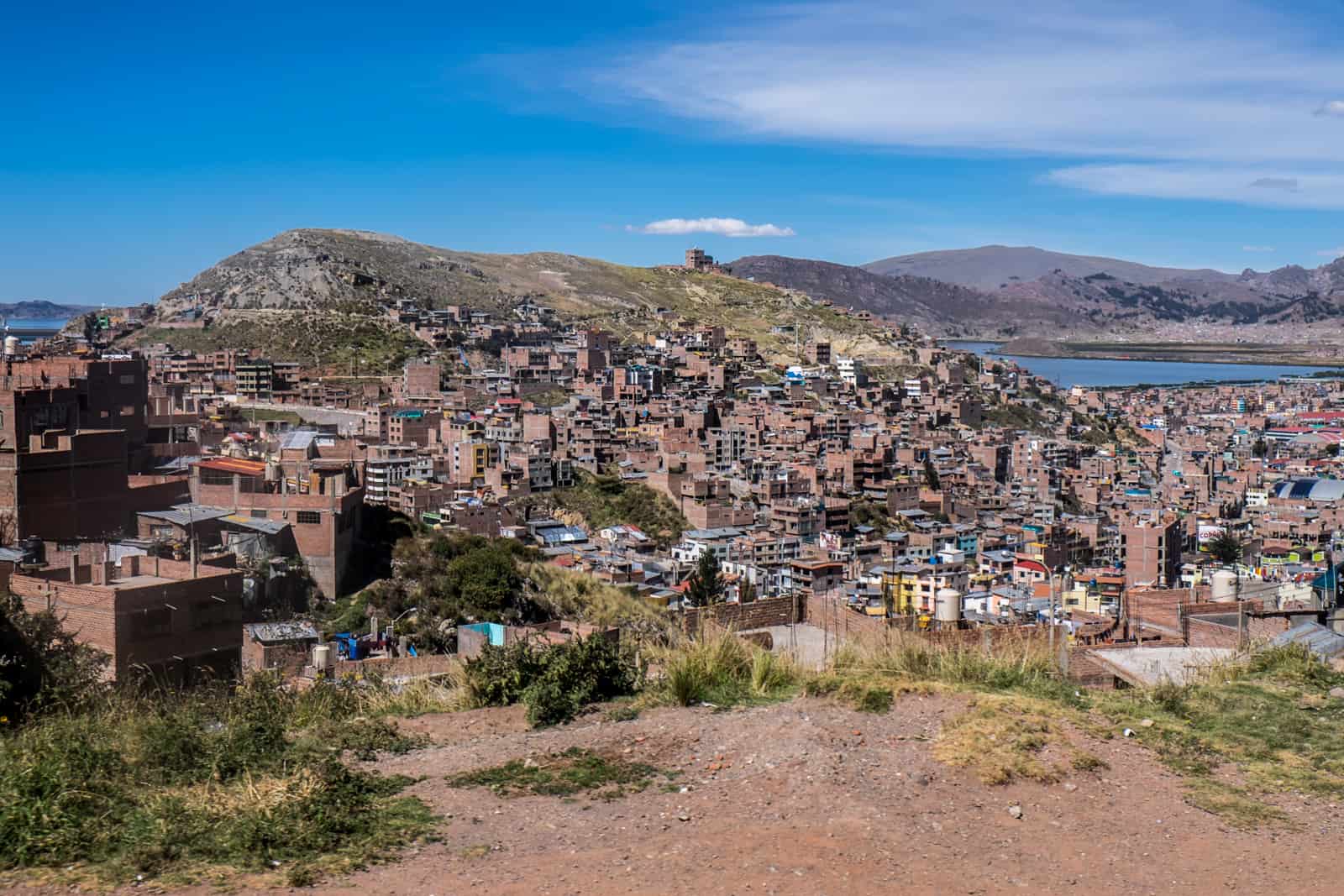
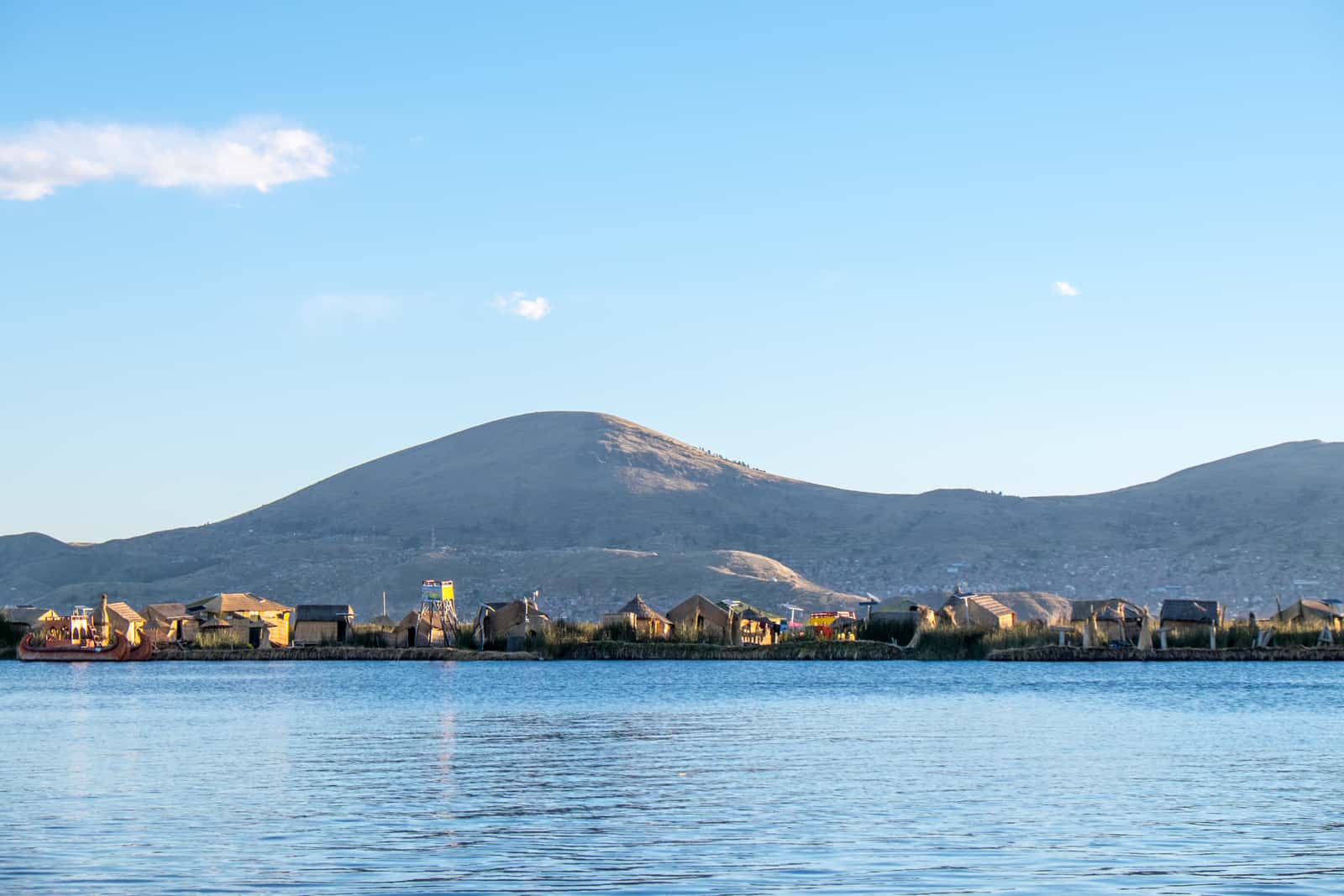
Puno is famous for Lake Titicaca – the highest navigable lake on Earth at over 3,800 meters above sea level.
It’s here that people visit the man-made floating reed islands, with the chance to stay overnight with a local family on one of the remote islands. I recommend this option if you have time, as I found the half-day and day tours to be highly touristy. Not to mention, it has fostered a culture of begging, even among the local children.
Others come to Puno, extending their lake visit to also connect to Bolivia via Copacabana.
Where to Stay in Puno
- Huaytusive Inn Hotel – Simple, rustic, homely budget property, with breakfast included.
- Casa Panqarani – Mid-budget, beautifully decorated family home. Many rooms overlook the verdant courtyard.
- Hotel Hacienda Plaza de Armas – Stay in a room with a terrace facing the main square at this classical property.
- Titicaca Kontiki Eco Lodge Peru – A lakeside stay with local hosts, with a sun terrace and garden.
Cusco and the Sacred Valley
Cusco, once the capital of the Inca Empire, is, of course, the starting point for those on their way to the famed Machu Picchu – the grand highlight of any Peru trip.
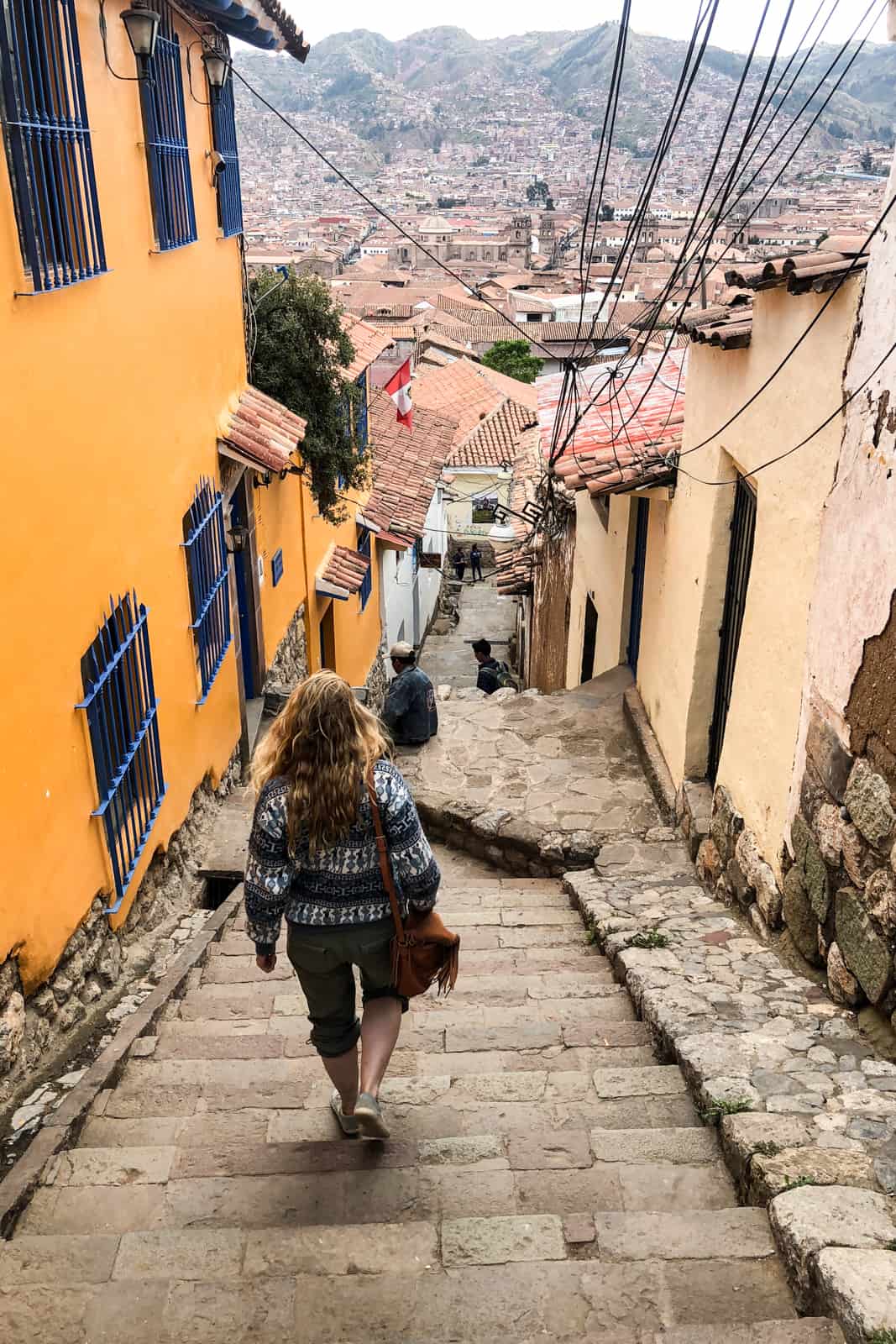
However, there’s more to Cusco than a gateway for those making the pilgrimage to the ancient Inca Site. The centre of Cusco itself is full of sites, including Colonial architecture, stone walls, and Inca ruins that line the steep cobblestone streets.
Fun tours in Cusco can be found in abundance if you want deeper historical and cultural insights. Hip coffee shops, vegan cafes and restaurants, independent design stores and funky hangouts define the city, especially in the bohemian San Blas neighbourhood.
Where to Stay in Cusco
- 7 Toritos Hotel Boutique by Hacienda – This former cosy residence got an arty upgrade and takeover, matching its location in the cool artisan district of San Blas.
- Wild Rover Cusco – The party hostel option in Cusco for revelling travellers.
- Viajero Cusco Hostel – A fun and funky decked hostel on the main square, with dorms and private rooms, hosting regular social events.
- Backpacker La Bo’M – Bohemian hostel hangout with cosy common rooms and a hammock-strewn courtyard hangout.
- Hotel Casa Fierro Cusco – Contemporary-elegant hotel a few blocks west of Cusco centre. Serves a buffet breakfast.
Inca Site Trips from Cusco
There are also a few key sites and treks that make for great day trips from Cusco, including.
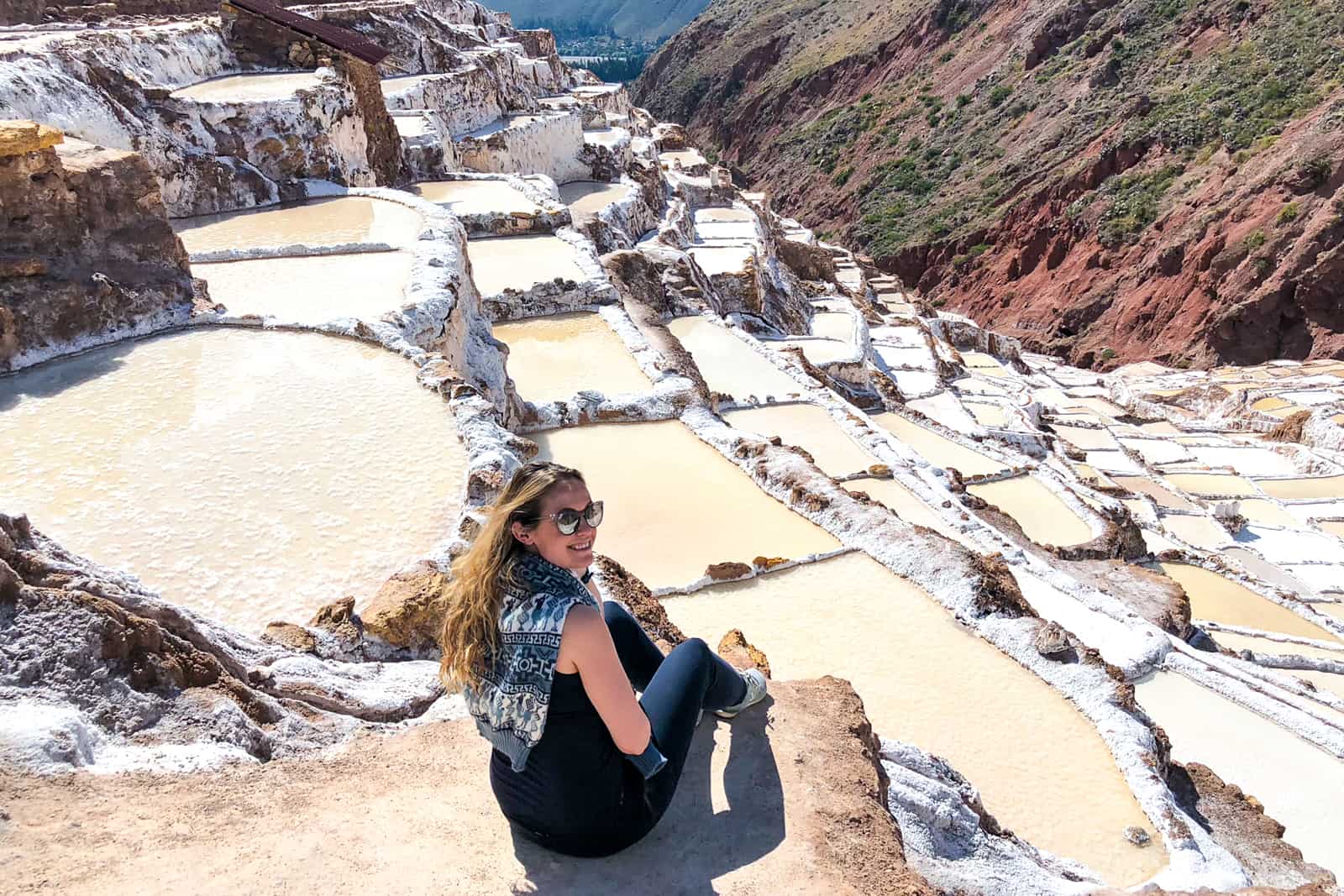
The Salinas Salt Ponds are a terrace system of evaporated salt ponds a short drive from the town of Maras, located around one hour outside of Cusco. A man-made layered landscape in the Sacred Valley, these salt basins have been in use since the days of the Incas, with a section now open to the public to marvel at.
Moray is an archaeological site of ringed Inca ruins in a remote area near Maras (and easily combined with Salinas). Defined by its circular terraces at a plateau of 3,500 metres, it is believed this was used for agricultural research, with the different terrace levels having unique microclimates.
Sacsayhuaman is a hilltop Inca citadel that sits on the northern fringes of Cusco and is said to be a fortress overlooking the city. It is known for its huge dry stones that fit together in the same way as those on the old Inca walls in Cusco – without any mortar or filling such as soil or clay.



Leave a Reply