
Disclaimer: This post contains affiliate links to handpicked partners, including tours, gear and booking sites. If you click through or buy something via one of them, I may receive a small commission. This is at no extra cost to you and allows this site to keep running.
Staying in a Japanese Ryokan in Tokyo is to experience the customs of a country that still values tradition while in Japan’s modern capital.
I knew Japan still held on to many of its traditions, despite its rapid modernisation. It’s one of the reasons I have always wanted to come here: to seek out pockets of the old Japan.
The experience of staying in a Ryokan – a traditional Japanese-style house or ‘inn’ whose origins date back to the Edo period, from the early 1600s to the late 1800s – came under that aspiration.
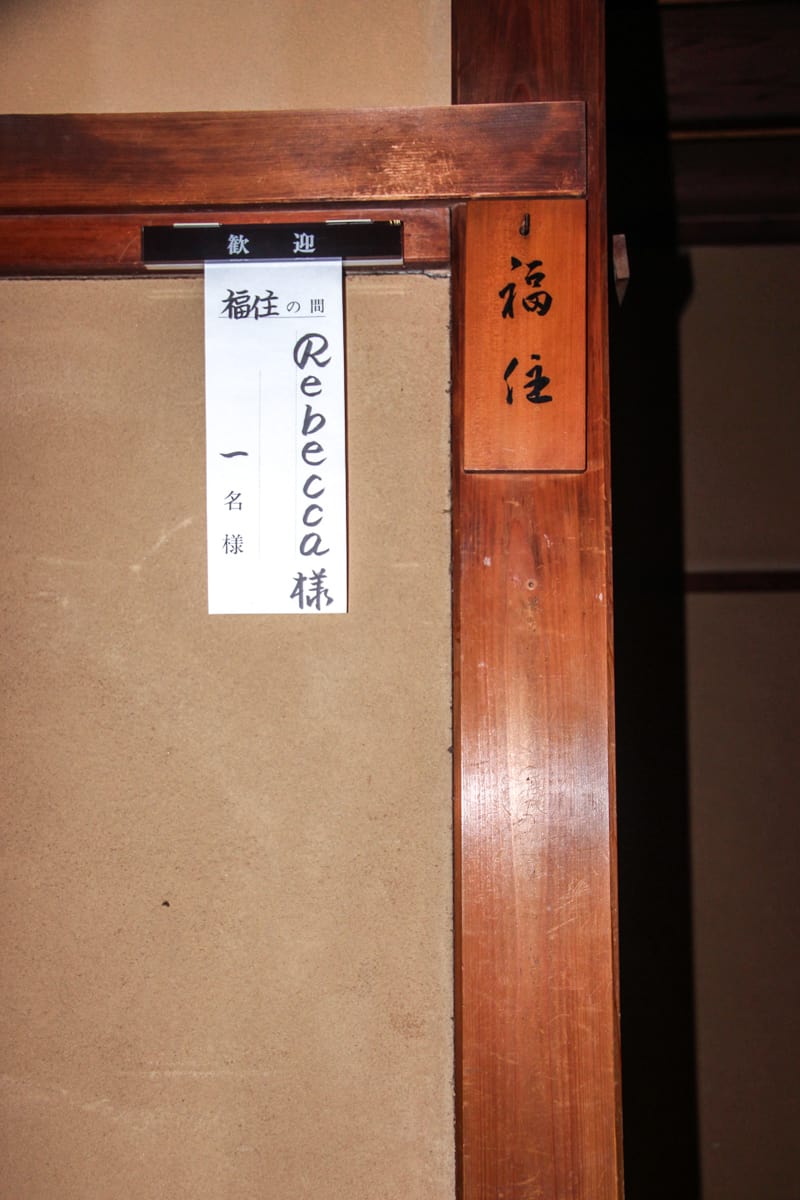
In Tokyo, I had the chance to seek the calm of a Ryokan, away from the modern city bustle, as a guest at the beautiful Homeikan for six days. It’s said to be one of Japan’s oldest ryokans. I couldn’t have asked for a more traditional introduction.
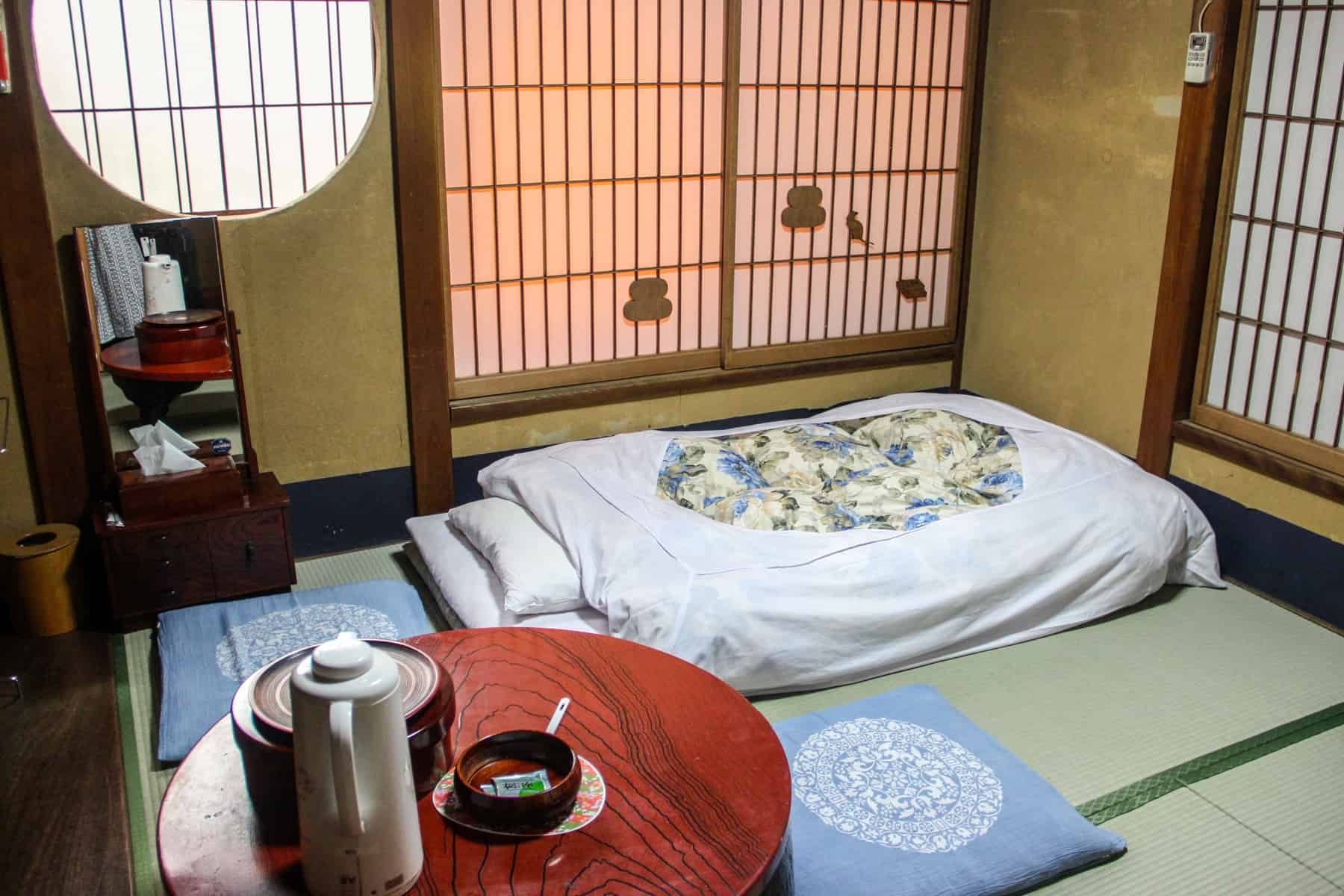
Inside a Japanese Ryokan
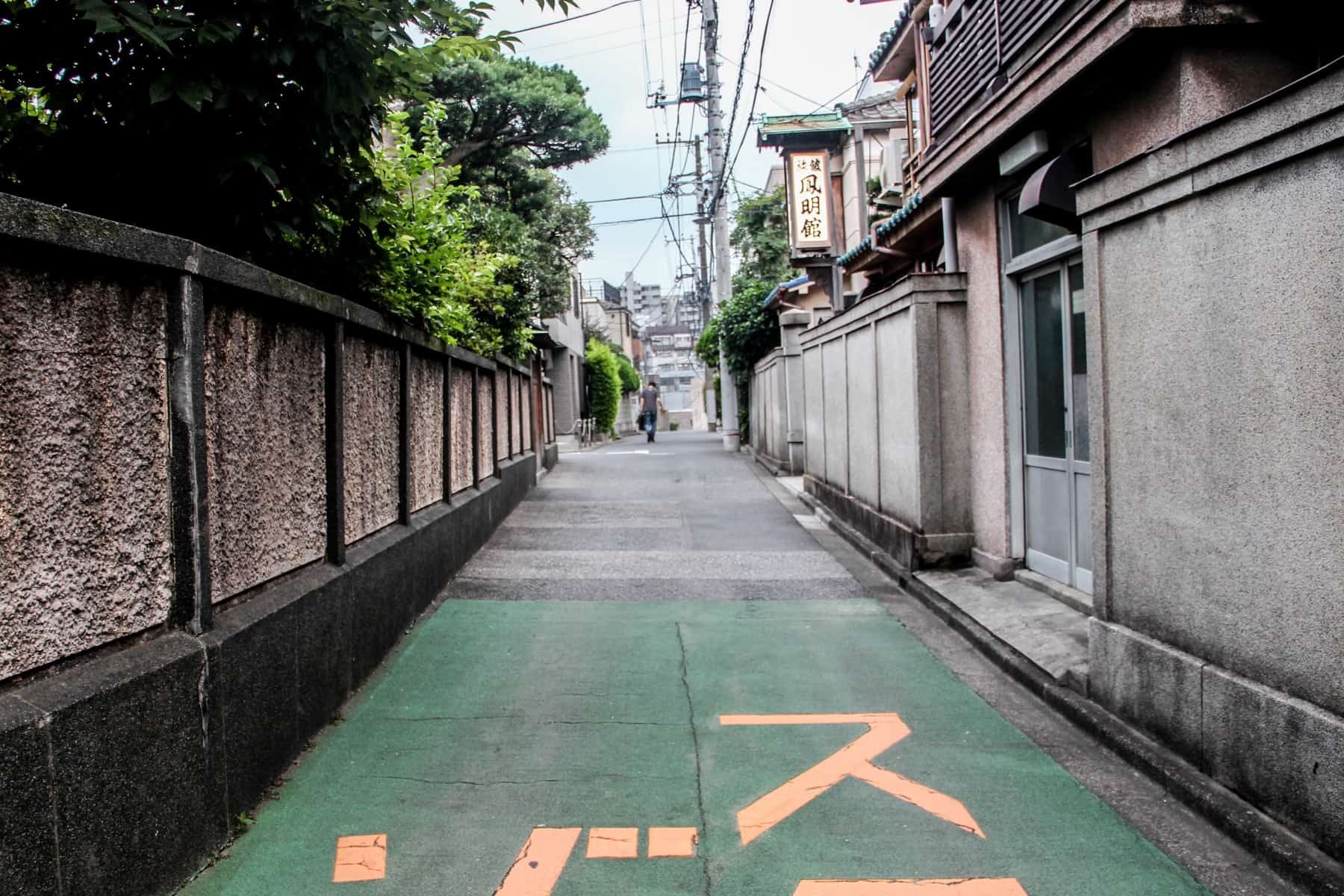
With three houses to choose from, Homeikan feels worlds away from Tokyo’s bold, chaotic uniqueness, in a quiet, local residential area near the well-known Uneo district. I tried out two of the Ryokan houses – Honken and Daimachi Bekkan. There are single rooms, twin and three-bed setups, and larger options that accommodate up to five people.
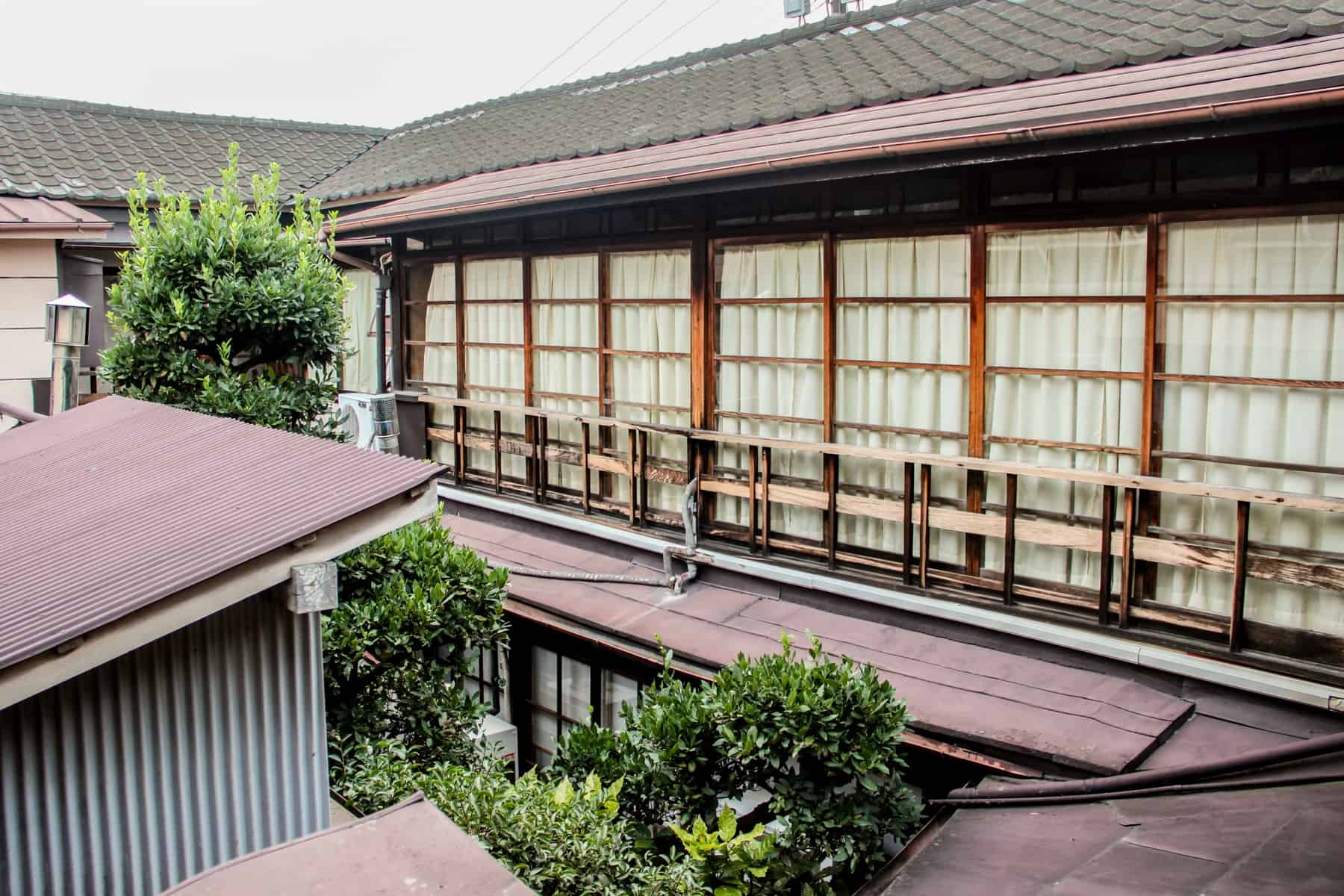
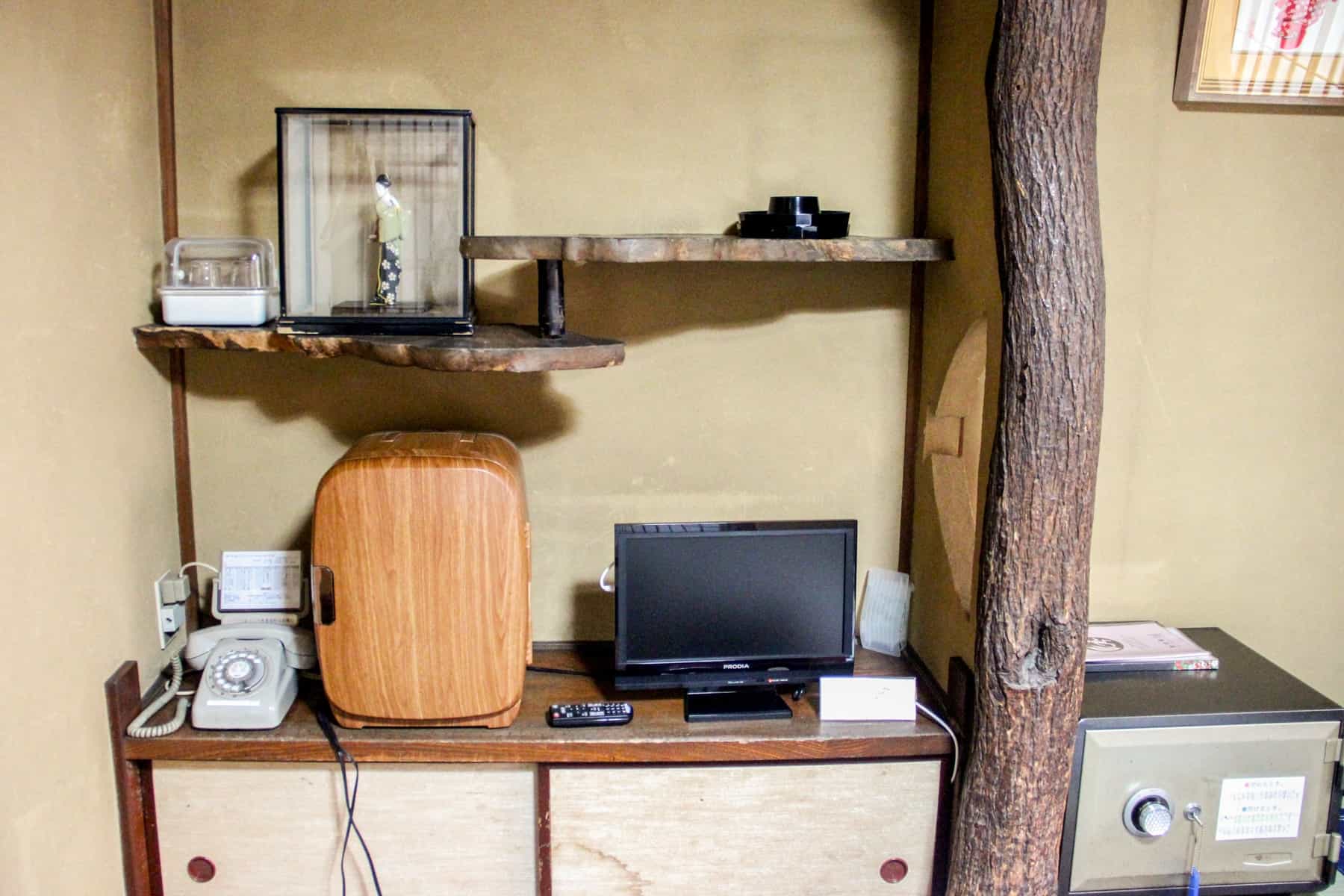
Ryokan Room Decor and Amenities
The rooms are like living in an immaculate micro-apartment, complete with TV, fridge, telephone, a seating area with a tea set, and a futon-style bed (which is laid out for you in the early evening or whenever you request it).
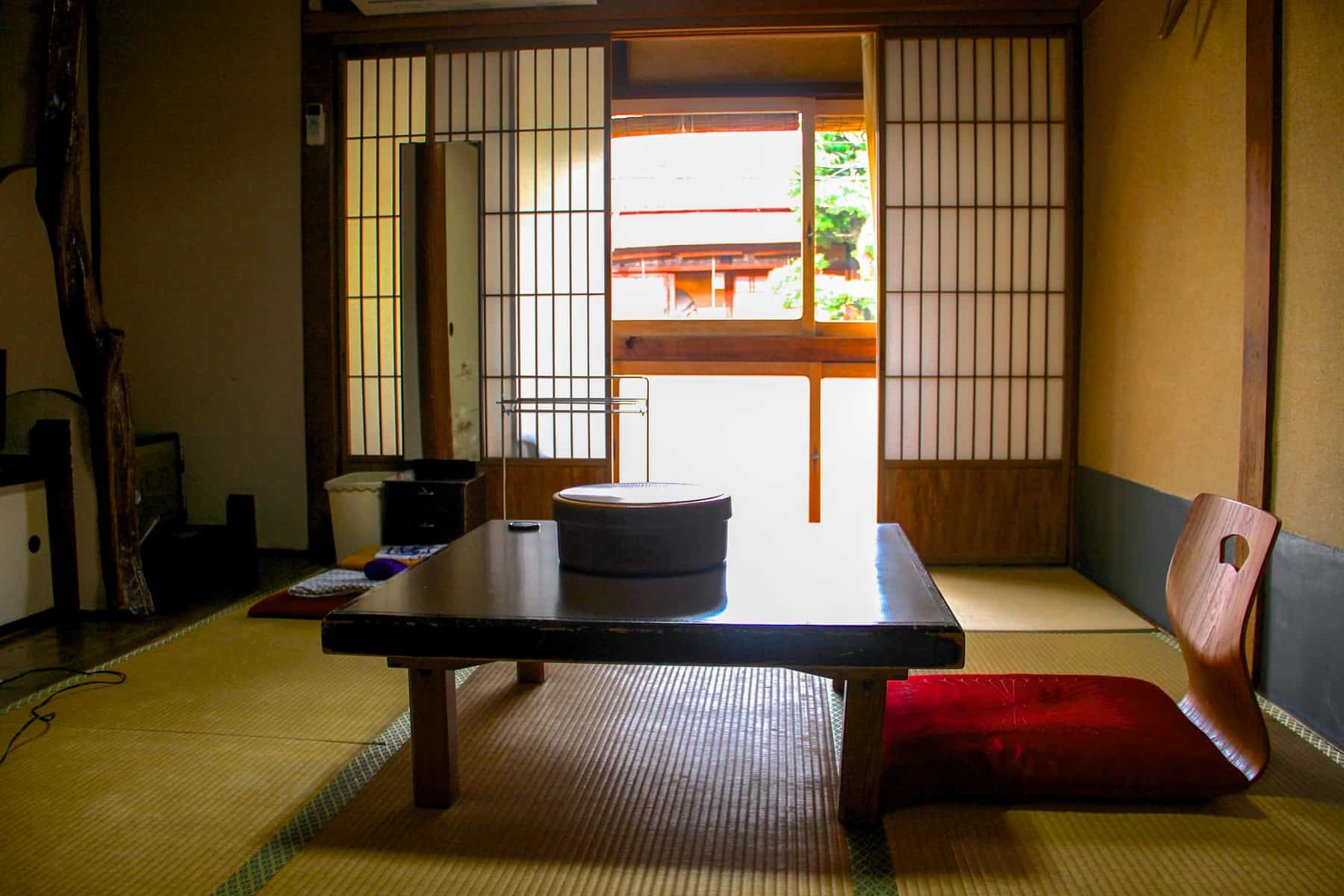
Basic, yet beautiful, a room in a Ryokan typically consists of traditional Japanese wooden décor with sliding doors, a tatami-matted floor, a table and floor-level chair or cushion and a space for your futon.
Also in the Ryokan, bathing areas are communal (male and female separate) and consist of a handful of showers – to be taken while seated on the plastic stool provided – and a hot bathing pool to soak your aching limbs after sightseeing or a night out. These baths stay hot up to around 3 am.
Customs and Traditions of Staying in a Ryokan
Japanese House Slippers
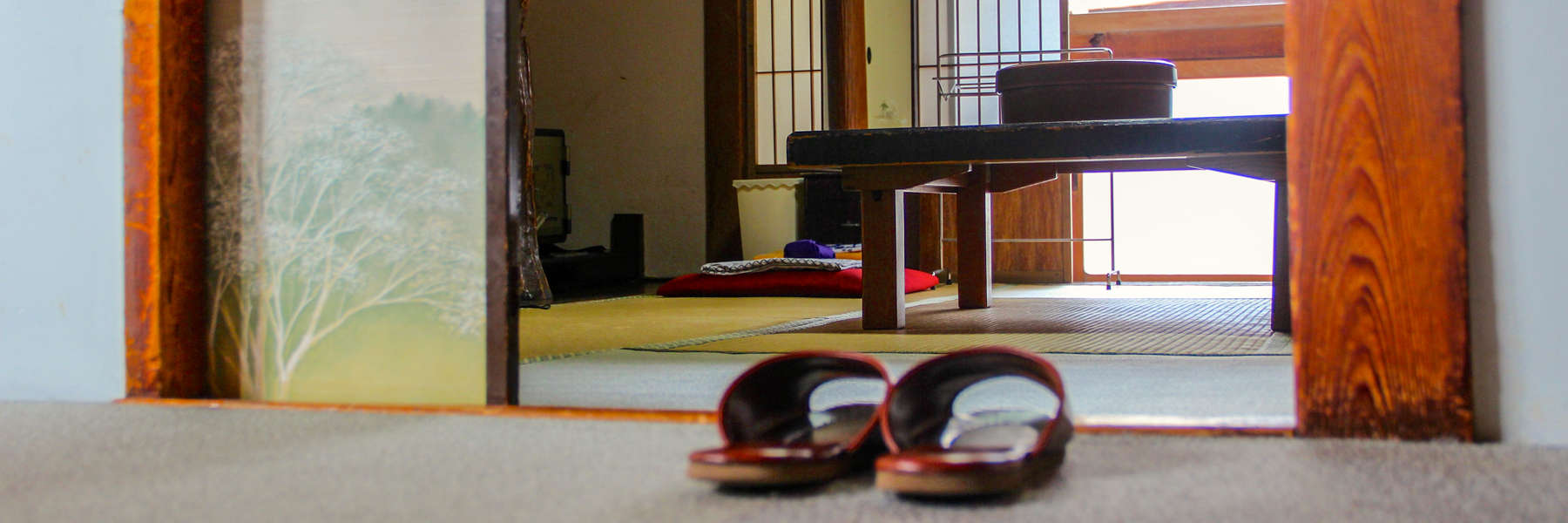
The Japanese are polite, attentive and extremely welcoming, and you will certainly feel that in a place like this. When I arrived, I was asked to remove my shoes and given slippers to wear inside the house.
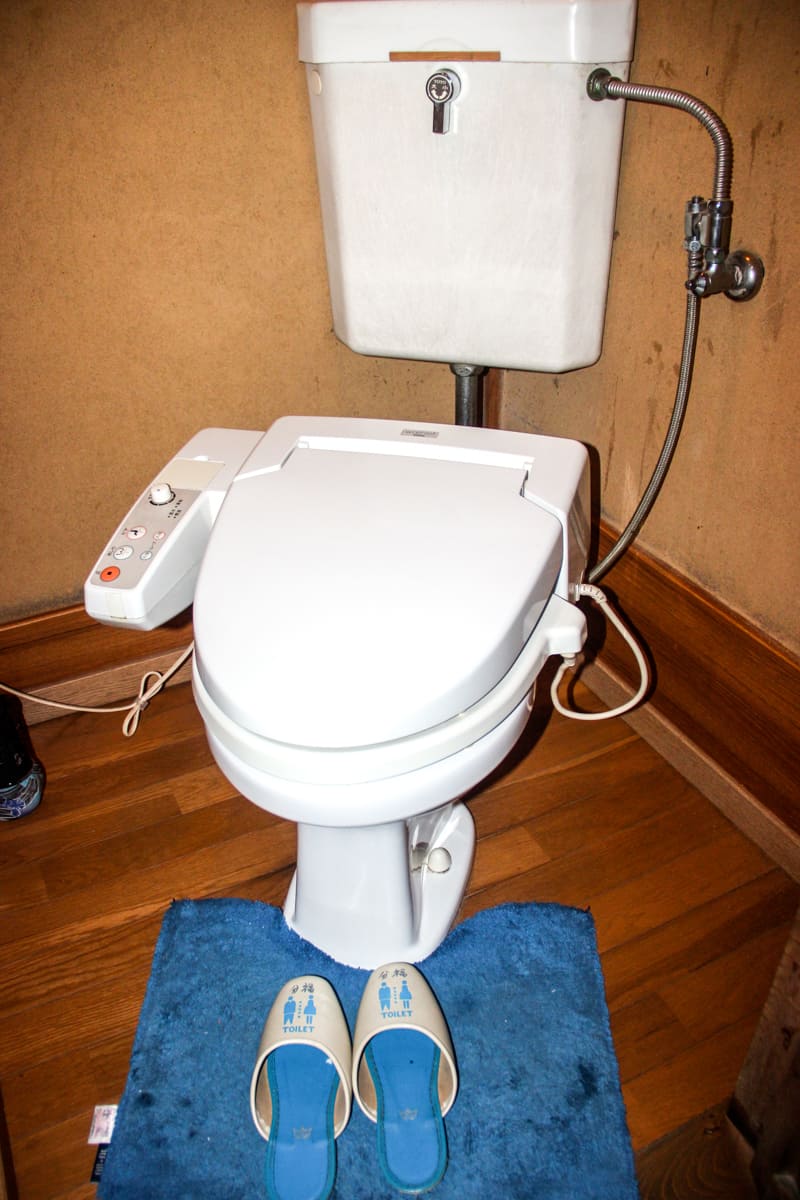
You must leave the slippers outside of your room and the bathroom before entering, as well as when you use the toilet – you have to use a different pair of slippers in there.
The Culture of Tea in Japanese Living
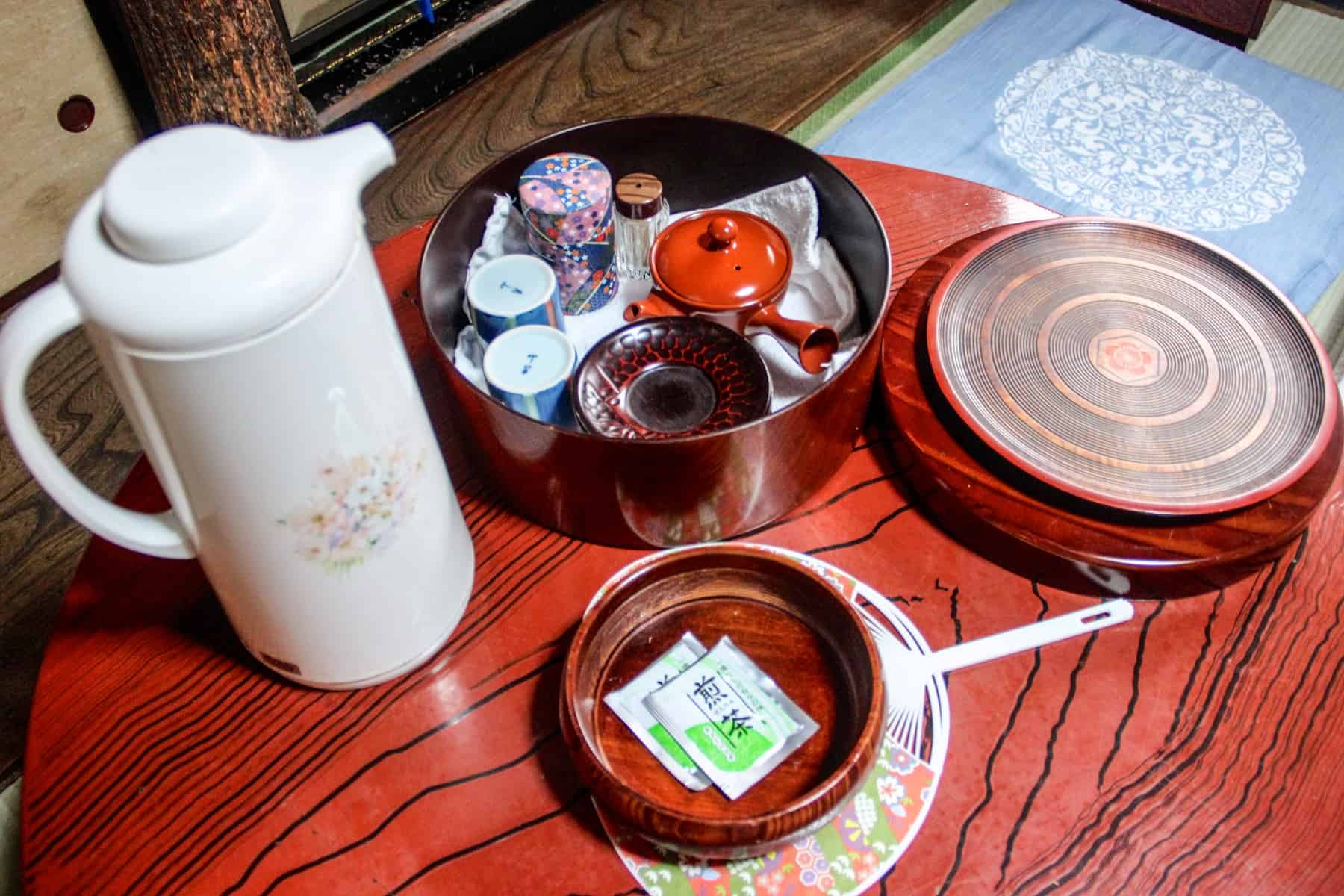
I was immediately asked whether I would like my futon put out, and a hot-water flask quickly arrived for my tea. A beautiful round wooden box sat neatly on the table, containing a traditional tea set of small cups and plates, a teapot, fresh tea leaves and a Japanese biscuit – all of which were refreshed daily.
When eating or drinking, you sit on the floor with the provided cushion; otherwise, you may use a floor-level wooden chair. This space also doubled as my ‘office’ and was more comfortable than it first looked.
Everything felt very ordered in the Japanese sense, but a few things took a bit of getting used to – mainly showering whilst sitting down on a tiny plastic stool and remembering to take off my slippers before entering my room. At first, I would dash out of the room immediately, worried I might cause offence.
Wearing a Yukata in a Ryokan
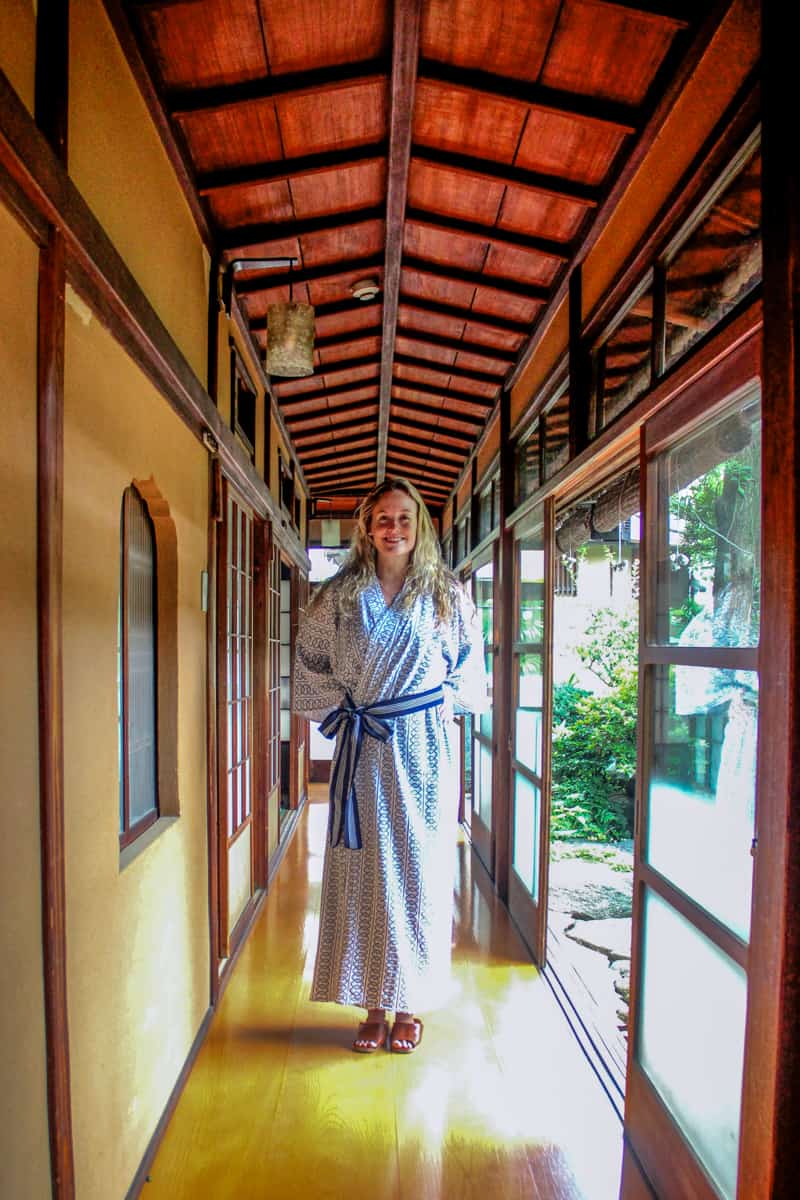
One of the things I loved most while staying in a Ryokan was getting to wear a Yukata, which we know better as a kimono.
It’s customary to wear this in the Ryokan when lounging indoors, especially after returning for the day or after bathing. You will find your Yukata on a tray in your room, with a bathing towel.
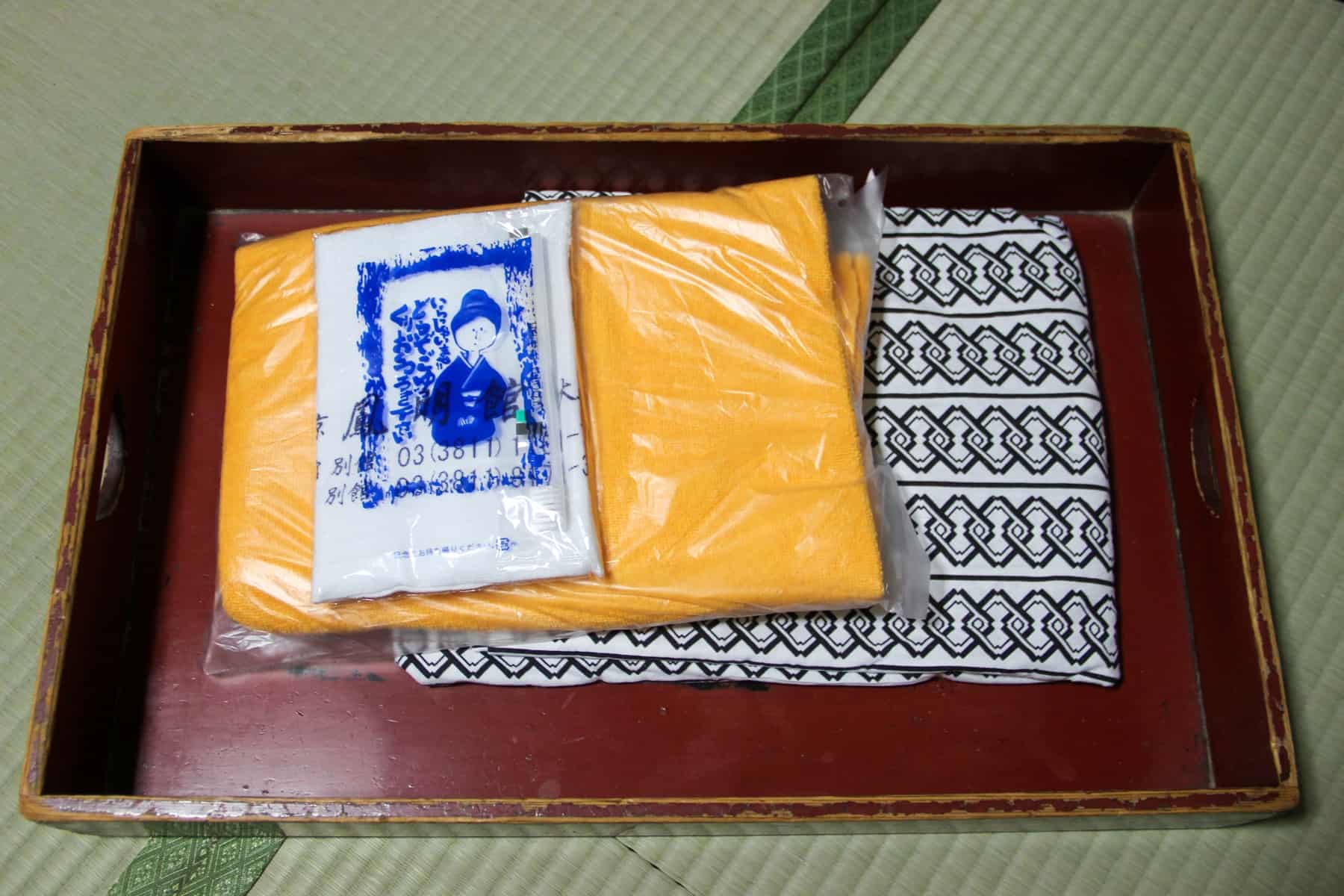
In fact, when you arrive, you will likely be asked whether you want to bathe and change into your Yukata. I couldn’t wait!
The staff also love to treat you to a photoshoot after teaching you how to wear and tie it properly.
Ryokan in Tokyo: Price vs. Experience
Japan is a pricey country to travel in, compared to the rest of Asia, and Ryokan accommodations are often more expensive than other standard forms of accommodation here.
However, experiencing time-honoured traditions will certainly outweigh the cost of approximately $50 a night, and it’s a great introduction to the cultural customs of Japanese living.
A stay at Ryokan should definitely be on your list – even if only for one night. You actually feel as though you are living in Japan, returning to a relaxing home after a busy day out in the fast-paced city of Tokyo.
Travel and Tradition in Tokyo
Continuing the search for traditional and unique Japanese accommodations? Stay in one of these capsule hotels in Tokyo and see why these simple, boxed spaces are a budget staple, meant for a few hours.
Planning your accommodation budgets? See how much it costs to travel in Japan with these budget trip tips and an overview of everyday expenses.
Seeking out the best of the capital? Get a feel for what Tokyo is like with this introduction.